
Companion Plants
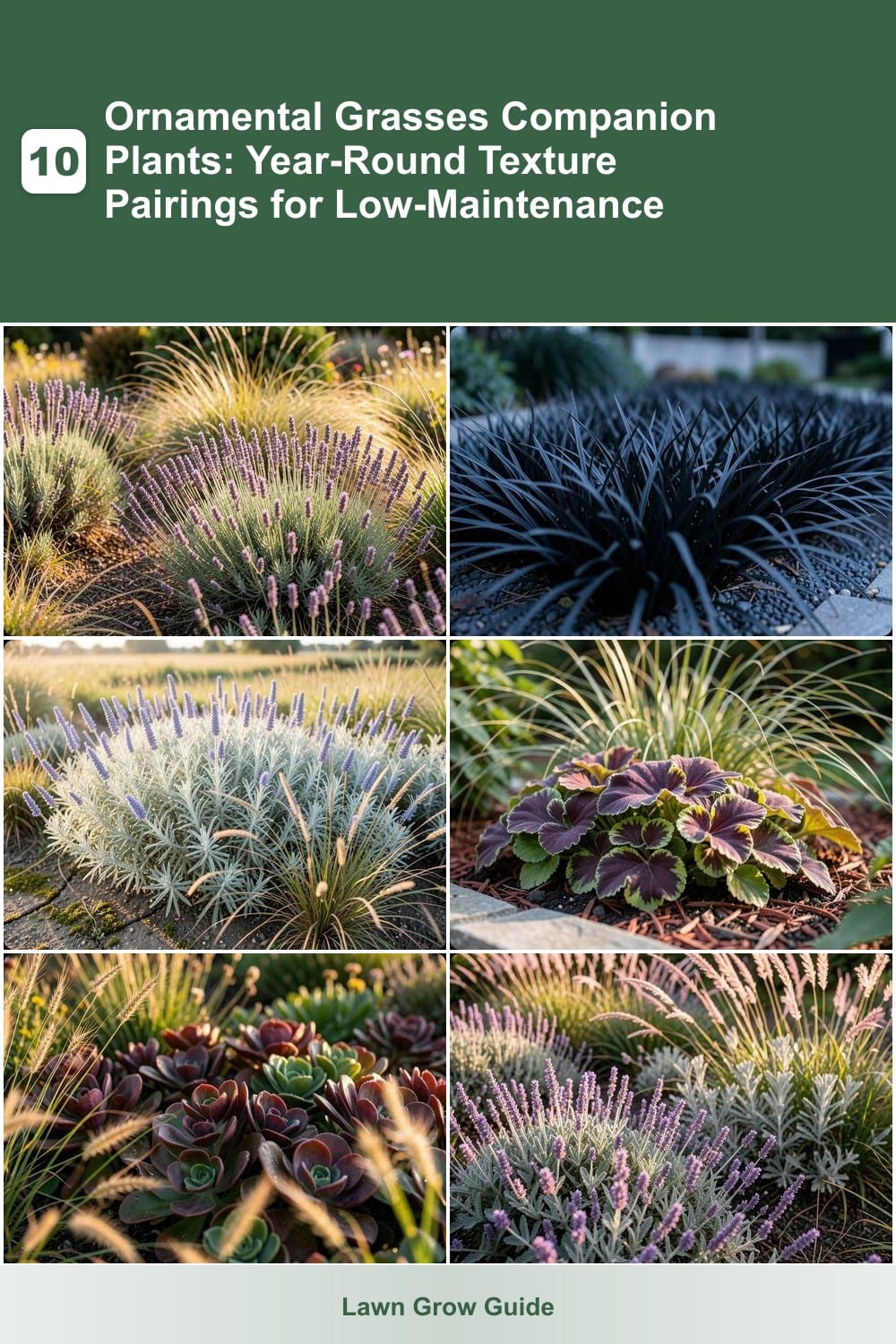
Ornamental grasses add movement and structure to gardens, but the right companion plants elevate their beauty year-round. These 10 low-maintenance pairings enhance texture, color, and seasonal interest while reducing care demands.
Lavender for Fragrant Purple Contrast
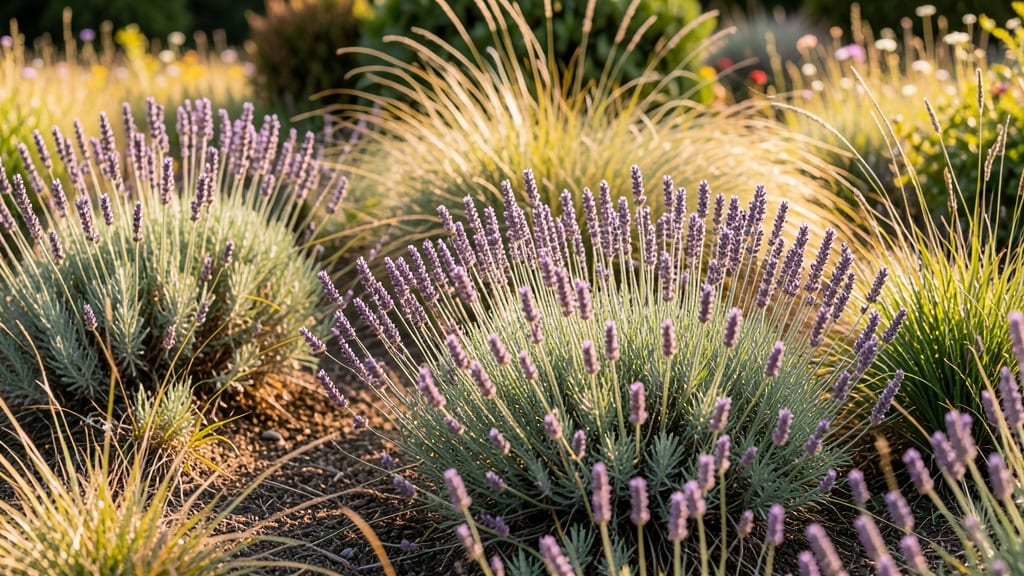
Want to add fragrance and color to your ornamental grass borders without extra watering? Lavender is the perfect partner—its silvery foliage and purple blooms create a soft, textured contrast while thriving in dry conditions. The aromatic blooms also repel pests like mosquitoes and aphids, making it a functional addition to any sunny garden bed.
Plant lavender along the edges of tall grasses like Feather Reed Grass or Miscanthus for a cottage-garden feel. Its compact growth (2-3 feet tall) stays neat without spreading, and it blooms from mid-summer to fall, extending your garden’s seasonal interest. For best results, place it in full sun with well-draining soil—once established, it requires almost no maintenance.
This pairing is ideal for beginner gardeners or those with low-water landscapes, offering beauty and practical benefits. The fragrant blooms will also attract bees and butterflies, turning your grassy borders into a pollinator haven. 🌿
Black Mondo Grass for Bold Edging
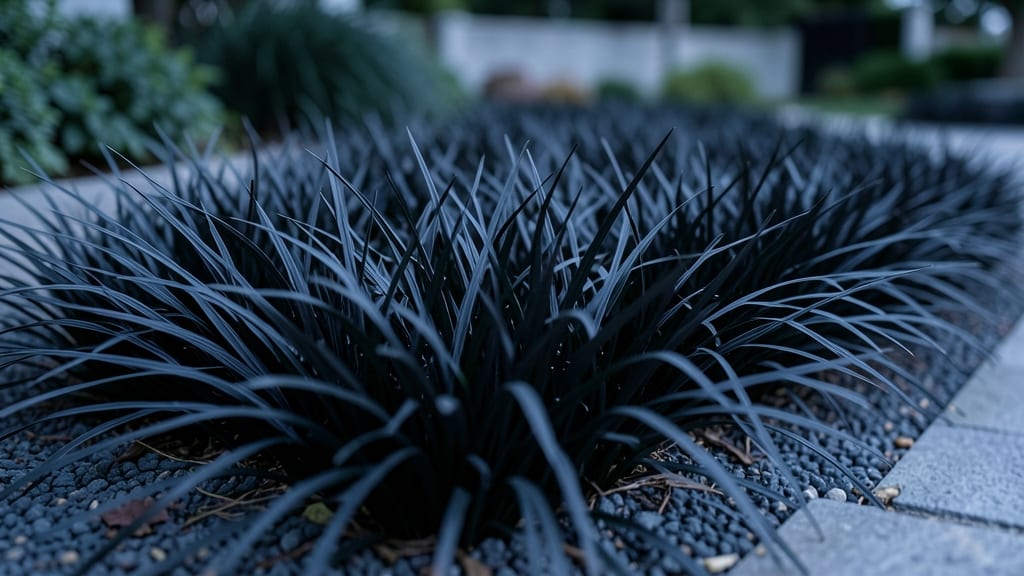
Looking for a dramatic, low-maintenance way to define garden edges? Black Mondo Grass (Ophiopogon planiscapus 'Nigrescens') delivers bold, velvety black foliage that creates sharp geometric lines—ideal for modern or Zen-inspired spaces.
This evergreen groundcover thrives in partial to full shade, making it perfect for pairing with light-colored grasses like Miscanthus or Pennisetum. Plant it in tight, 12-inch-wide rows to create crisp borders that contrast stunningly with feathery plumes. It’s also drought-tolerant once established, so it won’t demand extra watering.
Urban gardeners and minimalist designers will love how Black Mondo Grass adds structure without overwhelming other plants. Its year-round color ensures your garden stays striking in every season. ✨
Russian Sage for Airy Blue-Purple Spikes
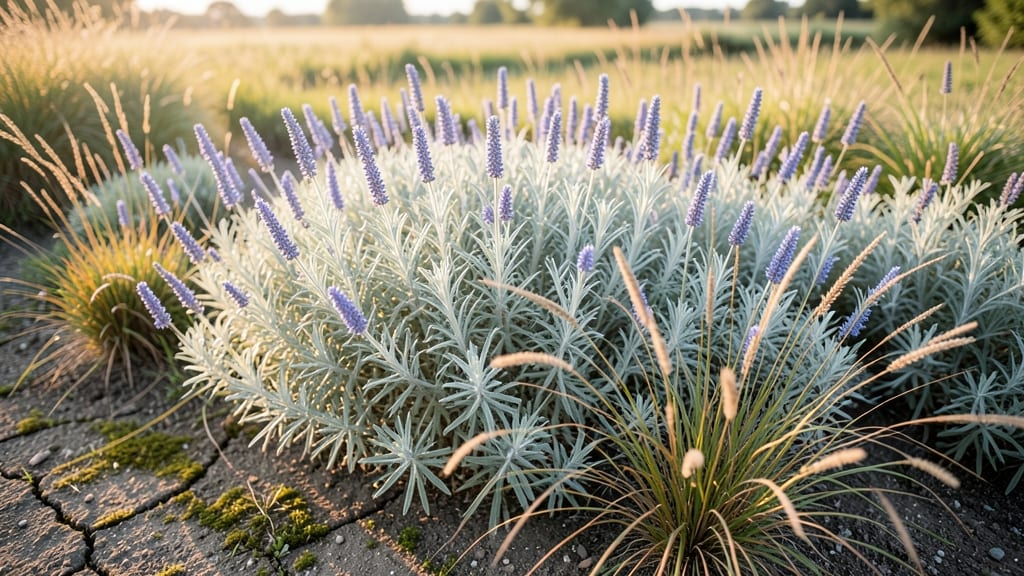
Looking for a low-maintenance perennial that thrives in poor soil while adding ethereal blue-purple spikes to your garden? Russian sage (Perovskia atriplicifolia) is the answer—its airy, silvery foliage and fragrant lavender-blue blooms create a dreamy contrast against grasses like Switchgrass or Blue Fescue. Unlike fussy plants, it tolerates drought, heat, and even rocky soil, making it perfect for sunny, challenging spots.
This late-summer bloomer (July through October) extends your garden’s seasonal interest when many perennials fade. Plant it in full sun for the best blooms, and let it reach 3-5 feet tall to complement taller grasses. Its delicate, wispy stems sway in the breeze, adding movement and texture to borders or meadow-style plantings. Prune back in early spring to encourage fresh growth.
Ideal for xeriscapes, pollinator gardens, and modern landscapes, Russian sage brings effortless elegance. Pair it with grasses like Prairie Dropseed for a soft, natural look—your garden will glow with late-summer color with almost no effort. ✨
Heuchera for Colorful Leaf Texture
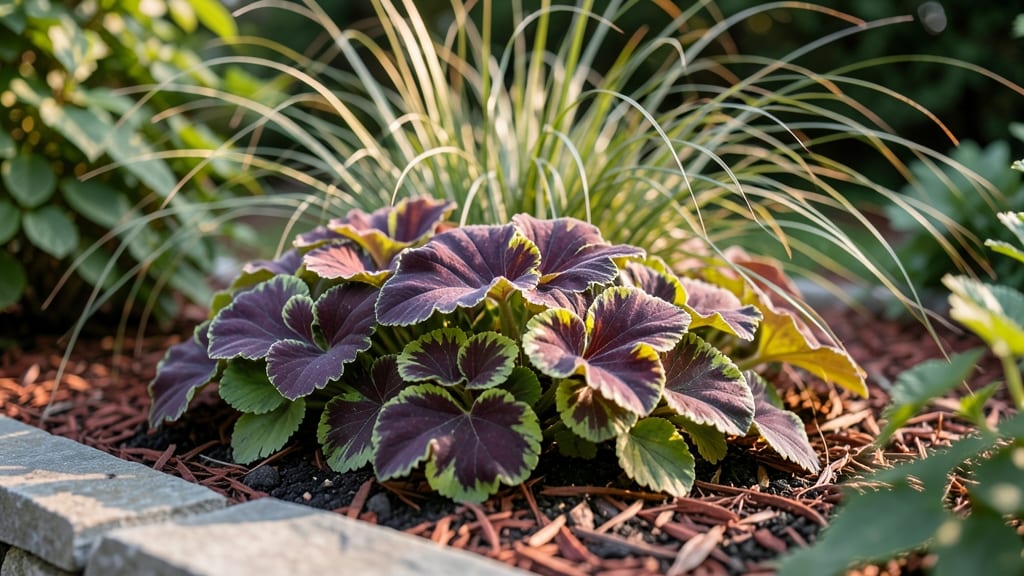
Want to add year-round color to your garden without relying on flowers? Heuchera, or coral bells, delivers velvety foliage in shades of deep purple, lime green, or even silver—perfect for creating a living tapestry beneath ornamental grasses.
These shade-loving perennials thrive in partial to full shade, making them ideal for pairing with taller grasses like Feather Reed Grass or Maiden Grass. Plant them in clusters at the base of grasses (12-18 inches apart) to create a multi-layered effect that adds depth and texture. Heuchera’s low-growing habit (6-12 inches tall) ensures it won’t compete with grasses while providing a striking contrast in color and form.
Perfect for woodland gardens, container plantings, or shady borders, Heuchera brings seasonal interest with minimal care. Its evergreen leaves stay vibrant even in winter, making it a standout choice for gardeners who love textural contrast and low-maintenance beauty. 🌿
Sedum for Succulent Summer Interest
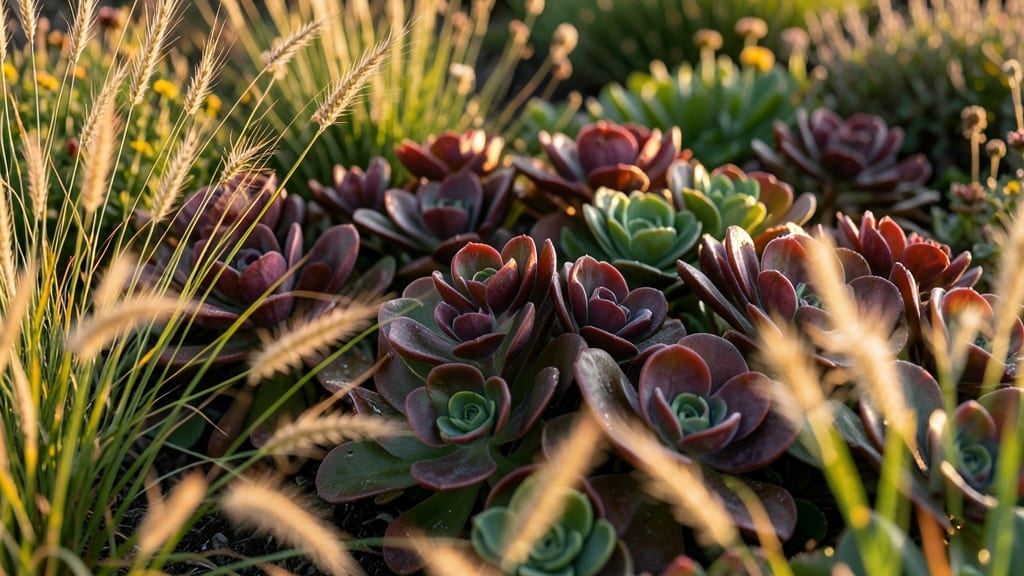
When your garden starts to look tired in late summer, sedum steps in to save the day with its plump, juicy foliage that glows in shades of green, purple, or even deep burgundy. Unlike many perennials that fade as temperatures rise, sedum thrives in the heat and drought, making it the perfect late-season companion for ornamental grasses like Little Bluestem or Switchgrass. Its succulent leaves add architectural contrast, while its ability to store water makes it ideal for water-wise gardens.
Plant sedum in full sun with well-draining soil—it handles rocky or sandy conditions with ease—and let it spread naturally to create a lush, low-growing carpet. Varieties like 'Autumn Joy' or 'Dragon’s Blood' offer striking foliage that turns even more vibrant as fall approaches. Pair it with grasses that have upright plumes, like Feather Reed Grass, to create a dynamic, textured display that keeps your garden vibrant well into autumn.
This pairing is a game-changer for xeriscapes, rock gardens, and pollinator-friendly spaces, offering both beauty and resilience. With almost no maintenance required, sedum ensures your garden stays lively long after other plants have faded. 💪
Catmint for Long-Blooming Purple Blooms
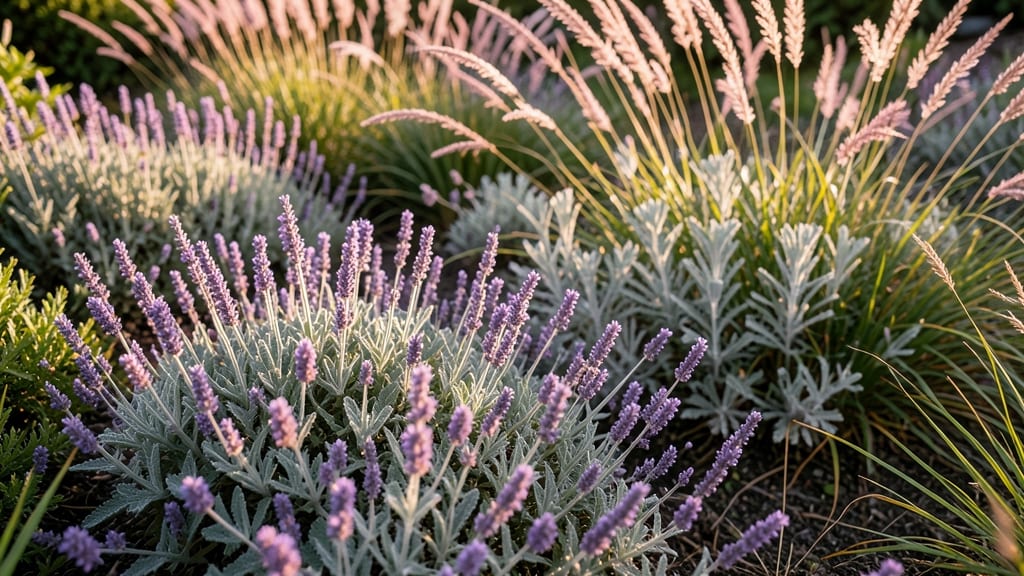
Tired of summer color fading before fall arrives? Catmint (Nepeta) keeps blooming from early summer straight through frost, creating a purple haze that pairs beautifully with ornamental grasses like Pink Muhly (Muhlenbergia capillaris). Its fragrant lavender flowers and silvery foliage add texture while naturally repelling pests like rabbits and deer—no fences or sprays required.
This drought-tolerant workhorse thrives in full sun to partial shade, making it perfect for sunny borders or cottage gardens. Plant it in clusters of 3-5 plants spaced 18-24 inches apart, letting the 2-3 foot tall blooms mingle with grasses like Maiden Grass (Miscanthus sinensis) for a soft, airy look. Deadhead spent blooms in early fall to encourage a second flush of flowers before winter.
Ideal for pollinator gardens and low-maintenance borders, catmint’s long bloom time ensures your garden stays vibrant when other perennials fade. Pair it with grasses like Blue Fescue for a striking contrast that’s as tough as it is beautiful. 🌻
Yarrow for Golden Summer Accents
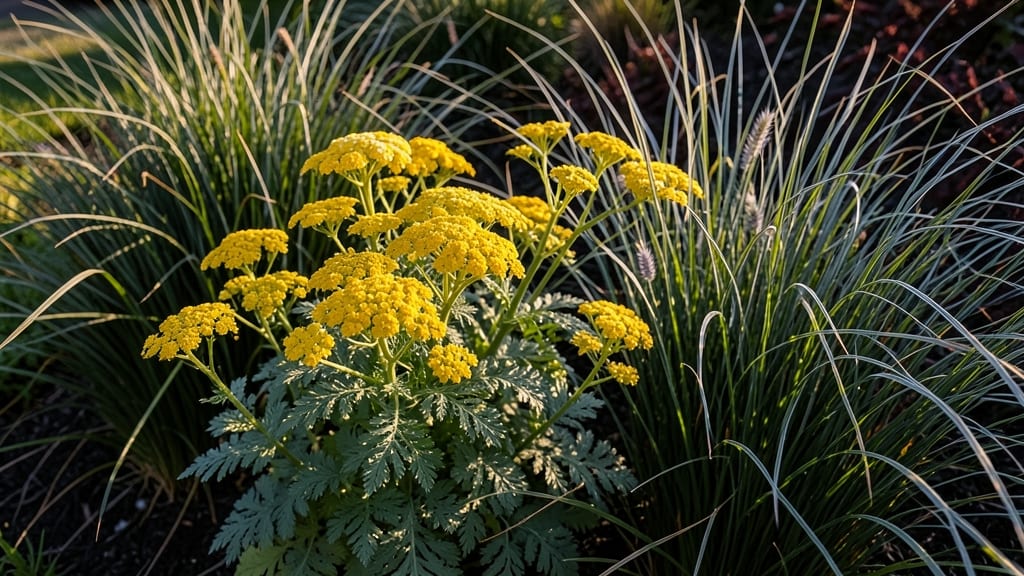
Need a sunny-season standout that pairs beautifully with dark ornamental grasses? Yarrow (Achillea millefolium) delivers golden-yellow blooms that pop against silvery or deep-green grasses like Japanese Silver Grass. Its fern-like foliage adds delicate texture, while flat-topped flower clusters create a soft, airy contrast that brightens borders from mid-summer to fall.
Beyond its visual appeal, yarrow’s medicinal properties make it a natural pest deterrent—its strong scent repels aphids, rabbits, and even deer, protecting nearby plants without chemicals. Plant it in full sun with well-draining soil, and let it self-seed for easy propagation. Deadhead spent blooms to encourage more flowers, and watch as it thrives in dry conditions once established.
Perfect for pollinator gardens and low-maintenance borders, yarrow’s golden accents elevate any grassy planting while keeping pests at bay. Add it to your summer garden for effortless color and natural protection. 🌻
Hostas for Shady Garden Pairings
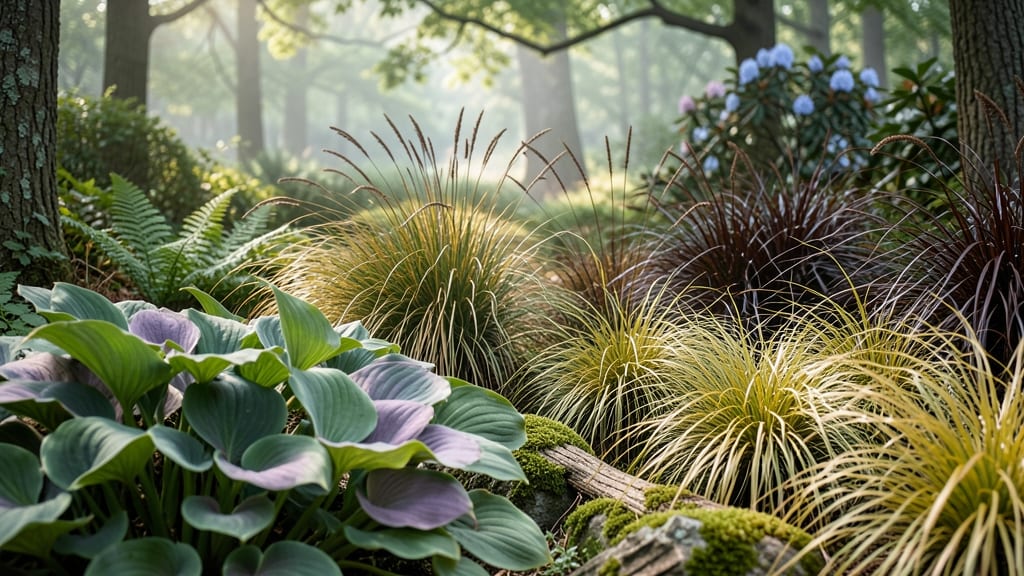
Struggling to make your shady garden feel lush and dynamic? Hostas and ornamental grasses like Carex or Hakonechloa are the perfect duo for woodland-inspired spaces. Hostas provide dense, velvety foliage that thrives in low light, while grasses add movement and height—creating a layered, textured look that feels alive even in the quietest corners of your yard.
Plant hostas in clusters around Carex or Hakonechloa for a natural, flowing transition between ground and sky. Their contrasting textures—hostas' broad leaves versus grasses' feathery plumes—add depth without needing bright sunlight. Mulch with shredded bark to retain moisture and suppress weeds, as both plants prefer consistently moist soil. For extra drama, choose hosta varieties with variegated foliage, like 'Blue Angel' or 'Francee,' to complement the soft greens of ornamental grasses.
This pairing is ideal for woodland gardeners or those with shady borders who want year-round interest. The combination stays vibrant through all seasons, offering a serene, low-maintenance solution for tricky low-light areas. 🌿
Salvia for Vertical Blue-Purple Drama
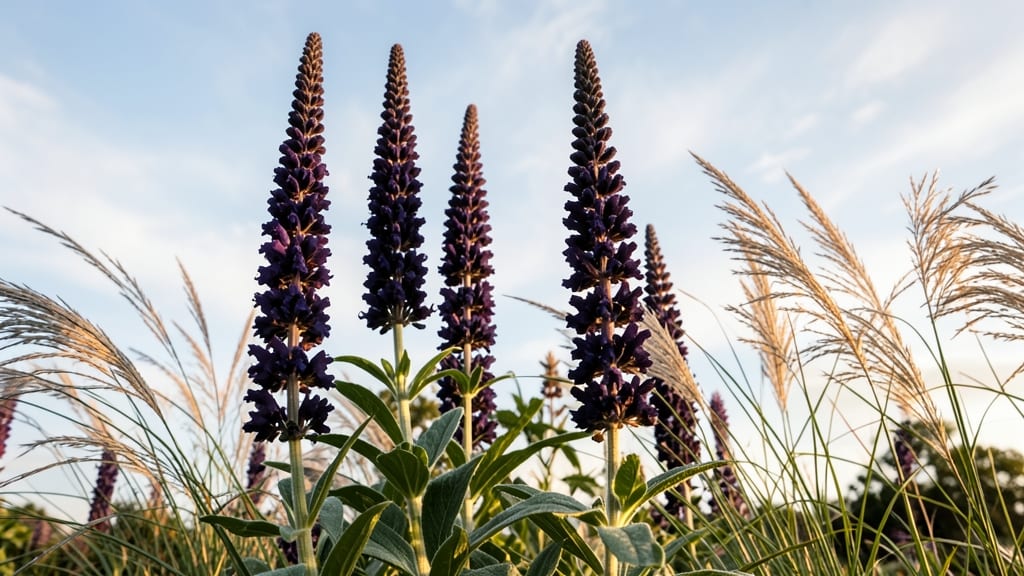
Craving a garden that pops with vertical drama and hummingbird action without the fuss? Salvia varieties like May Night or Victoria deliver towering spikes of deep purple blooms that rise above grasses like Pampas Grass or Miscanthus, creating a striking focal point. These drought-loving perennials thrive in hot, dry conditions where many plants wilt, making them perfect for sunny borders or modern landscapes.
Plant salvia in full sun (at least 6 hours daily) with well-draining soil, and watch it reach 3-5 feet tall—ideal for framing taller grasses. Deadhead spent blooms to encourage continuous flowering from late spring to fall, and you’ll attract hummingbirds by the dozen. For a bold contrast, pair it with silver-blue grasses like Blue Fescue or Little Bluestem.
This pairing is a game-changer for urban gardens or xeriscapes, offering year-round structure with minimal upkeep. The vertical height adds depth to small spaces, while the pollinator magnet benefits make it a must-have for eco-friendly gardens. 🌻
Ferns for Soft Green Contrast
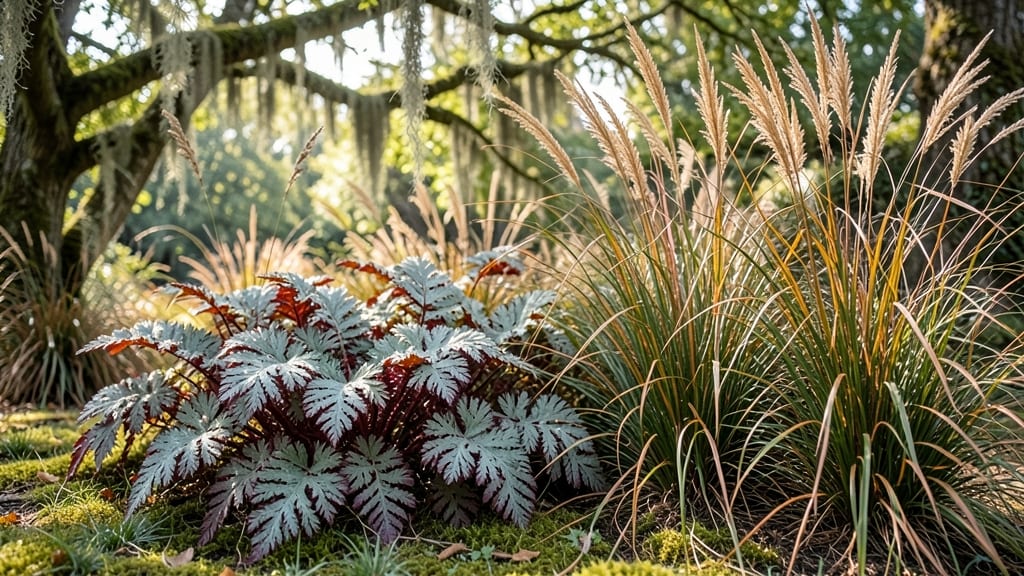
Want to create a whimsical, woodland-inspired garden that feels lush and inviting? Delicate ferns like the Japanese Painted Fern (Athyrium niponicum var. pictum) are the secret weapon—their frilly, lace-like foliage softens the bold lines of ornamental grasses like Stipa or Panicum, adding a dreamy contrast that feels like a secret garden.
These ferns thrive in partial to full shade, making them perfect for pairing with grasses that prefer similar conditions. Plant them in moist but well-draining soil—they tolerate seasonal moisture fluctuations better than most plants, so they’re ideal for woodland gardens or shaded borders. For best results, group them in clusters of 3-5 plants around taller grasses to create a natural, layered look that moves with the breeze.
Woodland gardeners and shade-lovers will adore how ferns add year-round interest—their silvery-green fronds turn bronze in fall, providing seasonal color without extra effort. This pairing is especially magical in container gardens or small spaces where you want texture without overwhelming height. 🌿