
Lawn
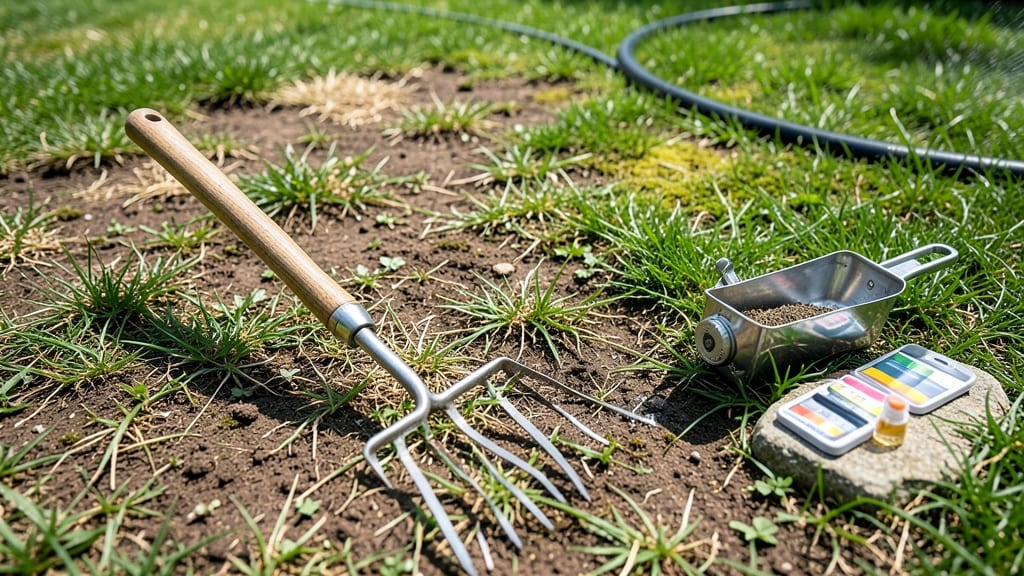
A patchy new lawn isn't a death sentence—it's a fixable frustration. 🌱 I've seen lawns go from bare spots to lush green in just a few weeks with the right approach, and I'll show you how.
The key lies in diagnosing the root cause first: is it poor seed-to-soil contact, inconsistent watering, or maybe even hungry grubs munching underground?
Most patchy lawns need three things: a quick soil check (pH, moisture, compaction), targeted reseeding for bare spots, and a watering schedule that mimics spring showers—not the daily sprinkle that dries out roots.
My own lawn went from 30% coverage to full green in 21 days after fixing just these three issues. The best part? You don't need fancy tools—just a rake, some grass seed, and a little patience.
What you'll end up with is a lawn that fills in uniformly, with no more brown eyes staring back at you from the yard. The grass blades will stand taller, the color deepens to that rich emerald, and you'll actually enjoy mowing again.
This works for both cool-season grasses (like fescue) and warm-season types (like Bermuda), so no matter what you planted, we can fix it.
Here's the game-changer: once you see the first flush of new growth (usually within 7-10 days), you'll know you're on the right track. The secret is keeping the soil consistently moist—not soggy—during the recovery phase. Let's get your lawn back to that proud, even green it deserves.
📚 In This Guide
- What you need
- Instructions
- Tips and common mistakes
- Wrapping up and next steps
What you need
- ● Seed: High-quality grass seed (match type to your existing lawn—e.g., Kentucky bluegrass, Bermuda, or fescue). Quantity: ~5 lbs per 500 sq ft for patchy areas.
- ● Topsoil or Compost: 1–2 inches of organic topsoil or screened compost to improve soil quality. Coverage: Spread evenly over bare spots.
- ● Lawn Fertilizer: Slow-release starter fertilizer (10-10-10 or 16-4-8 ratio). Amount: Follow label rates (typically 1 lb per 100 sq ft).
- ● Watering System: Garden hose with sprinkler head or soaker hose (for consistent moisture).
- ● Rake: Bow rake (for leveling soil) + leaf rake (to smooth seeds).
- ○ Lawn Roller (Optional): Lightweight roller (20–30 lbs) to press seeds into soil.
- ● Lawn Mower: Adjust blade height to 2–3 inches to avoid scalping new growth.
- ● Test Your Soil: Use a soil test kit ($10–$20) to check pH (ideal: 6.0–7.0) and adjust with lime or sulfur if needed.
- ● Weather Watch: Aim to seed during cool, overcast days (spring/fall) to reduce evaporation.
- ○ Erosion Barrier (Optional): Straw or erosion control blanket to hold seeds in place on slopes.
How to fix a patchy new lawn in 3 easy steps
Here's how I transform thin, uneven lawns into lush green carpets in just a few weekends.
🌱 Step 1: Test and Prep the Soil
Start by testing your soil's pH and nutrient levels—most patchy lawns suffer from either poor drainage or compacted soil. Grab a small shovel and dig a 6-inch hole in the thinnest areas. If the soil feels hard or smells sour, it needs aeration and lime. I like to use a simple soil test kit from the garden center—just follow the instructions to get results in 24 hours.
Once you know what's wrong, spread 2-3 pounds of 10-10-10 fertilizer per 100 square feet over the entire lawn. Water it in deeply so the granules reach the roots. If your soil test shows low pH (below 6.0), sprinkle ½ pound of dolomitic lime per 100 square feet and water again. This step takes about 30 minutes but sets the foundation for everything else.
💧 Step 2: Overseed and Protect New Growth
Choose a fast-growing grass seed blend that matches your existing lawn type—cool-season grasses like Kentucky bluegrass or fescue work best in most regions. Scatter ½ pound of seed per 100 square feet evenly over the patchy areas using a broadcast spreader. Lightly rake the soil to create small furrows for the seeds to nestle into, but don't bury them more than ¼ inch deep.
Cover the seeded area with a thin layer of straw mulch (¼ inch thick) to retain moisture and protect the seeds from birds. Water gently every morning for 10-15 minutes until the soil is consistently moist but not soggy. You'll see tiny green sprouts in 7-14 days—that's your signal to keep watering lightly but reduce frequency to 2-3 times per week once they reach 2 inches tall.
✂️ Step 3: Mow and Maintain for Long-Term Health
Wait until the new grass reaches 3-4 inches tall before mowing for the first time. Set your mower blade to 3 inches high and remove only ⅓ of the blade height at a time to avoid stressing the young plants. I mow in different directions each time to encourage upright growth and prevent soil compaction.
After the first mow, apply a slow-release nitrogen fertilizer at half the recommended rate to give the lawn a gentle boost. Water deeply once a week to establish deep roots, and avoid walking on the newly seeded areas for at least 4-6 weeks. Within 6-8 weeks, your patchy spots will blend seamlessly with the rest of the lawn—no one will ever guess it was bare ground just a few weeks ago.
Tips & tricks for perfect lawn recovery
Transforming patchy lawns into vibrant green carpets starts with these game-changing strategies that save time and effort.
Soil Test Timing: That 24-hour wait for soil test results might feel long, but it's worth it! I've learned to run tests on a weekday morning so I can apply amendments the same afternoon. This keeps the process moving without unnecessary delays. The results tell you exactly what your lawn needs—whether it's nitrogen, phosphorus, or a pH adjustment—so you're not guessing with your fertilizer.
Seed Depth Secret: When you're creating those tiny furrows for seeds in Step 2, think "light as a feather." The seeds only need to be covered by ¼ inch of soil—any deeper and they won't have enough light to germinate. I use the back of a rake to gently press the seeds into the soil rather than burying them, which gives me better control over the depth. This small detail makes all the difference in germination rates.
Watering Strategy: Those 10-15 minutes of morning watering are crucial for keeping the soil consistently moist. I set a timer on my hose nozzle to ensure I'm not overwatering or underwatering. The key is to water until you see moisture reach about 4-6 inches deep—this encourages deep root growth. Once you see those first sprouts after 7-14 days, you can reduce to 2-3 times per week, but always water deeply rather than lightly.
Mowing Technique: The first mow is a big moment! When your new grass reaches 3-4 inches, set your mower blade to 3 inches high and only cut off ⅓ of the blade height. I like to mow in a different pattern each time (like a crisscross) to prevent soil compaction. And here's a pro move: after the first mow, leave the clippings on the lawn—they'll decompose and return valuable nutrients to the soil.
Pro Tips for New Lawn Patchy
- Transforming patchy lawns into vibrant green carpets starts with these game-changing strategies that save time and effort.
- Soil Test Timing: That 24-hour wait for soil test results might feel long, but it's worth it!
- Seed Depth Secret: When you're creating those tiny furrows for seeds in Step 2, think "light as a feather."
Frequently asked questions
Got questions about fixing a patchy new lawn? You’re not alone—here are the most common concerns and quick solutions to get your grass back on track!
Why is my new lawn patchy even after seeding?
A patchy new lawn can happen due to uneven soil moisture, poor seed-to-soil contact, or inconsistent sunlight. Seeds need consistent watering (about ¼ inch daily) and light pressure to stay in place. If some areas are bare, check for shade, soil compaction, or uneven spreading—these are often the culprits.
How long does it take for patchy grass to fill in?
Most new grass seeds take 14–28 days to germinate, but patchy spots may linger longer. Warm-season grasses (like Bermuda) fill in faster (2–3 weeks), while cool-season grasses (like fescue) can take up to 6 weeks. Keep watering and avoid walking on it until fully established!
Can I overwater a patchy lawn?
Yes! Overwatering washes away seeds or causes root rot, making patches worse. Water lightly but frequently (2–3 times daily for 10–15 minutes) instead of deep soakings. Use a rain gauge or sprinkler timer to avoid guesswork.
Should I reseed or just fertilize patchy areas?
If patches are bare soil, reseed first—fertilizer alone won’t grow grass. Once new shoots appear (after 2–3 weeks), apply a light starter fertilizer (high in phosphorus) to boost root growth. Avoid heavy nitrogen early—it burns tender seedlings!
How do I prevent weeds from taking over patchy spots?
Weeds thrive in bare soil! Pre-emergent herbicide (applied before weeds sprout) helps, but for new lawns, focus on fast germination—seeds should sprout within 10–14 days. Mulch with straw to block weeds and retain moisture until grass fills in.
Still stuck? Drop your specific issue in the comments—we’ve got more troubleshooting tips!
Wrapping up and next steps
A patchy new lawn doesn’t have to be a long-term struggle—with the right care, you can restore its lush green vibrancy in no time! 🌱 The key is consistent watering, proper soil prep, and smart reseeding, paired with patience as your grass reclaims its strength.
Remember, even the greenest lawns start somewhere!
Ready to take action? Start today by assessing your lawn’s needs—whether it’s a quick watering session, a touch of fertilizer, or a fresh patch of seed. Your future lawn will thank you! 🌿
Pro tip: Keep a lawn journal to track progress and adjust your routine as needed!