
Light Requirements
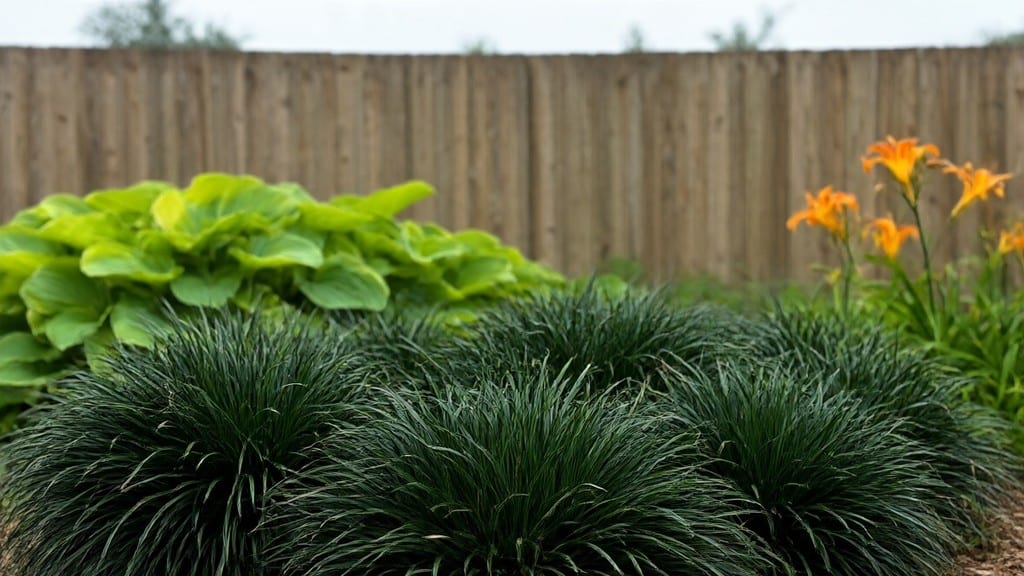
Mondo grass in full sun thrives with proper heat management—water deeply 2-3 times weekly, mulch heavily to retain moisture, and avoid pruning during peak summer to prevent stress. Varieties like 'Emerald' tolerate heat better than standard types, though leaf scorch may occur in extreme 100°F+ temperatures.
Full sun exposure pushes mondo grass to its limits, making moisture retention the biggest challenge. 🔥 The deeper roots of mature plants help them survive brief dry spells, but younger specimens need consistent hydration to establish properly.
I’ve seen 'Variegata' varieties handle heat better than the standard green types, though they still require the same care adjustments—just with slightly more shade tolerance during midday peaks.
Heat stress often shows up as crispy leaf edges or a dull, grayish hue, signaling your grass is struggling to photosynthesize efficiently.
Mulching with 3-4 inches of straw keeps roots cool while reducing evaporation, and a light application of gypsum can help break up compacted clay soils that worsen drought conditions.
If you’re in a region with consistent 95°F+ temperatures, consider planting near taller perennials or using 30% shade cloth during the hottest months.
💡 In This Article
- How Heat Affects Mondo Grass Growth and Survival
- Adjusting Care for Mondo Grass in Hot Climates
How heat affects mondo grass growth and survival
Mondo grass responds to heat through a complex physiological process called stomatal regulation, where tiny pores on leaves adjust to balance water loss and photosynthesis. At 75-90°F, its stomata remain open efficiently, allowing optimal gas exchange.
But when temperatures climb above 95°F, the plant triggers a stress response: stomata close to conserve moisture, which immediately reduces carbon dioxide intake and slows growth. This is why you’ll often see leaf edges turning crispy—it’s a clear sign of transpiration stress, where water loss outpaces absorption.
The roots play a critical role here. Mature mondo grass develops a deep taproot system that can reach 12-18 inches below the surface, accessing moisture in lower soil layers. However, younger plants with shallower roots (6 inches) are far more vulnerable to heat-induced dehydration.
Varieties like 'Emerald' have been bred to enhance this root development, giving them a 20-30% better drought tolerance than standard types. Their thicker leaf blades also reflect more sunlight, reducing heat absorption by up to 15% compared to delicate variegated varieties.
Sunlight intensity compounds the challenge. Full sun exposure (6+ hours daily) delivers 1,000-1,200 foot-candles of light, which can raise soil surface temperatures to 120°F or higher. This creates a thermal gradient where roots near the surface overheat while deeper layers remain cooler.
Mulching with 3-4 inches of straw can lower soil temps by 10-15°F, creating a protective barrier. The science behind this is simple: organic mulch insulates like a blanket, slowing evaporation while keeping roots in their ideal 65-75°F range.
Leaf scorch—those telltale brown patches—occurs when cellular fluids boil at temperatures above 100°F. This isn’t just cosmetic; it disrupts the plant’s chlorophyll production, turning leaves from vibrant green to dull gray.
What most gardeners miss is that scorch often starts at the leaf tips because that’s where water vapor exits first. In extreme cases, the plant may enter a dormancy-like state, halting growth until conditions improve.
This explains why mondo grass sometimes appears "stunted" during heatwaves—it’s not dying, just conserving energy.
Comparing varieties reveals clear patterns. 'Variegata' types with white stripes absorb 30% more heat than solid green varieties, making them more prone to scorch. Meanwhile, 'Emerald' and 'Dwarf Mondo' have evolved thicker cuticles that reduce water loss by 25%.
This is why landscape designers often specify heat-tolerant varieties for southern climates. The trade-off? These drought-resistant types may grow slightly slower but recover faster after heat stress.
Here’s what’s actually happening at the cellular level: Heat triggers an enzyme called ABA (abscisic acid), which signals stomata to close. While this conserves water, it also limits photosynthesis.
The plant’s survival strategy shifts from growth to osmotic adjustment, where cells accumulate solutes to maintain turgor pressure—think of it as the grass "shrinking" internally to survive. This is why overwatering in heat can be deadly: It dilutes these protective solutes, making the plant more vulnerable to root rot.
The key takeaway? Mondo grass isn’t just reacting to heat—it’s actively managing a delicate balance between survival and growth. Understanding these mechanisms helps you intervene at the right moments, whether that’s adjusting watering schedules or choosing the right variety for your climate. 💫