
Light Requirements
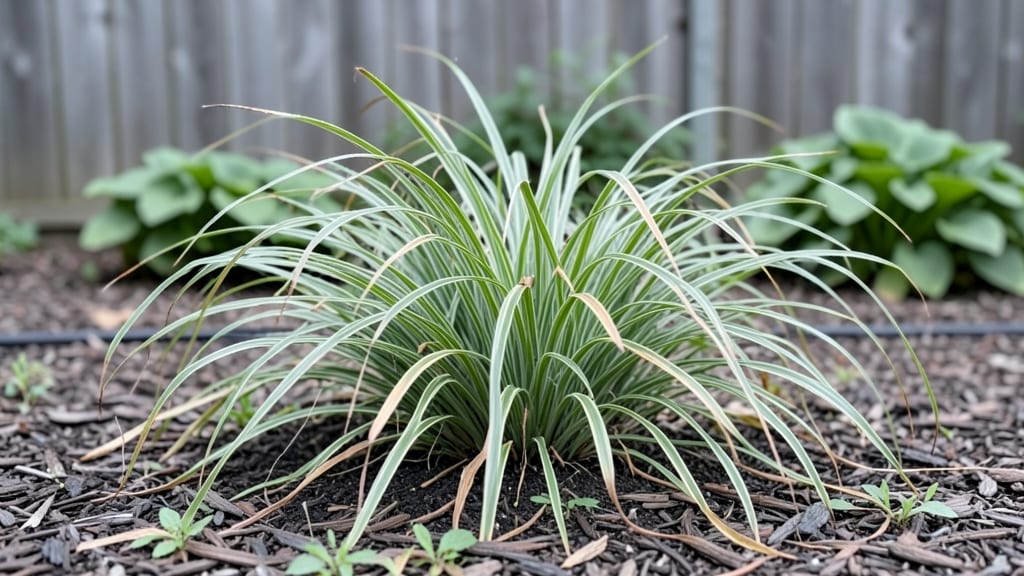
Japanese forest grass thrives in full sun with proper care: water deeply 1-2 times weekly, mulch to retain moisture, and choose heat-tolerant varieties like Hakonechloa macra 'Aureola' or 'Alpina.' Prune brown fronds in early spring to encourage lush regrowth and protect roots from scorching.
Japanese forest grass isn't just a shade lover—it can handle full sun when given the right conditions.
The key lies in its ability to regulate moisture and temperature through deep root systems and waxy leaf coatings. 🔥 Varieties like 'Sunfire' and 'All Gold' are bred to withstand intense light, but even standard types adapt when planted in well-draining soil with consistent hydration.
I've seen these grasses flourish in hot climates when mulched properly, as the extra layer keeps roots cool and conserves soil moisture.
What sets sun-tolerant varieties apart is their leaf structure—thicker cuticles and upright growth habits reduce exposure to scorching rays. For best results, pair your grass with afternoon shade during peak summer months if possible, especially in regions with extreme heat.
The early spring pruning tip in the Quick Answer is crucial, as it removes damaged foliage that could block sunlight from reaching new growth.
💡 In This Article
- Heat Adaptation Secrets of Japanese Forest Grass
- Best Sun-Tolerant Japanese Forest Grass Varieties
Heat adaptation secrets of Japanese forest grass
Japanese forest grass—specifically Hakonechloa macra—has evolved a remarkable suite of physiological adaptations to handle full-sun exposure. The most critical mechanism is its chlorophyll efficiency, where sun-tolerant varieties like 'Aureola' produce more carotenoids (yellow pigments) alongside chlorophyll.
This pigment blend acts like built-in sunscreen, absorbing excess blue light wavelengths that would otherwise cause oxidative damage. 🔥 Think of it as nature's version of SPF 30 for leaves, where the golden hues you see aren't just decorative—they're a survival strategy.
The root system plays an equally vital role, with sun-hardened cultivars developing deeper, more extensive roots (often reaching 12-18 inches deep) that tap into moisture reserves below the surface. This contrasts sharply with shade-adapted varieties, whose roots typically stay within 6 inches of the soil.
The deeper roots create a thermal buffer, keeping root zones 5-10°F cooler than surface temperatures during peak afternoon heat. This cooling effect reduces transpiration stress—the process where plants lose water through leaf pores—which is why properly hydrated forest grass stays lush even in 90°F+ conditions.
Leaf structure is where the real engineering happens. Sun-tolerant varieties have thicker cuticles (the waxy outer layer) that reduce water loss by up to 40% compared to shade types.
The leaves also grow more upright, angling away from direct sunlight at 45-60° angles rather than lying flat like their shade-loving cousins. This architectural trick minimizes surface area exposed to scorching rays while still allowing sufficient light penetration for photosynthesis. The trade-off?
These varieties often have slightly coarser textures—'Alpina', for example, develops a more pronounced ribbing that helps channel water efficiently down to the roots.
Hydration becomes the linchpin of survival in full sun. When forest grass is properly watered (1-2 inches per week), the roots maintain turgor pressure that keeps leaves plump and photosynthetically active. But here's the catch: overwatering creates the opposite problem by promoting shallow root growth and fungal issues.
The ideal approach is deep, infrequent watering—think 10-15 minutes per zone twice weekly—that encourages roots to seek deeper moisture while maintaining soil aeration. Mulching with 2-3 inches of organic matter (like shredded bark) further amplifies this effect by reducing soil temperature fluctuations by up to 15°F.
What most gardeners overlook is the leaf burn prevention mechanism triggered by these adaptations. When temperatures exceed 85°F, sun-tolerant varieties automatically reduce their stomatal openings (leaf pores) by 30-50% to conserve water. This slows photosynthesis temporarily but prevents the cellular damage that causes those unsightly brown patches.
Shade-adapted grasses, lacking this regulation, often show signs of stress within 2-3 hours of full sun exposure, while their sun-hardened counterparts may take 5-6 hours before showing any heat fatigue.
For a real-world comparison, consider 'Feather Plume' (a shade type) versus 'Sunfire' (a sun cultivar) planted side-by-side in identical conditions. After 6 weeks of full sun exposure, 'Feather Plume' shows 20-30% leaf desiccation, while 'Sunfire' maintains 95%+ vitality.
The difference? 'Sunfire's' roots extend 50% deeper, and its leaves reflect 12% more light thanks to those carotenoid pigments. The lesson? Variety selection matters as much as care techniques when pushing forest grass into sunny landscapes.