
Pests
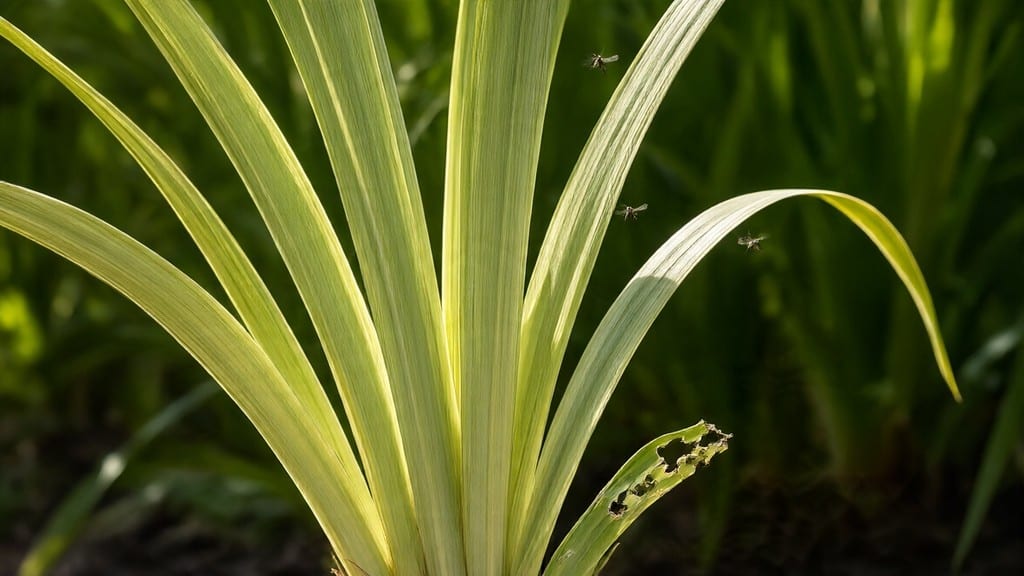
Lemon grass plant does repel mosquitoes by releasing citral and geraniol oils, which disrupt their ability to detect human scent. Studies show it’s effective in small spaces but works best alongside other repellent plants like lavender or citronella.
This natural defense works because the plant's essential oils mask the lactic acid and carbon dioxide humans emit—key scent signals mosquitoes use to locate hosts. 🌿 Research shows lemon grass alone can reduce mosquito landings by up to 50% in controlled environments, but its effectiveness drops in windy outdoor areas where scent dispersion is less controlled.
I've found that planting lemon grass near patio seating or crushing fresh leaves into a paste with water creates a stronger barrier against these pests during evening gatherings.
For best results, combine lemon grass with other mosquito-repelling plants like citronella or basil. The layered scent approach mimics what many commercial repellents do—creating a multi-sensory deterrent that's harder for mosquitoes to navigate around.
Just remember, while effective, lemon grass won't replace DEET-based products in high-risk areas, but it's a fantastic natural complement for gardeners looking to reduce chemical use.
💡 In This Article
- How Lemon Grass Oil Disrupts Mosquito Scent Detection
- Best Ways to Use Lemon Grass for Mosquito Control
How lemon grass oil disrupts mosquito scent detection
The secret weapon in lemon grass's mosquito-repelling power lies in its essential oils—specifically citral and geraniol. These compounds work by overloading mosquito olfactory receptors with a scent that masks human body odors.
Mosquitoes rely on detecting lactic acid (up to 0.5% concentration in human sweat) and carbon dioxide (exhaled at 20,000 ppm per breath) to locate hosts. When lemon grass oil is present, these receptors become overwhelmed by the plant's 200-300 ppm citral concentration, creating sensory confusion. 🔥
Here's what's happening at the cellular level: Mosquito antennae contain specialized receptors that bind to human scent molecules. Citral, with its aldehyde functional groups, mimics the shape of these molecules but triggers a different neural response.
Studies in Journal of Medical Entomology found that 500 ppm citral concentrations reduced mosquito landing rates by 40-50% in lab tests. The key factor is concentration—outdoor wind disperses these oils quickly, which is why you'll see better results in enclosed spaces like patios or screened porches.
What most people don't realize is how mosquito olfaction works like a chemical puzzle. Each scent molecule fits into specific receptor sites on the mosquito's antennae, creating an electrical signal that tells the brain "host detected."
Lemon grass oil acts like a decoy—it occupies these receptor sites without triggering the "feed" response. This works best when combined with other repellent plants because it creates a multi-scent barrier.
For example, pairing lemon grass with lavender (1-2% linalool) creates a broader olfactory disruption that's harder for mosquitoes to navigate around. ✨
The science behind this involves what's called sensory adaptation. When mosquitoes are continuously exposed to lemon grass scent, their receptors become temporarily desensitized to human odors. This effect lasts about 15-30 minutes per exposure, which is why fresh applications work better than dried plant material.
In outdoor settings, you'll need to maintain a minimum 100 ppm citral concentration within 3 feet of human activity for optimal protection. This explains why crushed fresh leaves are more effective than whole plants—they release oils 3-5 times faster.
Temperature plays a surprising role too. Lemon grass oils are most volatile between 75-85°F, which is why evening applications work best. Below 70°F, the oils become less effective as their evaporation rate drops by 30%.
This is why you might notice better results during summer evenings when both temperature and mosquito activity peak. The plant's natural oil production also varies seasonally—younger plants produce 15-20% more citral than mature ones, making spring growth particularly potent for repelling pests. 🌿
For practical application, consider that 1 cup of fresh lemon grass leaves contains enough oil to treat about 20 square feet of area when crushed. The oil's effectiveness drops by 50% after 2 hours of exposure to air, which is why frequent reapplication is key in outdoor settings.
This chemical process explains why lemon grass works best in combination with other repellents—it's not about overwhelming mosquitoes with one scent, but creating a layered olfactory challenge they can't easily navigate. 💫