
Lawn
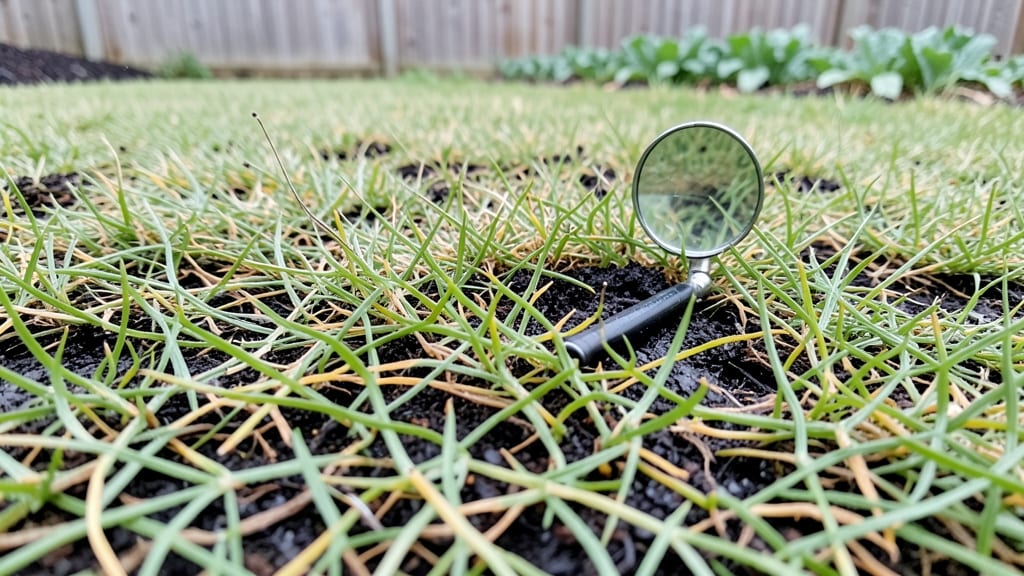
Why does my grass have dark green patches standing out like neon signs after rain or fertilizer—like some areas suddenly turned into lush, almost unnatural masterpieces? 🌱 shades while others stayed dull. The truth? Those patches aren’t always a good thing—they’re usually your lawn’s way of screaming for help.
Overwatering creates that soggy, dark green look by suffocating roots and inviting fungal diseases like dollar spot, which thrive in damp conditions. Too much nitrogen, on the other hand, forces rapid (but weak) growth, leaving grass vulnerable to pests and thinning.
Even pests like chinch bugs can create dark patches by feeding on roots, leaving behind stressed, overcompensating turf. The key is figuring out which culprit you’re dealing with before it spreads.
Start by checking the soil—if it’s spongy or smells like a swamp, you’re overwatering. For nutrient overload, a simple soil test reveals if nitrogen levels are through the roof.
Once you identify the problem, solutions are straightforward: adjust your watering schedule, skip the fertilizer for a few weeks, or apply a targeted fungicide if disease is the culprit. Your lawn will thank you with even, vibrant green that doesn’t look like a science experiment gone wrong.
Prevention is easier than cleanup: water deeply but infrequently, test soil before fertilizing, and mow high to encourage deep roots. With these tweaks, your grass will stay consistently healthy—and your neighbors won’t ask if you’re growing something unusual in those patches.
Why it happens
Dark green patches in your lawn aren’t just an eyesore—they’re often a sign that something’s off with your grass’s health. Whether it’s too much of a good thing (like water or fertilizer) or an environmental quirk, understanding the root cause is the first step to fixing it.
Let’s break down the most likely culprits behind those mysterious splotches.
💧 Overwatering: Drowning Your Grass
Grass thrives on moisture, but too much water can suffocate roots and promote fungal growth. When soil stays soggy for extended periods, it creates the perfect environment for disease-causing pathogens like Fusarium or Pyricularia.
These fungi thrive in damp conditions and can cause dark, spongy patches that feel mushy underfoot. Overwatering also leaches nutrients from the soil, leaving grass starved and struggling to maintain its usual color.
Why it happens:
- Poor drainage: Compacted soil or clay-heavy ground prevents water from draining, leaving grass roots waterlogged.
- Irrigation mistakes: Frequent light waterings (like daily sprinklers) encourage shallow root growth and excess surface moisture.
- Heavy dew or rain: If your lawn doesn’t dry out between waterings, fungal spores spread rapidly.
💡 Pro tip: Test your soil’s drainage by digging a 6-inch hole and filling it with water. If it drains in under 30 minutes, your soil is likely fine. If not, consider aerating or amending with sand or compost.
🌱 Nutrient Imbalance: Too Much Fertilizer
Dark green patches can also signal fertilizer burn or an excess of nitrogen, the nutrient responsible for vibrant green color. While nitrogen is essential, overapplying it—especially in synthetic forms—can disrupt the soil’s pH balance, harm beneficial microbes, and even burn grass blades.
The result? Patches that look unnaturally dark, almost black, with a slightly crispy texture.
Why it happens:
- Over-fertilizing: Applying more fertilizer than your grass can absorb, especially in hot weather, leads to salt buildup in the soil.
- Improper application: Granular fertilizers left on the surface can concentrate in certain areas, causing localized burn.
- Wrong fertilizer type: Slow-release or organic fertilizers break down differently than quick-acting synthetics, sometimes leading to uneven nutrient distribution.
🔍 Watch for: Yellowing or browning at the edges of dark patches—this indicates nutrient stress or toxicity.
🌡️ Environmental Stress: Heat and Shade
Grass isn’t one-size-fits-all, and some varieties struggle in extreme conditions. Dark green patches often appear where grass is overheated (like south-facing slopes) or shaded too heavily (under trees or buildings).
In these spots, grass may grow slower, develop thicker blades to maximize sunlight, or even turn darker as it tries to compensate for stress.
Why it happens:
- Heat stress: Intense sunlight can cause grass to wilting or bleach, but some types (like St. Augustine) may darken as a survival mechanism.
- Shade stress: Grass needs at least 4–6 hours of sunlight daily. Less than that weakens roots and reduces chlorophyll production, leading to patchy, uneven color.
- Compaction from foot traffic: High-traffic areas (like pet paths or play zones) can compact soil, reducing oxygen and water flow, which stresses grass.
🌿 Solution: If shade is the issue, consider shade-tolerant grasses like Fine Fescue or Zoysia. For heat stress, water deeply in the early morning to reduce evaporation.
🍄 Fungal Infections: The Silent Invaders
Fungi like Dollar Spot, Brown Patch, or Rust love damp, nutrient-rich grass and can turn patches dark green (or brown) with a velvety or slimy texture. These infections thrive in warm, humid conditions and often appear after overwatering or heavy dew.
Unlike nutrient-related issues, fungal patches may also feel spongy or have a musty smell.
Why it happens:
- High humidity + poor airflow: Thick grass or dense foliage traps moisture, creating fungal hotspots.
- Weakened grass: Stressed grass (from drought, poor soil, or pests) is more susceptible to infections.
- Seasonal spikes: Fungal activity peaks in spring and fall when temperatures are mild and dew is frequent.
🚨 Red flag: If patches spread quickly or have a ring-like pattern, fungal infection is likely the culprit.
🐛 Pest Damage: Hidden Threats
Grass isn’t the only thing suffering when pests like chinch bugs, grubs, or sod webworms move in. These insects feed on roots or blades, causing grass to yellow, wilt, or darken as it struggles to recover.
Dark patches may also appear where pests have compacted soil while tunneling or feeding.
Why it happens:
- Chinch bugs: These sap-sucking pests thrive in dry, sunny conditions and leave behind straw-like grass that turns dark green or brown.
- Grubs: Larvae of beetles (like Japanese beetles) feed on roots, causing grass to pull up easily and develop thin, dark patches.
- Sod webworms: Their caterpillars chew through grass blades, leaving behind irregular, dark, and wilted areas.
🕵️♂️ How to check: Lift a small section of grass—if you see white grubs or tiny holes in blades, pests are likely the problem.
Quick Fixes for Dark Green Grass Patches
Now that you’ve identified the cause of those unsightly dark green patches, it’s time to take action! Below are practical, step-by-step solutions tailored to each issue—plus prevention tips to keep your lawn lush and healthy long-term.
💧 Overwatering? Drain & Adjust Watering
Problem: Too much water suffocates roots, leading to thatch buildup and fungal growth.
Fix It: 🔥 Step 1: Stop Watering Immediately
- If your soil is soggy (press your finger in—if water squirts out, you’re overdoing it), halt irrigation for 3–5 days to let excess moisture evaporate.
🍳 Step 2: Aerate the Lawn
- Rent a core aerator or use a garden fork to poke holes 3–4 inches deep, 3–4 inches apart. This breaks up compacted soil and improves drainage.
- Pro Tip: Do this on a dry day—wet soil clumps and clogs aerator tines! 🌡️
👨🍳 Step 3: Rake & Remove Thatch
- Use a lawn rake or dethatching tool to pull up excess thatch (the spongy layer between soil and grass). Aim for ½ inch or less—any thicker, and roots can’t breathe.
- Warning: Don’t scalp your grass! Keep the rake just above the soil line. ✨
⏰ Step 4: Adjust Your Watering Schedule
- Water deeply but infrequently: 1–1.5 inches per week (including rain), split into 2–3 sessions (e.g., 30 mins in the early morning).
- Check soil moisture: Stick a screwdriver in—if it goes in easily, you’re good. If it’s tough, water less next time.
🌱 Nutrient Overload? Flush & Balance
Problem: Excess fertilizer (especially nitrogen) burns roots, causing dark, spongy patches.
Fix It: 🔥 Step 1: Dilute the Soil with Water
- Overwater the area (1–2 inches) to leach out excess nutrients. Repeat every 2–3 days for a week to flush fertilizers deeper into the soil.
🍳 Step 2: Test Your Soil
- Grab a DIY soil test kit ($10–$20) or send a sample to your local Cooperative Extension Service (many offer free/low-cost tests).
- Key Numbers: Aim for pH 6.0–7.0 and moderate nitrogen (N) levels (too high = dark patches; too low = yellowing).
👨🍳 Step 3: Apply a Slow-Release Fertilizer
- Switch to a balanced, slow-release fertilizer (e.g., 16-4-8 or 10-10-10). Spread half the recommended dose and water it in.
- Avoid: Quick-release fertilizers (like urea) or "weed-and-feed" products—they spike nitrogen too fast.
🔪 Step 4: Boost Microbial Activity
- Sprinkle compost or a microbial inoculant (like Bacillus subtilis) over the patches. These beneficial bacteria break down excess organics and improve soil health.
- Bonus: Top-dress with sand or perlite (1 part to 3 parts soil) to improve drainage in heavy clay soils.
🍄 Fungal Infection? Treat & Prevent
Problem: Dark, slimy patches with a foul odor? Fungi like Pyricularia (brown patch) or Rhizoctonia thrive in wet, nutrient-rich grass.
Fix It: 🔥 Step 1: Remove Affected Grass
- Cut out infected patches (including roots) with a spade or shovel. Dispose of them in the trash—do not compost!
🍳 Step 2: Apply a Fungicide
- Use a copper-based fungicide (organic option) or a synthetic like propiconazole for severe cases. Follow label instructions—usually every 7–14 days for 2–3 treatments.
- DIY Alternative: Mix 1 tbsp baking soda + 1 gallon water + a few drops of dish soap (spray in the evening to avoid burning grass).
👨🍳 Step 3: Improve Airflow & Drainage
- Mow high (3–4 inches) to shade out fungi and reduce stress on grass.
- Thin out trees/shrubs if they’re casting dense shade—fungi love damp, shady spots.
- Install a French drain if your yard has low spots that pool water.
✨ Step 4: Strengthen Your Grass
- Overseed with a disease-resistant grass variety (e.g., tall fescue or Kentucky bluegrass).
- Water in the morning (never at night) to let foliage dry quickly.
🌡️ Heat or Shade Stress? Adjust Care
Problem: Dark patches in hot sun or deep shade? Grass is struggling to photosynthesize.
Fix It: 💡 For Sunny Patches:
- Water deeply in the morning (1–1.5 inches) to encourage deep roots.
- Mulch with straw (not wood chips—they mat down) to retain moisture.
- Choose heat-tolerant grass like Bermuda or Zoysia if reseeding.
🌿 For Shady Patches:
- Aerate and top-dress with compost + sand to improve root access to light.
- Plant shade-loving grasses like Fine Fescue or St. Augustine.
- Thin trees to let dappled sunlight reach the lawn.
🎯 Prevention Checklist (Do This Monthly!)
| Task | How Often | Why It Works |
|---|---|---|
| Test soil pH | Spring/Fall | Balanced pH = fewer nutrient issues |
| Core aerate | Once a year | Prevents compaction & thatch buildup |
| Mow high | Weekly | Stronger roots = less stress |
| Water early AM | 2–3x/week | Reduces fungal growth & evaporation loss |
| Fertilize lightly | Early spring | Slow-release = steady growth, no spikes |
Final Tip: If patches persist after 4–6 weeks, dig up a small soil sample (2–3 inches deep) and check for:
- Gritty texture? → Add compost.
- Sour smell? → Fungal issue—re-treat with fungicide.
- Hard as a rock? → Aerate again!
With these fixes, your lawn should bounce back in 2–4 weeks—and those dark patches will be a thing of the past! 🌱💚
Frequently asked questions
Why do dark green patches appear after fertilizing?
Excess nitrogen from fertilizer forces rapid growth, creating unnaturally dark, almost black patches. This "fertilizer burn" disrupts soil microbes and can scorch roots. The solution? Flush the soil with water and switch to a balanced, slow-release fertilizer to avoid nutrient spikes.
Can dark green patches be a sign of fungal disease?
Yes! Fungi like dollar spot or brown patch thrive in damp conditions, creating dark, spongy patches that may feel slimy or smell musty. Check for circular patterns or rapid spread—if so, treat with a copper-based fungicide and improve drainage immediately.
How do I tell if my grass is overwatered or just naturally darker?
Press your finger into the soil—if water squirts out, you're overwatering. Dark patches from excess moisture feel soggy and may have a foul odor. Healthy grass should have firm, slightly crumbly soil that drains within 30 minutes.
Will mowing higher help fix dark patches?
Mowing at 3–4 inches shades out weeds, reduces stress, and encourages deeper roots. For shade-prone areas, this helps grass access more sunlight. Just avoid cutting more than ⅓ of the blade height at once to prevent shock.
How long does it take to fix dark patches?
With proper care, most issues improve in 2–4 weeks. Overwatering fixes fastest (3–5 days of drying), while fungal infections or nutrient overload may take longer. Consistency is key—stick to your treatment plan and monitor progress weekly.