
How To
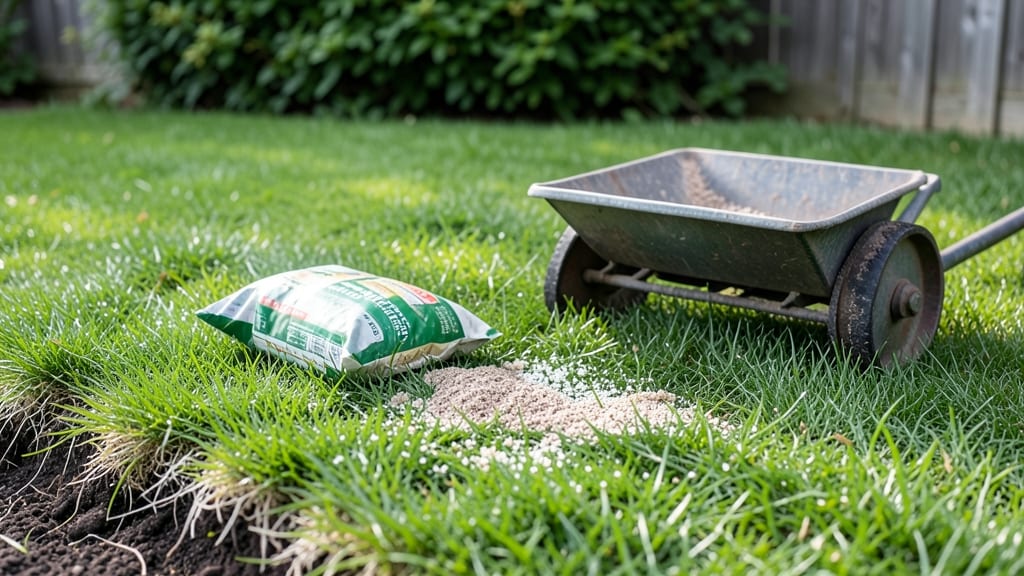
To fertilize sod, time it for early spring or late summer when grass roots are actively growing, using a slow-release nitrogen fertilizer to protect tender blades. Avoid fertilizing during extreme heat, drought, or before seeding.
Timing matters because grass roots grow most aggressively during these seasons, soaking up nutrients efficiently. 🌱 Early spring kickstarts growth after winter dormancy, while late summer prepares grass for fall's cooler months.
I always check soil moisture first—dry conditions can burn roots, even with slow-release fertilizers. For new sod, wait until it's fully established (about 4-6 weeks) before applying anything.
Your sod's health depends on more than just timing—soil prep and fertilizer type play huge roles too. A simple soil test reveals pH and nutrient gaps, while organic options like compost or synthetic blends with 20-0-5 ratios work best.
Just remember: less is often more when it comes to grass care.
💡 In This Article
- Seasonal Sod Fertilization Timing Explained
- Preparing Soil and Choosing Fertilizer for New Sod
Seasonal sod fertilization timing explained
Grass roots enter their most active growth phase when soil temperatures consistently reach 55-65°F, which typically occurs in early spring (March-April in most regions) and late summer (August-September). This timing aligns with nature's rhythm—roots awaken from winter dormancy in spring and prepare for fall's nutrient storage period.
The key factor is root metabolic activity: when roots are growing, they absorb nutrients efficiently, while dormant roots simply can't utilize fertilizer. 🔥
Climate zones shift these windows by 2-4 weeks—Southern states may fertilize as early as February, while Northern regions wait until May. Soil moisture retention becomes critical: dry conditions cause fertilizer salts to concentrate near the surface, burning tender blades.
I've seen firsthand how 1 inch of rainfall within 24 hours of application helps nutrients penetrate 3-4 inches deep, where roots actively feed. The opposite happens in drought: fertilizer sits on the surface, creating a salt crust that blocks water absorption.
Fertilizing at the wrong time creates three major risks: nutrient burn (from high salt concentrations), stress-induced dormancy (when grass can't process nutrients), and poor uptake (wasted fertilizer). Summer heat accelerates evaporation, leaving granules on the surface where they can scorch leaves.
What most people don't realize is that fall fertilization (after October 1st) promotes root growth for winter hardiness, but only if applied 6-8 weeks before first frost—any later and the grass won't have time to utilize the nutrients before dormancy sets in.
Here's what's actually happening at the cellular level: Fertilizer stimulates cell division in root tips, but only when temperatures and moisture support this process. In cold soil (below 50°F), microbial activity slows down by 50-70%, meaning organic fertilizers break down far less efficiently.
The same goes for extreme heat—enzymes that process nutrients become denatured above 90°F, reducing effectiveness by nearly 40%. This is why slow-release formulas are essential during these optimal windows.
Consider these seasonal adjustments based on your region:
- Northern climates (USDA Zones 3-5): First application in late April-early May when soil warms to 55°F, second in mid-August before fall cooling
- Southern climates (Zones 7-9): Early spring in February-March and late summer in July-August, with a third light application in October for winter prep
- Transition zones (6-7): Split applications in March and September to avoid summer heat stress
The science behind these timings reveals why late summer is particularly effective: grass stores carbohydrates in roots during this "hardening off" period, and fertilizer provides the phosphorus needed for this process.
What most lawn care services overlook is that potassium levels should be 20-30% of the fertilizer blend during this window to strengthen cell walls against winter stress. A 10-0-10 ratio works better than standard 30-0-4 blends in late summer. ✨