
Lawn
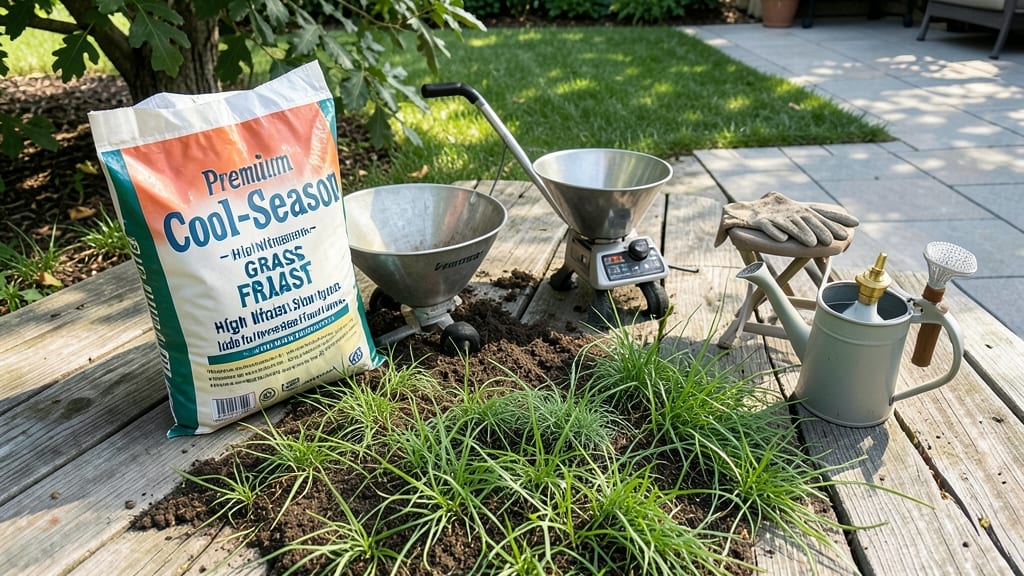
To fertilize an overseeded lawn, wait 6-8 weeks after seeding when new grass reaches 3-4 inches tall and is actively growing. Fall applications (late August to October) work best for cool-season grasses, while warm-season grasses need spring or early fall feeding after overseeding.
Timing matters because young grass needs time to establish strong roots before handling extra nutrients. 🌱 Cool-season grasses like Kentucky bluegrass thrive in fall's mild temperatures, while warm-season varieties such as Bermuda grass prefer spring feeding when soil warms up.
I've learned that fertilizing too early can burn tender seedlings, while waiting too long means missing the ideal growth window. For best results, always check your grass type and local climate patterns before scheduling applications.
Most gardeners overlook soil temperature as a key factor—cool-season grasses grow best when soil stays between 50-65°F, while warm-season types need 70-85°F for optimal nutrient uptake. This explains why fall works perfectly for northern climates but spring is better for southern regions.
I recommend testing soil moisture too—dry conditions can make fertilizer less effective, while overly wet soil may cause runoff.
💡 In This Article
- How Grass Type and Season Affect Fertilizer Timing
- Step-by-Step Fertilizer Schedule for Overseeded Lawns
How grass type and season affect fertilizer timing
Cool-season grasses like fescue and ryegrass enter their most active growth phase in early fall when temperatures drop to 50-65°F—this is why late August to October is ideal. Their biological clock triggers rapid root development during this period, allowing them to absorb nutrients efficiently.
Warm-season grasses such as Bermuda or Zoysia, however, remain dormant until soil temperatures rise above 70°F in spring, making early spring feeding critical for their recovery after overseeding. 🌱
The key difference lies in their dormancy cycles: cool-season types slow down in summer heat but thrive in fall's mild conditions, while warm-season varieties shut down in winter but explode with growth when spring arrives.
This explains why fertilizing cool-season grasses in fall provides a growth boost before winter, while warm-season types need spring feeding to kickstart their season. Soil temperature gauges (available at garden centers) can help you track these thresholds precisely.
Seasonal dormancy also affects fertilizer effectiveness. Cool-season grasses store nutrients in their roots during fall, which helps them survive winter—this is why a light application of 10-10-10 fertilizer (equal parts nitrogen, phosphorus, potassium) in early fall primes them for spring.
Warm-season grasses, meanwhile, need higher nitrogen levels (25-0-5) in spring to green up quickly after dormancy. The wrong timing can lead to fertilizer burn or wasted nutrients.
Regional climate plays a surprising role too. In northern states, fall fertilization aligns with natural rainfall patterns, reducing irrigation needs. Southern climates often see spring rains that wash away fertilizers, making slow-release formulas essential.
I've noticed that overseeded lawns in transition zones (like the Midwest) sometimes need both fall and spring feedings to accommodate both grass types growing simultaneously. 💫
What most people don't realize is how light intensity affects nutrient uptake. Cool-season grasses grow best with 10-12 hours of daylight, while warm-season types thrive with 14+ hours—this daylight difference explains why fall works for northern lawns but spring is better for southern ones.
The shorter days of late fall reduce evaporation, helping fertilizers stay active longer in the soil.
For best results, always match your fertilizer's nitrogen-to-phosphorus ratio to your grass type. Cool-season grasses need more phosphorus (3-1-2 ratio) for root development, while warm-season types benefit from higher nitrogen (4-1-2 ratio) for leaf growth.
This precision makes all the difference between a lush lawn and one that struggles to establish. 🌿