
Lawn
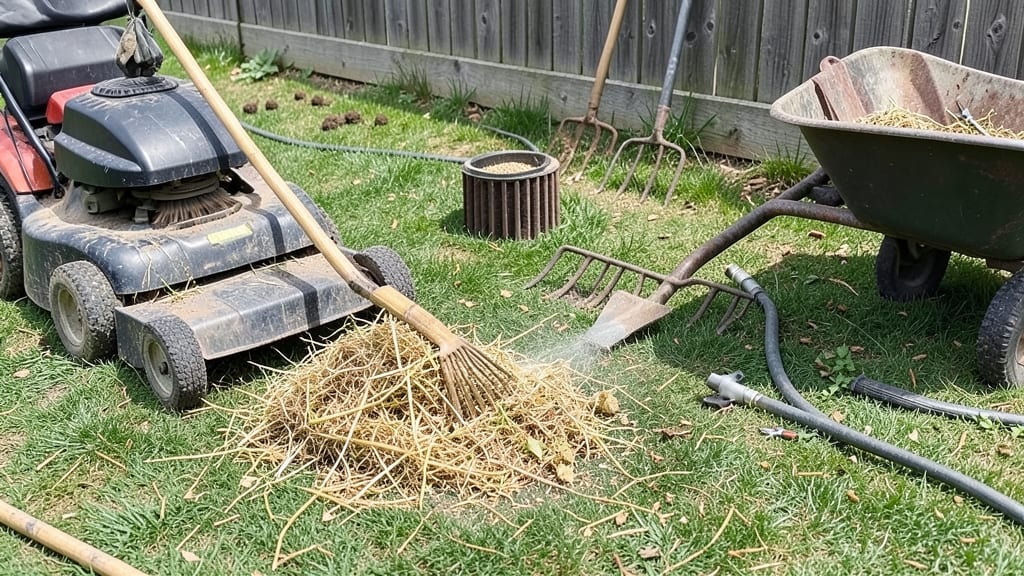
Lawn care spring clean-up transforms your lawn from a winter battleground to a lush green carpet—and it’s simpler than you think. ✨ I’ve turned my patchy, brown lawn into a neighbor’s envy spot using just three core steps, no fancy equipment required. The key is timing: wait until daytime temperatures hit 50°F consistently, then act fast before weeds take over. Start by clearing debris—leaves, branches, and thatch—because they smother grass roots and trap moisture. A stiff rake or dethatching tool does the trick in under an hour for a small yard. I skip the power tools; my hands and a good stretch are enough motivation to get outside. The payoff? Grass that breathes, grows faster, and stays vibrant all season. Next, adjust your mower height to 3–4 inches—taller blades shade soil, retain moisture, and crowd out weeds. Most people cut too short, stressing their lawn right when it needs energy. After mowing, overseed bare patches with high-quality grass seed and a light top dressing of compost. Water gently but daily until new growth appears—usually within 7–10 days. This method works for cool-season grasses (like Kentucky bluegrass) and warm-season types (like Bermuda), with minor tweaks. For clay-heavy soil, aerate first to loosen compaction. The result? A lawn that’s so healthy, you’ll forget how much work it took.
📚 In This Guide
- What you need
- Instructions
- Tips and common mistakes
- Wrapping up and next steps
What you need
- ● Lawn mower – Gas or electric (preferably sharp blades for clean cuts).
- ● String trimmer/weed whacker – For edges and tight spots.
- ● Rake – A bow rake (for debris) and a leaf rake (for finer cleanup).
- ● Garden shears/pruners – For trimming overgrown plants or shrubs.
- ● Garden hose or sprinkler – With a spray nozzle for targeted watering.
- ● Gloves – Heavy-duty work gloves to protect your hands.
- ● Knee pads – For comfort during extended kneeling.
- ● Lawn fertilizer – Slow-release spring blend (16-4-8 or similar) (10-20 lbs, depending on yard size).
- ● Mulch or compost – For replenishing garden beds (2-4 bags, 2-4 cubic feet each).
- ● Soil amendment – Topsoil or compost (1-2 cubic yards for larger areas).
- ○ Weed killer (optional) – Pre-emergent herbicide (if weeds are a concern).
- ● Trash bags – Heavy-duty 30-50 gallon bags for debris removal.
- ● Wheelbarrow or cart – For hauling debris and supplies.
- ● Lawn aerator – For compacted soil (rent or purchase).
- ● Soil test kit – To check pH and nutrient levels.
- ● Post-hole digger – For planting new shrubs or trees.
- ● Safety gear – Sunglasses, sunscreen, and ear protection (if using loud tools).
- ● Portable leaf blower – For quick debris removal.
Lawn care spring clean-up: step-by-step instructions for a renewed yard
Here's how to refresh your lawn with minimal fuss—no heavy equipment or complex steps required.
🌱 Step 1: Clear Debris and Aerate Compacted Soil
Start by removing winter's leftover debris—leaves, branches, and thatch buildup. I use a stiff rake to gather everything into piles, then bag it for compost or disposal. Pay special attention to low spots where water pools; these areas need extra clearing to prevent fungal growth. Once cleared, check for soil compaction by pressing your thumb into the ground—if it resists, it's time to aerate.
For small lawns, a manual spike aerator works well. Push it into the soil at 4-inch intervals in a grid pattern, lifting cores of turf to break up compaction. Water the lawn 24 hours before aerating—this softens the soil slightly and makes the process easier. You'll know you've done enough when the soil feels light and crumbly down to 2-3 inches deep.
💧 Step 2: Overseed and Fertilize for Thick Growth
After aerating, spread ½ pound of grass seed per 100 square feet evenly over bare patches or thin areas. I use a broadcast spreader for large areas and a hand-held one for edges. Lightly rake the seed into the soil to ensure good seed-to-soil contact—this prevents washing away during watering. For new lawns or heavily damaged areas, mix in ¼ pound of starter fertilizer per 100 square feet to give seedlings a nutrient boost.
Water immediately after seeding with a gentle sprinkler to keep the soil consistently moist for the first 10-14 days. You'll see the first green shoots in 7-10 days, but avoid walking on the area until the new grass reaches 2-3 inches tall. This prevents smothering the tender growth. If your lawn has moss, apply a moss-killing fertilizer now—it works best when soil temperatures are 50°F or higher.
☀️ Step 3: Adjust Mowing and Watering for Spring Recovery
Wait until new grass reaches 3-4 inches tall before mowing for the first time. Set your mower blade to 3-4 inches high—taller grass shades the soil, reducing weed growth and retaining moisture. Never remove more than ⅓ of the grass blade in one mowing; this prevents stress and promotes deep root growth. Collect clippings the first few times to avoid thatch buildup, then switch to mulching for nutrient recycling.
Water deeply 2-3 times per week in the morning, aiming for 1 inch of water per week. Check moisture by digging 2 inches into the soil—if it's dry, water again. Avoid evening watering to prevent fungal diseases. By mid-spring, your lawn should look lush and uniform, with no bare spots or yellowing patches. This is your signal that the clean-up worked.
Tips & tricks for a flawless spring lawn refresh
Between us, I've seen too many well-intentioned spring lawn projects go sideways—here's how to avoid the common pitfalls while keeping it simple.
Timing is Everything: The 24-hour pre-aeration watering is non-negotiable. Cold, dry soil resists aeration and can tear your turf instead of loosening it. I've learned this the hard way after trying to aerate compacted soil without prepping—it's like trying to push a nail through concrete. If you forget to water ahead, at least soak the area thoroughly the morning of aeration.
Seed Placement Precision: When spreading that ½ pound of grass seed per 100 square feet, overlap your passes by about 6 inches to avoid streaks. I use a simple trick: walk in a grid pattern, then turn 90 degrees and go the opposite direction. This ensures even coverage without wasting seed. For large areas, mark your starting point and walk in straight lines—your eyes will naturally follow the previous pass.
Moss Management: If your lawn has moss, that 50°F soil temperature threshold is critical for moss-killing fertilizer to work. Check your local weather forecast—if temperatures dip below 50°F, wait a few days. I've applied it too early only to see moss creep back. For stubborn moss, consider spot-treating with a vinegar solution (1 part vinegar to 1 part water) before fertilizing, but test on a small area first.
Post-Mowing Strategy: After your first mow when grass reaches 3-4 inches, resist the urge to bag those clippings permanently. Once the lawn establishes (after about 4-6 weeks), switch to mulching clippings—they return valuable nitrogen to the soil. Just be patient and collect clippings the first few times to prevent thatch buildup.
Pro Tips for Lawn Care Spring Clean Up
- Between us, I've seen too many well-intentioned spring lawn projects go sideways—here's how to avoid the common pitfalls while keeping it simple.
- Timing is Everything: The 24-hour pre-aeration watering is non-negotiable.
- Seed Placement Precision: When spreading that ½ pound of grass seed per 100 square feet, overlap your passes by about 6 inches to avoid streaks.
Frequently asked questions
Got questions about spring lawn clean-up? You’re not alone! Here are some of the most common concerns—and quick answers—to help you tackle your yard like a pro.
When is the best time to start my spring lawn clean-up?
The ideal window is early to mid-spring (March–April in most regions), once the soil is workable but before summer heat sets in. Wait until daytime temps consistently stay above 50°F (10°C)—this ensures grass and plants wake up from dormancy but aren’t stressed by extreme weather. Pro tip: Check your local frost dates for a heads-up!
Do I really need to dethatch my lawn every spring?
Not always! Only dethatch if you see a thick layer of dead grass, roots, or thatch (over ½ inch). For most lawns, a light raking or aeration suffices. Skip it if your grass looks healthy—over-dethatching can damage roots. Test first: Dig a small section; if soil feels spongy, you’re good to go!
What’s the difference between aerating and overseeding?
Aerating creates holes in compacted soil to let air, water, and nutrients reach roots (think of it as giving your lawn a breath of fresh air). Overseeding sows new grass seed to fill bare patches. Do both together for best results: Aerate first, then overseed within 24 hours. Timing tip: Aerate in spring or fall; overseed in cool, moist weather.
Can I skip hiring a pro and DIY my spring clean-up?
Most tasks—raking, edging, aerating, and overseeding—are DIY-friendly with the right tools. Rent a core aerator or use a manual rake for thatch. Save money by tackling small sections weekly. When to call a pro: For large lawns (>1 acre), severe thatch buildup, or if you’re dealing with pests/disease.
What should I do if I find grubs or pests after cleaning up?
Don’t panic! Grubs, chinch bugs, or fungus (like brown patch) are common post-clean-up. Act fast: Water deeply in the morning to encourage healthy grass growth (stress = pest magnet). For grubs, apply beneficial nematodes or a granular insecticide. Prevent future issues by keeping your lawn mowed, fertilized, and aerated regularly.
Still stumped? Drop your question in the comments—we’re happy to help your lawn bloom!
Wrapping up and next steps
Spring is your lawn’s best chance to shine—and with these three simple steps, you’ve got everything you need to transform it into a lush, vibrant space! 🌱 From clearing debris to aerating and fertilizing, a little effort now means big rewards all season long.
Ready to see the results? Grab your tools, roll up your sleeves, and start your spring clean-up today. Your future self—and your neighbors—will thank you! For extra guidance, check out our lawn care checklist or local gardening resources to keep your yard thriving.