
Lawn
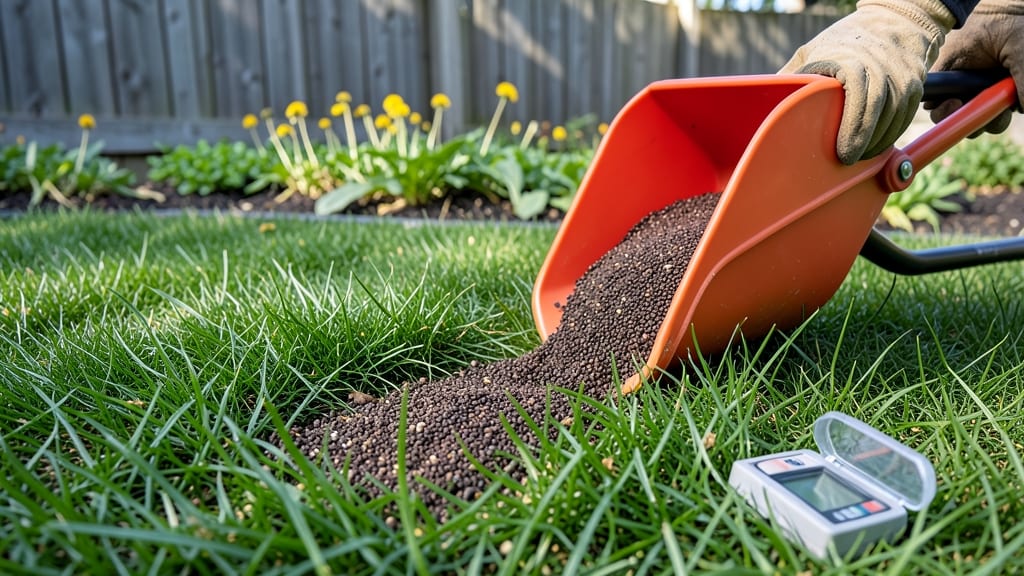
You can fertilize your lawn during early spring (March–April) or fall (September–October) when soil temperatures are between 55–65°F, as this encourages robust root development without risking grass burn. Avoid fertilizing during droughts or extreme heat.
Timing your lawn fertilization correctly makes all the difference in how well your grass absorbs nutrients. 🌱 The 55–65°F soil temperature range ensures the fertilizer activates properly without stressing the grass—too cold, and the nutrients won't work; too hot, and you risk scorching.
I always check soil temps before applying, especially in transitional seasons like late winter or early fall, when conditions can be unpredictable. This approach not only prevents waste but also sets your lawn up for healthier growth cycles.
Another key factor is your grass type. Cool-season grasses (like Kentucky bluegrass or fescue) thrive with early spring fertilization, while warm-season grasses (such as Bermuda or Zoysia) respond better to late summer or early fall applications.
Adjusting your schedule based on your specific grass type can mean the difference between a lush lawn and one that struggles to recover.
💡 In This Article
- Best Soil Temperature and Season Rules for Lawn Fertilization
- Step-by-Step Guide to Choosing the Right Fertilization Schedule
Best soil temperature and season rules for lawn fertilization
The 55–65°F soil temperature range isn't arbitrary—it's the sweet spot where grass roots become most active. At these temperatures, soil microbes break down fertilizer nutrients into forms your lawn can absorb efficiently. Below 55°F, microbial activity slows dramatically, leaving fertilizer inactive in the soil.
Above 65°F, especially during drought, the concentrated salts in fertilizer can dehydrate grass blades, causing brown patches that look like burn damage. 🌱
Seasonal timing works with this biological rhythm. Early spring fertilization (March–April) coincides with cool-season grasses waking from dormancy, while fall applications (September–October) provide warm-season grasses with a final nutrient boost before winter.
For example, Kentucky bluegrass needs nitrogen-rich fertilizer in spring to support its rapid growth phase, while Bermuda grass benefits more from a late-summer feeding to strengthen roots before cold weather. The difference? Spring feeding focuses on top growth, while fall feeding prioritizes root development.
What happens when you fertilize outside these windows? In summer heat, even slow-release fertilizers can overstimulate grass, leading to thatched buildup and pest problems. Winter applications are wasted because cold soil microbes can't activate the nutrients.
I once saw a neighbor apply fertilizer in July during a drought—within days, their lawn had large dead patches that took months to recover. The lesson? Always check soil temps before applying, especially in transitional seasons.
Regional climate plays a huge role too. In northern states, spring fertilization might start as early as February when soil warms, while southern lawns may need to wait until April. The 55–65°F rule applies universally, but your exact timing depends on local frost dates and rainfall patterns.
For precise scheduling, use a soil thermometer (available for under $20) to measure 4 inches deep—surface temps can be misleading. This depth matches where most grass roots absorb nutrients.
Another critical factor is fertilizer type. Quick-release fertilizers (like 24-0-6) work best in ideal conditions but risk burning if applied when soil is too warm. Slow-release options (like polymer-coated urea) provide more flexibility by gradually feeding grass over 6–12 weeks, making them safer for borderline temperatures.
For example, a slow-release fertilizer applied in early May (when temps might be 68°F) will still provide nutrients as soil cools in June, whereas quick-release would likely cause stress. 💫
Don't overlook the importance of rainfall after application. Fertilizer needs ½–1 inch of water within 24 hours to activate properly, but too much water can leach nutrients away. In dry climates, I recommend applying fertilizer in the evening when evaporation is lowest, then watering lightly.
This gives nutrients time to penetrate soil before the next day's heat. The goal is to create a balanced environment where your lawn can absorb what it needs without stress.