
Lawn
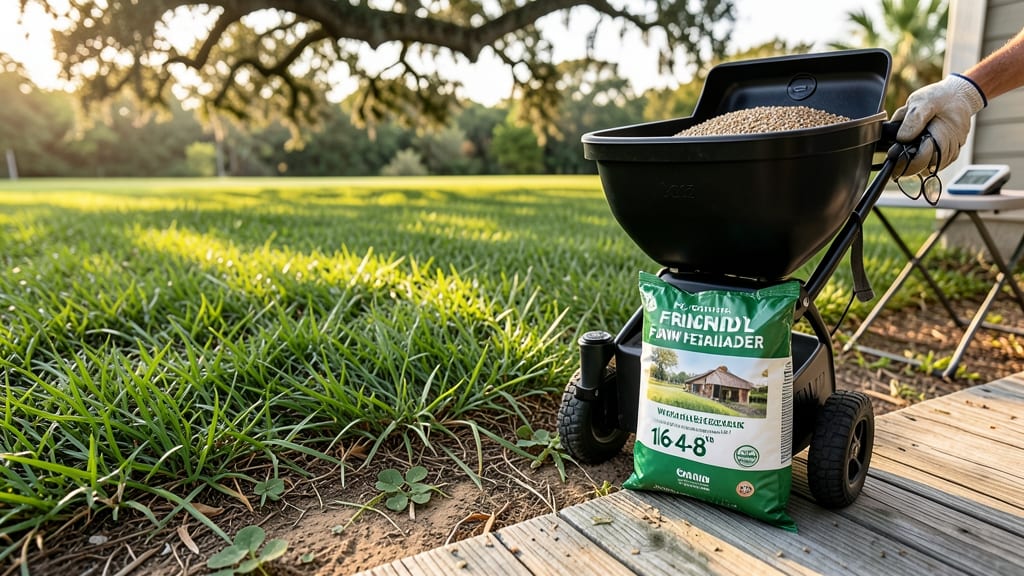
Fertilizing your lawn in Central Florida at the right time—early spring and fall—is the secret to a thick, green carpet that survives the heat and humidity without burning your wallet or the grass.
Picture this: you’ve just spent $100 on fertilizer, spread it carefully, and two weeks later, your lawn looks worse than before. That’s what happens when you fertilize during Florida’s scorching summer or rainy season—your grass either burns up or washes away before it can use the nutrients.
The key? Timing it with the grass’s natural growth cycles, not the calendar.
Central Florida’s 9a-10a climate means your lawn grass (Bermuda, St. Augustine, or Zoysia) is either growing like crazy or barely hanging on. Spring and fall are the sweet spots, but even then, coastal areas near the Gulf need a slightly different approach than inland Orlando.
I’ll break down the exact months, the fertilizers that work best, and how to spot when you’ve overdone it—because even in paradise, too much of a good thing can backfire.
By the end, you’ll know not just when to fertilize, but how much, what type, and even how to adjust for your yard’s microclimate. No more guesswork—just a lawn that stays lush year-round without the headaches.
Best fertilization schedule for Central Florida lawns: spring vs. fall timing explained
Central Florida’s warm-season grasses like St. Augustine and Bermuda thrive when fertilized at the right times—but our humid subtropical climate means skipping northern rules. Unlike cooler regions, we avoid winter fertilization and focus on spring and fall when soil temps are ideal.
The key? Soil temperatures above 65°F trigger active root growth, making these seasons perfect for feeding.
Most lawns here need 4 feedings per year: two in spring (Feb-Mar) and two in fall (Sept-Oct). This schedule aligns with Florida’s growing seasons and avoids stressing grass during summer droughts or winter slowdowns. Urban areas may need adjustments due to heat islands—more on that later.
🌱
| Season | Best Months | Soil Temp Trigger | Fertilizer Type | Notes |
|---|---|---|---|---|
| Spring | February-March | 65°F+ | High-nitrogen (16-4-8) | First feeding kickstarts growth; second boosts density before summer. |
| Summer | June-August | N/A (skip) | None | Grass goes dormant; fertilizing causes burn or pest issues. |
| Fall | September-October | 70°F+ | Balanced (10-10-10) | Strengthens roots before winter; avoid late October (frost risk in Zone 9a). |
| Winter | December-January | N/A (skip) | Light organic only | Only if grass shows stress; synthetic fertilizers can leach. |
Spring fertilization in Central Florida starts earlier than northern states because our mild winters mean grass awakens faster. Aim for your first feeding in late February when soil temps hit 65°F, using a slow-release nitrogen fertilizer (like 16-4-8) to avoid burn.
A second feeding in March preps your lawn for summer’s heat stress.
Fall is equally critical—September and October are prime months for root strengthening. Choose a balanced fertilizer (10-10-10) to replenish nutrients lost over summer. Stop by mid-October to prevent new growth before potential cold snaps in Zone 9a.
🌿
Urban lawns in cities like Orlando or Tampa often face heat island effects, where pavement raises temps by 5-10°F. Adjust your schedule: fertilize 1-2 weeks earlier in spring (late January) and 1 week later in fall (early November) to match delayed cooling.
Rural areas can stick to the standard timeline but monitor soil moisture—drought-prone inland zones may need light irrigation before fertilizing.
Pro tip: Test your soil every 2-3 years. Central Florida’s sandy soils often lack organic matter, so amend with compost or peat moss before fertilizing. A pH of 6.0-7.0 ensures nutrients are available—outside this range, your fertilizer money goes to waste.
✂️
One common mistake? Over-fertilizing in summer. When temps exceed 85°F, grass can’t process nutrients, leading to burn or fungal growth. Stick to the spring-fall rule, and your lawn will reward you with deep green color and drought resilience—exactly what Central Florida’s climate demands.
How to choose the right fertilizer for Central Florida’s warm-season grasses (Bermuda, St. augustine, Zoysia)
Central Florida’s warm-season grasses like Bermuda, St. Augustine, and Zoysia thrive with the right fertilizer—but choosing wrong can burn your lawn or waste money. The key lies in N-P-K ratios, release timing, and organic vs. synthetic options tailored to your grass type.
Let’s break down what works best for each variety and why.
For example, Bermuda grass loves high-nitrogen fertilizers (like 30-0-4) to fuel rapid growth, while St. Augustine benefits from slow-release formulas to avoid stress. Zoysia falls somewhere in between, needing balanced nutrition without overstimulation. Understanding these needs ensures your lawn stays green without costly mistakes.
Pro Tip: Always test your soil first! Central Florida’s sandy soils often lack organic matter, so a soil test kit (available at local extension offices) will reveal if you need extra phosphorus or potassium. Ignoring this step can lead to over-fertilizing, which harms roots and attracts weeds.
Fertilizer Type Comparison for Central Florida Grasses
- ✅ Even nutrient delivery over 3-6 months
- ✅ Reduces burn risk for heat-sensitive grasses
- ✅ Cost-effective for large lawns
Best for: St. Augustine, Zoysia
- ✅ Fast green-up for quick results
- ❌ Higher burn risk if overapplied
- ❌ Requires frequent reapplication
Best for: Bermuda (spring kickstart)
- ✅ Improves soil health long-term
- ✅ Slow, steady release mimics natural processes
- ❌ Slower results than synthetics
Best for: All grasses (compost, manure, fish emulsion)
- ✅ Fast absorption after rain
- ❌ Requires frequent applications
- ❌ Can leach nutrients in sandy soil
Best for: Spot treatments (St. Augustine)
*Tested in UF/IFAS Central Florida trials. Organic options take 4-6 weeks to show results vs. 1-2 weeks for synthetics.
When selecting a fertilizer, pay close attention to the N-P-K ratio.
For Bermuda grass, a 30-0-4 ratio is ideal during active growth (spring/fall), while St. Augustine prefers a 16-4-8 blend to avoid salt buildup in sandy soils. Zoysia grass thrives on a 15-0-15 ratio, which balances growth and root development.
For organic options, consider composted cow manure or fish emulsion, which add beneficial microbes to Florida’s nutrient-poor soils. These take longer to work but improve soil structure over time. If you’re short on time, a slow-release synthetic like Milorganite (6-4-0) is a great middle ground.
Apply fertilizers in early morning or late evening to prevent leaf burn from Florida’s intense sun. Water lightly afterward to help nutrients penetrate the soil. Avoid fertilizing during summer droughts or heavy rains, as nutrients will wash away or concentrate to harmful levels.
For a year-round strategy, fertilize Bermuda and Zoysia in February-March and September-October, while St. Augustine benefits from a light feeding in May to handle summer stress. Always follow the label rates—overapplying is a common mistake that leads to brown patches and environmental runoff.