
Lawn
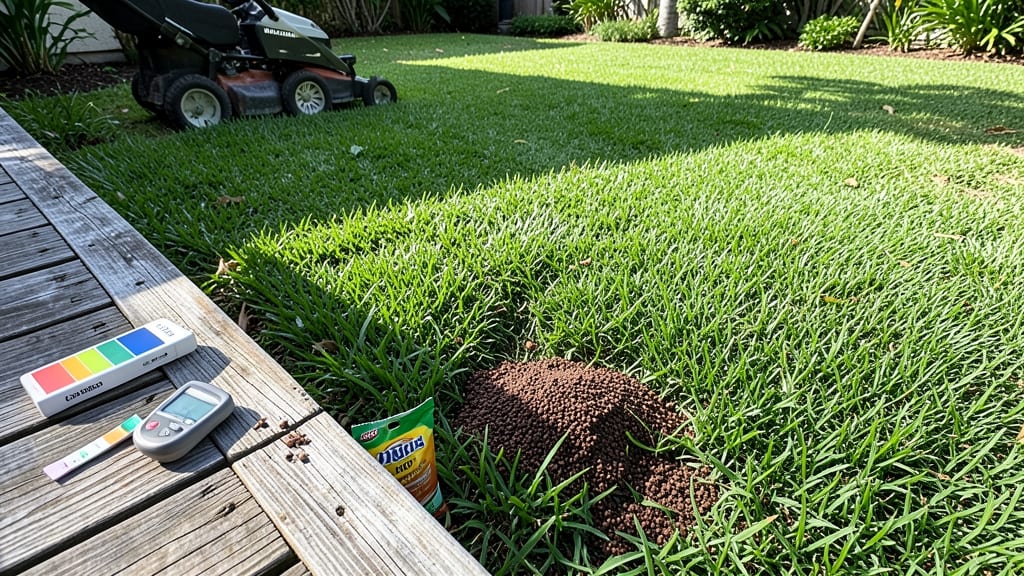
Fertilizing your South Florida lawn at the right time ensures lush, year-round greenery without wasting nutrients or harming the environment.
South Florida’s humid climate and frequent rains make fertilizing your lawn a delicate balance—too early, and nutrients wash away; too late, and growth stagnates. Timing is everything for a thick, vibrant lawn that thrives in USDA zones 10a-11.
Most homeowners here struggle with the same question: When should I fertilize? The answer depends on your grass type—whether it’s St. Augustine, centipede, or bahiagrass—and the season. Skip the guesswork with a month-by-month schedule tailored to Florida’s unique weather patterns.
In this guide, I’ll break down the best months to feed your lawn, how to spot nutrient deficiencies, and which fertilizers work best for South Florida’s heat and humidity. You’ll leave here with a clear plan to keep your grass green all year—without overdoing it.
Optimal fertilization schedule for South Florida lawns by season
South Florida’s year-round growing season and humid climate create unique challenges for lawn care. Unlike northern regions, your grass doesn’t get a natural winter break, so fertilization must align with rainy seasons, hurricane risks, and temperature shifts.
The key is feeding your lawn when it can absorb nutrients efficiently—before heavy rains dilute fertilizers or extreme heat stresses roots.
Most South Florida lawns thrive with 4-6 feedings per year, spaced strategically to avoid nutrient runoff during monsoon seasons. I’ve broken this down by month, including hurricane season prep (June-November) and pre-rainy-season fertilization to maximize root growth before summer downpours.
For St. Augustine, centipede, or bahiagrass, timing differs slightly, but the core principle remains: feed when grass is actively growing.
In early spring (February-March), your lawn needs its first feeding to kickstart growth after the cooler months. I recommend a slow-release granular fertilizer with a 16-4-8 NPK ratio—this balances nitrogen for leaf growth while providing phosphorus and potassium for root development.
Apply this 4-6 weeks before rainy season (typically by mid-April) to prevent runoff. For St. Augustine, which loves moisture, this timing is critical to avoid fungal issues.
By late spring (April-May), your lawn should show signs of vigorous growth. This is your second feeding window, but switch to a higher-nitrogen formula (20-5-10) to support rapid blade expansion. However, stop by June—hurricane season begins, and fertilizers can wash away in heavy rains.
Instead, switch to liquid iron supplements in summer to maintain color without stressing roots. Centipede grass is particularly sensitive here; over-fertilizing can burn its blades.
Summer in South Florida is brutal for lawns. June-August should be a low-maintenance period. Avoid granular fertilizers entirely during this time—they can burn grass in the heat or leach into waterways after storms. Instead, use organic liquid feeds like seaweed extract or iron supplements every 6-8 weeks.
Deep watering in the early morning (4-8 AM) helps roots absorb any residual nutrients while preventing fungal growth from evening moisture.
Your final feeding of the year comes in early fall (September-October), when temperatures drop slightly and grass resumes active growth. This feeding should focus on root strengthening, so opt for a 12-4-12 NPK ratio with added potassium.
This helps your lawn withstand winter stress and recover quickly from hurricane damage. For bahiagrass, which is drought-tolerant, this fall feeding is especially important to build resilience.
Winter (November-February) is the only time I recommend skipping fertilization entirely. South Florida’s mild winters don’t kill grass, but growth slows dramatically. Fertilizing now can lead to excessive top growth that weakens roots when temperatures drop.
Instead, focus on light mowing (set blades to 3-4 inches) and occasional watering if rains are scarce. This lets your lawn recover energy for spring’s first feeding.
One pro tip: Always fertilize in the early morning to allow nutrients to absorb before the heat of the day. If you’re using slow-release granules, apply them 2-3 days before a predicted rain—this gives them time to dissolve slightly while still protecting against immediate runoff. For
Signs your South Florida lawn needs fertilizer (and when to avoid it)
Your South Florida lawn communicates its needs through subtle (and not-so-subtle) cues. Yellow patches, slow growth, or bare spots are classic signs your grass is hungry for nutrients.
These deficiencies often appear when soil nutrients are depleted or rainfall washes away fertilizers too quickly. Understanding these signals helps you act before problems escalate.
But here’s the catch: South Florida’s humid climate and heavy rains create a tricky balance. Over-fertilizing can lead to nutrient runoff, harming local waterways, while under-fertilizing leaves your lawn weak and vulnerable.
The key is timing—applying nutrients when your grass can absorb them efficiently, not during rainy seasons or droughts.
⚠️ When to PAUSE Fertilizing in South Florida
- Hurricane season (June-November): Avoid fertilizing before or after storms—nutrients can wash away, and damaged roots need time to recover.
- Drought conditions: Fertilizing during dry spells stresses grass further. Wait until rainfall returns or irrigate deeply first.
- After heavy rains: Pause for 2-3 weeks to let soil settle and prevent nutrient loss from runoff.
- Winter months (December-February): Most Florida grasses slow growth; fertilizing wastes nutrients.
Pro Tip: Always check the 7-day forecast before fertilizing—aim for dry, calm weather.
Start by inspecting your lawn for uneven color. Healthy St. Augustine grass should be a deep green, while centipede grass has a softer, lighter hue. If you notice pale yellowing or brown tips, it’s often a sign of nitrogen deficiency.
For slow-growing grass, check for thin patches—this could indicate phosphorus or potassium shortages.
Don’t ignore weed invasion, either. A nutrient-deficient lawn becomes a magnet for crabgrass and clover. These weeds thrive where grass struggles, signaling your lawn needs a balanced fertilizer (look for a 16-4-8 NPK ratio for Florida lawns).
Test your soil first—South Florida’s acidic soils often need lime or sulfur to optimize nutrient uptake.
If your lawn shows signs of fungal issues (like brown rings or spongy patches), hold off on fertilizing until you treat the problem. Overfeeding can worsen fungal growth by promoting lush, soft grass that’s more susceptible to diseases like brown patch or take-all root rot.
For best results, fertilize in early spring (March) and late fall (October), when temperatures are mild and rainfall is moderate. Use a slow-release fertilizer to avoid spikes in growth that attract pests. Always water deeply after applying to help nutrients penetrate the soil.
Remember: Your lawn’s health is a year-round commitment. By reading its signals and respecting South Florida’s climate quirks, you’ll avoid common pitfalls and keep your grass thriving—without wasting fertilizer or harming the environment. 🌱