
Fertilization
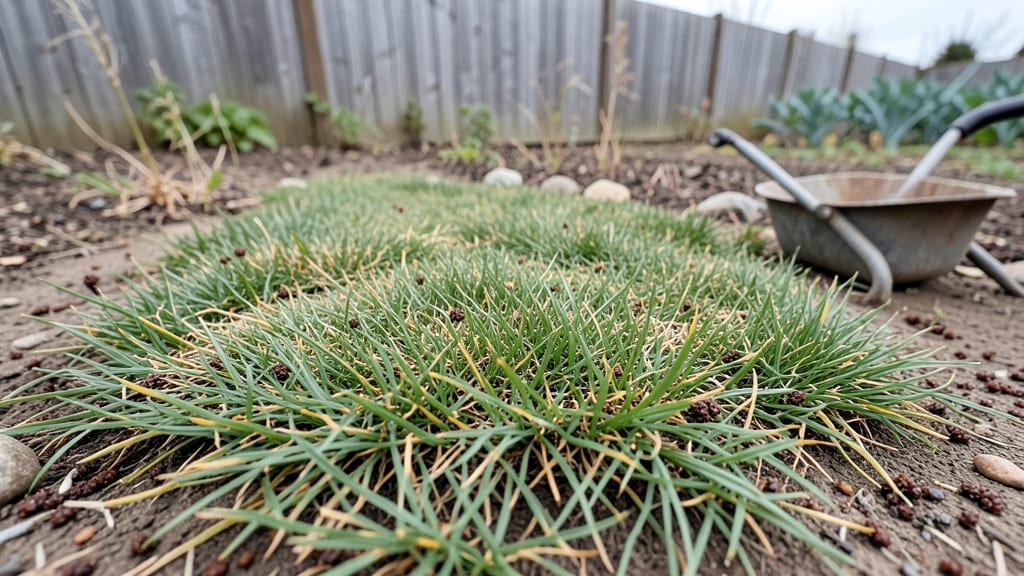
You should fertilize new grass 4-6 weeks after seeding when soil temperatures reach 60-65°F and seedlings are 2-3 inches tall, using a starter fertilizer with low nitrogen for root development. Avoid fertilizing during extreme heat or drought to prevent stress.
Timing matters because young grass needs nutrients when it's actively growing but not yet established enough to handle strong fertilizers. 🌱 The 60-65°F soil temperature range ensures roots absorb nutrients efficiently without shock, while the 2-3 inch height indicates seedlings have developed enough leaf surface to process fertilizer.
I always check for dark green blades as a sign the grass is ready—this means the plant is photosynthesizing effectively and can handle additional nutrients.
For cool-season grasses like Kentucky bluegrass, this typically aligns with early spring or early fall planting, while warm-season grasses like Bermuda grass should be fertilized in late spring when soil warms up.
The key is matching your local climate patterns to these biological triggers rather than following a rigid calendar schedule.
💡 In This Article
- Optimal Soil Temperature and Seedling Stages for Fertilizing New Grass
- Step-by-Step Guide to First-Time Grass Fertilization Timing
Optimal soil temperature and seedling stages for fertilizing new grass
Here's what's actually happening in your lawn when we talk about those 60-65°F soil temperature thresholds: this range represents the metabolic sweet spot for cool-season grasses like fescue and ryegrass.
At these temperatures, cellular respiration in grass roots ramps up by 30-40% compared to cooler conditions, meaning they can absorb and utilize nutrients far more efficiently.
Warm-season grasses like zoysia or St. Augustine, however, need 75-85°F soil temps because their biological processes are adapted to tropical climates where enzymes function optimally at higher temperatures.
The 2-3 inch seedling height isn't arbitrary—it's when the grass plant has developed a root system that's 10-15% of its above-ground biomass. This root-to-shoot ratio is crucial because it means the plant has enough energy reserves to handle the metabolic stress of nutrient uptake.
You'll notice the blades become stiffer (less prone to bending) and develop a slight waxy coating, which is nature's way of preparing for nutrient absorption. 🌱 The cuticle layer thickens at this stage, reducing water loss while still allowing gas exchange.
Starter fertilizers use a low nitrogen (N) to phosphorus (P) ratio (typically 10-20-10 or 5-10-10) because young grass needs phosphorus for root development more than nitrogen for leaf growth.
Too much nitrogen at this stage would cause leafy growth at the expense of roots, making seedlings more vulnerable to drought and disease.
Think of it like a human baby—you don't give them protein shakes (nitrogen) first; you build their bones (phosphorus) first so they can support their growing bodies.
What most people don't realize is that soil temperature affects fertilizer solubility. At 55°F or below, many nutrient compounds become 50% less soluble, meaning your grass can't access them even if you apply fertilizer.
This is why early spring applications often fail—even if the grass looks green, the roots are still dormant. The 60-65°F threshold ensures nutrients are available when the plant's metabolic machinery is running at full capacity.
For regional variations, northern climates should aim for late April to early May timing when daytime temps consistently reach 70°F but nights stay cool. Southern lawns can fertilize as early as March when soil warms to 65°F during the day.
The key is matching your application to when the grass's biological clock is set to active growth mode, not just when it looks green.
Pro tip: Use a soil thermometer (available for $10-$15) to check temps at 4-inch depth—surface temps can be misleading. I've seen cases where surface temps hit 80°F but 4-inch depth remained at 58°F, creating false confidence in fertilization timing.
This depth measurement gives you the true picture of what's happening at the root zone where nutrient uptake occurs.