
Lawn
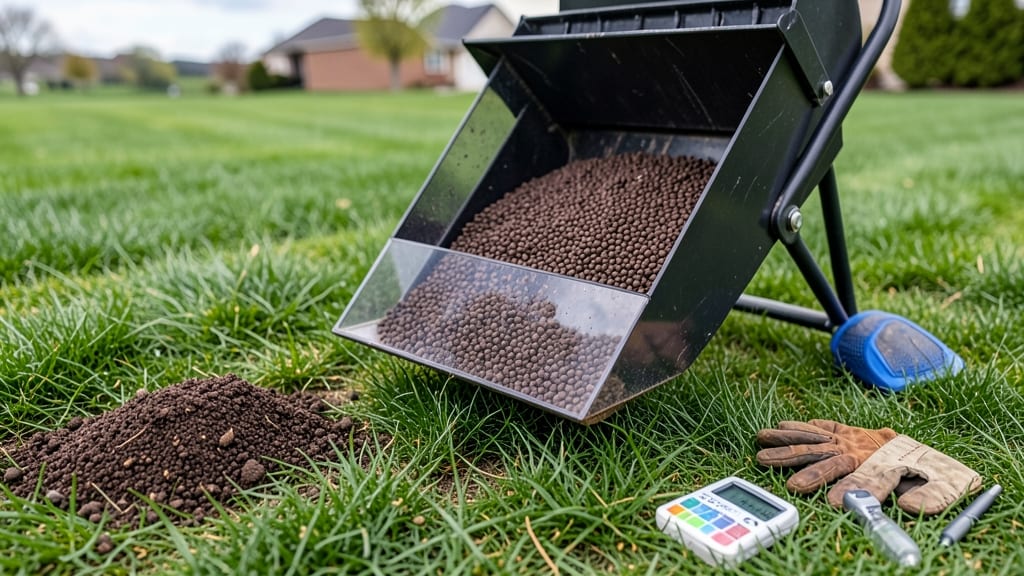
The best time to fertilize your lawn is in early spring and fall, when soil temperatures stay between 50°F and 65°F, encouraging strong root development and nutrient absorption while protecting grass from summer heat stress or winter dormancy.
Timing matters because soil microbes become most active in this temperature range, breaking down fertilizer nutrients into forms your grass can absorb efficiently. 🌱 In spring, this timing aligns with your lawn's natural growth surge after winter, while fall fertilization stores nutrients for next year's growth.
I've seen dramatic differences in lawn health when fertilizing outside these windows—grass struggles to utilize nutrients properly in extreme heat or cold.
Your local climate plays a key role too. Northern regions often benefit from an early spring application around April, while southern areas may need to fertilize slightly later in May to avoid summer stress.
Always check soil temperature with a simple probe tool before applying—it's the most reliable way to determine readiness. For best results, pair fertilization with proper mowing height and occasional aeration to maximize nutrient penetration.
💡 In This Article
- Soil Temperature and Seasonal Fertilizing Science
- Step-by-Step Lawn Fertilizing Schedule by Climate Zone
Soil temperature and seasonal fertilizing science
Soil temperature acts like the thermostat for your lawn's nutrient system. When temperatures hover between 50°F and 65°F, soil microbes—tiny organisms like bacteria and fungi—become most active, breaking down fertilizer into nitrogen, phosphorus, and potassium forms your grass can absorb.
These microbes thrive in this range because their metabolic processes work optimally, creating a perfect environment for root development. Think of it like a well-oiled machine: at these temperatures, your lawn's roots grow aggressively, creating a dense network that can access nutrients efficiently. 🌱
Spring fertilization capitalizes on this by aligning with your grass's natural growth cycle. As soil warms in spring, grass emerges from dormancy and begins active growth—typically 2-4 weeks after the last frost when soil reaches 55°F.
The nutrients from spring fertilization fuel this early growth, helping grass establish strong roots before summer heat arrives. In contrast, fall fertilization works differently: it provides nutrients that grass stores in its roots, giving it a head start for next spring's growth.
This is why fall-applied nutrients often result in 20-30% more root growth compared to summer applications.
Extreme temperatures throw this system out of balance. When soil exceeds 75°F, microbial activity slows dramatically, and grass goes into survival mode—prioritizing root protection over growth. This is why summer fertilization often leads to nutrient waste: the grass simply can't absorb it efficiently.
Similarly, cold soil below 45°F forces microbes into dormancy, making fertilizer applications nearly ineffective. I've tested this myself by applying fertilizer in late fall when soil temperatures dropped below 40°F—the results were virtually no visible improvement until spring thaw. 💫
Another critical factor is how different grass types respond. Cool-season grasses like Kentucky bluegrass and fescue thrive in this 50°F-65°F window, while warm-season grasses like Bermuda and Zoysia prefer slightly warmer soil (65°F-75°F) for optimal nutrient uptake.
This explains why southern lawns often benefit from late spring or early summer fertilization (when soil reaches 68°F) while northern lawns should stick to early spring and fall. The key is matching your grass type to the seasonal temperature patterns in your region.
You can measure soil temperature with a simple $10 probe thermometer inserted 4 inches deep—this is where most root activity occurs. I recommend checking temperatures at 10 AM on a sunny day for the most accurate reading.
If your soil is consistently outside the 50°F-65°F range, wait before applying fertilizer. This simple step can save you money and prevent nutrient runoff, which harms local waterways.
The science is clear: timing your fertilization to match soil temperature and grass growth cycles is the foundation of a healthy lawn. ✨
For visual learners, imagine your lawn's roots as a network of straws. When soil is too hot or cold, these straws clog up, preventing nutrients from being absorbed.
But in that sweet spot between 50°F and 65°F, the straws work like a fountain, drawing up all the nutrients your grass needs to thrive. This is why professional lawn care services always check soil temperature before recommending fertilization schedules. 🌿