
Fertilization
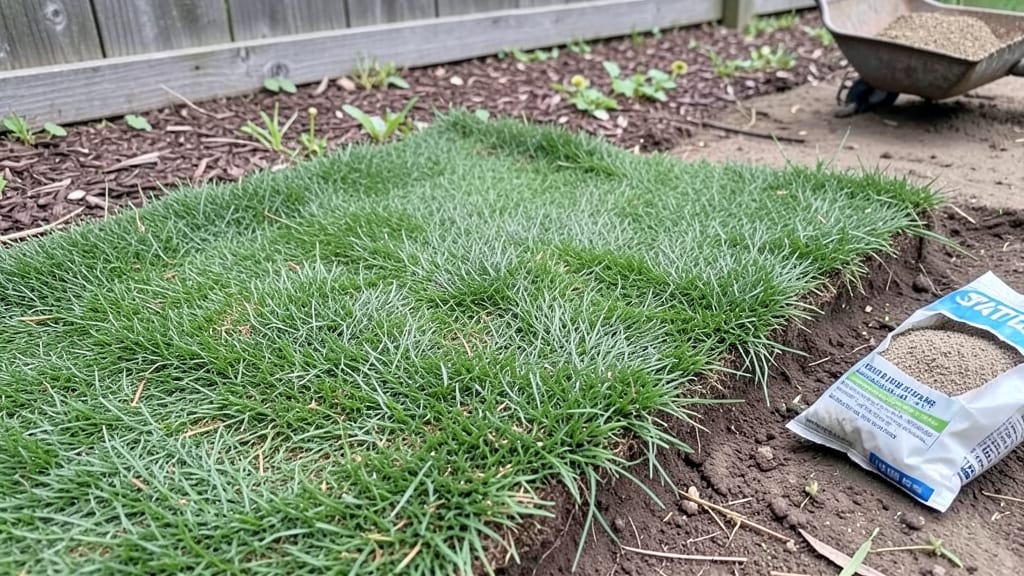
You should fertilize new sod 4-6 weeks after installation, once roots are established but before the grass fully matures, using a starter fertilizer with low nitrogen for cool-season grasses or a balanced blend for warm-season types. Avoid fertilizing during extreme heat or drought to prevent stress.
Timing matters because young sod needs nutrients to strengthen its root system, but too much too soon can burn tender blades. 🌱 For cool-season grasses like Kentucky bluegrass, aim for early fall or spring planting—this gives roots time to establish before winter dormancy or summer heat.
Warm-season grasses like Bermuda grass, planted in late spring, benefit from a balanced fertilizer to support their aggressive growth patterns. The key is patience: wait until you can gently lift a corner of sod and see at least 1-2 inches of white roots before applying fertilizer.
Don’t let weather fool you—extreme heat or drought can turn fertilizer into a double-edged sword. High temperatures force sod to work harder to absorb nutrients, while dry soil locks them out entirely. I always check soil moisture first: if the top inch feels dry, water thoroughly before fertilizing.
Pro tip? A simple DIY test—press your finger into the soil—reveals whether it’s ready for nutrients or needs more hydration.
💡 In This Article
- Optimal Fertilizer Timing for Cool-Season vs Warm-Season Sod
- Signs Your New Sod Is Ready for Fertilizer (And What to Avoid)
Optimal fertilizer timing for cool-season vs warm-season sod
Cool-season grasses like Kentucky bluegrass and fescue thrive in temperatures between 60-75°F and enter dormancy when soil temps drop below 50°F. Their root systems develop rapidly in early spring and fall, growing 2-3 inches deep within 4-6 weeks of installation.
This is why fall planting (August-September) gives them a head start before winter. Warm-season grasses like Bermuda and Zoysia, however, prefer 80-95°F and grow best when planted in late spring (May-June), with roots reaching 1-2 inches in just 3-4 weeks due to their aggressive growth habits.
The science behind this timing lies in how temperature affects nutrient uptake. Cool-season grasses absorb nitrogen most efficiently at 68-72°F, which is why starter fertilizers for them contain low nitrogen (10-15%) paired with phosphorus to boost root growth.
Warm-season grasses, however, need a balanced blend (16-20% nitrogen) to fuel their rapid top growth during hot months. The difference comes down to their metabolic rates: cool-season grasses prioritize root development, while warm-season types focus on leaf expansion when temperatures rise.
Here's what's actually happening in the soil: Cool-season grasses develop a fibrous root system that spreads horizontally, creating a dense network that stabilizes the lawn. Warm-season grasses, on the other hand, grow deeper roots that reach for moisture in dry conditions.
This biological difference explains why Bermuda grass can recover from drought better than fescue. The key factor is matching your fertilizer's nutrient profile to the grass's natural growth cycle—cool-season types need phosphorus-heavy starters, while warm-season varieties benefit from potassium to strengthen their drought resistance.
Seasonal planting windows matter because they dictate when roots establish before the grass enters its active growth phase. For cool-season sod, fertilizing too early in spring risks burning tender blades still recovering from winter dormancy.
Conversely, applying fertilizer too late in fall may not give roots enough time to harden before cold sets in.
Warm-season grasses face a different challenge: summer heat can cause fertilizer salts to build up in the soil, creating a hypertonic environment that draws moisture out of plant cells—this is why we avoid fertilizing when temperatures exceed 90°F.
Consider these biological cues when deciding: Cool-season grasses will show deep green blades with 1-2 inches of white roots when ready, while warm-season types display blue-green hues and stiff blades that bounce back when pressed.
The texture difference comes from their cell structure—cool-season grasses have softer cell walls that absorb more water, while warm-season types develop thicker cell walls for heat tolerance. This is why a simple tug test (gently lifting a sod corner) reveals readiness: if roots resist coming out, it's time to fertilize.
What most people don't realize is how soil temperature affects microbial activity that breaks down fertilizer. In cool weather, soil microbes work slower, so nutrients stay available longer.
During summer heat, microbes become hyperactive, consuming nitrogen faster than grass can absorb it—this is why warm-season grasses need more frequent, lighter applications. The ideal soil temperature for microbial activity sits at 70-80°F, which aligns perfectly with warm-season planting windows. 🌱