
Lawn
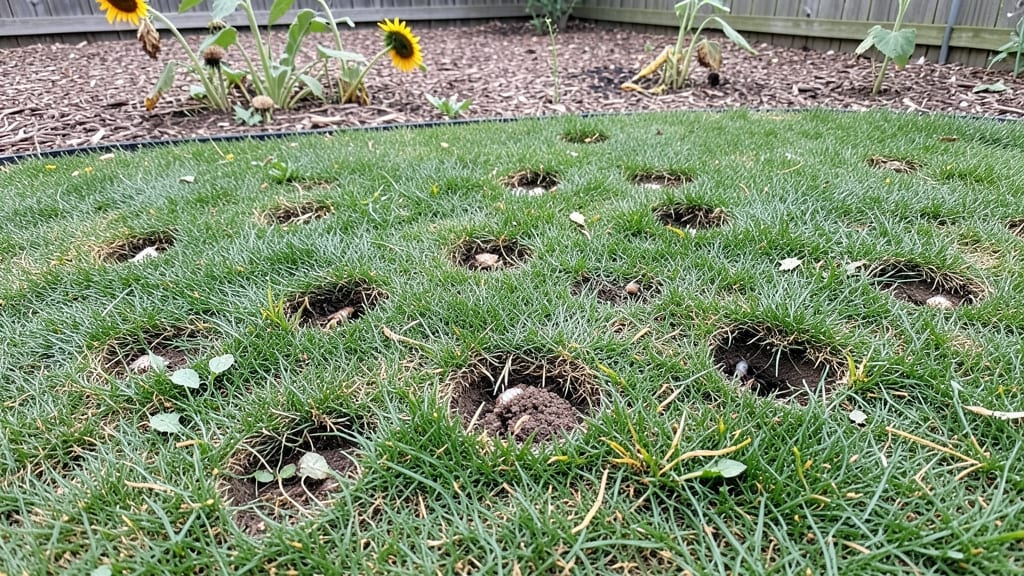
Round holes in your lawn aren’t just ugly—they’re a sign something’s wrong beneath the surface. 🌱 I’ve spent years fixing these patches, and I’ll tell you exactly what’s causing yours and how to patch them so they disappear in days, not weeks.
The key is knowing whether you’re dealing with grubs, moles, or something else entirely.
Most round holes come from grubs, moles, or voles—each leaving clues. Grubs create small, shallow holes with chewed grass roots, while moles dig tunnels with mounds of soil.
Voles make larger holes with clean edges and chewed stems. I’ll help you spot the difference so you can treat the real problem, not just the symptom.
Once you’ve identified the culprit, repairing the holes is straightforward. Fill them with a mix of topsoil and compost, tamp it down, and overseed. In about 10-14 days, you’ll have grass filling in seamlessly. The secret? Preventing future damage with simple steps like aerating and using natural pest deterrents.
This works for any yard, whether you’re dealing with a few scattered holes or a full-blown infestation. Let’s get your lawn looking smooth and healthy again—no more surprises lurking underground.
Why it happens
Those mysterious round holes in your lawn aren’t just random bad luck—they’re often the work of unseen (or overlooked) creatures and forces. Understanding the why behind these patches is the first step to stopping them.
Let’s dig into the most common causes, backed by science, so you can identify—and fix—the problem.
###
🐛 Burrowing Pests: The Underground Chewers
Small, hungry critters are the #1 culprit behind round holes in lawns. These pests don’t just nibble—they dig, creating tunnels and exit points that leave behind perfect circles of displaced turf. Here’s who’s likely to blame:
- Grubs (White Grubs):
Larvae of beetles (like Japanese beetles or June bugs), grubs feast on grass roots. When populations explode, they create large, irregular holes (often 2–4 inches wide) as they surface for air. Sign: Lift a patch of grass—if it peels back like a carpet, grubs are the problem. 🐛
- Molehills & Vole Tunnels:
Moles and voles don’t eat grass—they displace it. Moles create raised tunnels (often with plugged holes), while voles gnaw roots and leave shallow, neat holes (1–2 inches wide). Pro tip: Check for fresh dirt mounds or chewed stems near the holes. 🏔️
- Chinch Bugs:
These tiny, sap-sucking insects kill grass in patches, leaving behind small, dry holes (often <1 inch wide) as the turf dies and pulls away. Sign: Look for yellowing grass in a ring pattern around the holes. 🟡
🔍 Actionable fix: Dig up a small section near the hole—if you find white, C-shaped larvae (grubs), or tiny brown insects (chinch bugs), treat with beneficial nematodes or insecticidal soap. For moles/voles, use repellents or traps.
###
🌱 Grass Diseases: Silent Root Sabotage
Fungal infections and bacterial diseases can weaken grass roots until entire sections collapse into holes. Unlike pests, these issues spread slowly and often go unnoticed until the damage is visible. Common offenders include:
- Fusarium Patch (Snow Mold):
A fungal disease that thrives in cold, wet conditions, causing grass to turn white or straw-colored before forming soft, spongy holes. Sign: Holes appear after heavy dew or snowmelt. 🌨️
- Red Thread or Brown Patch:
These fungal diseases create thin, circular patches where grass turns reddish-brown and pulls away easily. Sign: Look for stringy fungal threads on blades. 🧵
- Bacterial Wilt (Erwinia):
Rare but destructive, this bacteria clogs grass stems, causing sudden wilting and hollowed-out sections. Sign: Grass feels slimy when pulled. ⚠️
💡 Prevention tip: Improve airflow with proper mowing height (never cut >1/3 of the blade) and water in the morning to reduce fungal growth. For infected areas, apply fungicide (copper-based for bacteria).
###
🌪️ Environmental Stress: Nature’s Lawn Sabotage
Not all round holes are caused by living things—sometimes, weather, soil, or human error create the perfect storm for turf collapse. Here’s how:
- Compacted Soil:
Heavy foot traffic, machinery, or clay-heavy soil crushes roots, starving grass of oxygen and water. Over time, small, sunken holes form where roots can’t support the turf. Sign: Grass feels spongy when stepped on. 👣
- Drought or Overwatering:
Extreme moisture swings stress grass roots. Drought causes roots to shrink and pull away, while overwatering drowns roots, leading to mushy, hole-like collapse. Sign: Holes appear after weeks of dry spells or standing water. 💦
- Animal Urine or Fertilizer Burn:
Concentrated nitrogen (from dog urine or over-fertilizing) burns grass, killing patches in perfectly round patterns. Sign: Grass turns yellow or crispy before dying. 🐕💥
✨ Quick fix: Aerate compacted soil with a core aerator, adjust watering to 1 inch per week, and dilute fertilizer (use slow-release formulas).
How to solve it
Discovering round holes or uneven patches in your lawn can feel like a sudden surprise—especially when you’re not sure what caused it. The good news? Most fixes are simple, cost-effective, and require minimal effort.
Below, we’ve broken down the most common causes of round holes in lawns and matched them with step-by-step solutions. Whether it’s critters, disease, or human activity, we’ve got you covered with practical fixes and prevention tips to keep your lawn lush and even.
###
🐾 Animal Activity: Pets, Burrowing Creatures, or Wildlife
If your lawn has round holes with smooth edges, chances are a critter—or your curious pup—is to blame. Here’s how to handle it:
- 🔥 Step 1: Identify the Culprit Check the hole’s size and shape. Large, deep holes? Likely a raccoon or skunk. Smaller, shallow holes with torn grass? Probably a dog or rabbit. Tiny mounds of dirt? Moles or voles may be tunneling underground.
- 🍳 Step 2: Fill and Smooth the Hole Remove any debris (like roots or rocks) and fill the hole with a mix of topsoil and compost (50/50 ratio). Tamp it down gently with your foot or a board to create a firm base. For deeper holes, layer the soil in 1-inch increments to avoid settling.
- 👨🍳 Step 3: Replant the Grass Sprinkle grass seed over the patched area and lightly cover it with a thin layer of soil (about ¼ inch). Water gently but thoroughly to encourage root growth. Use a lawn roller (lightly!) to press the seed into the soil for better contact.
- 🌱 Step 4: Deter Future Digging
- For dogs: Train them to use a designated potty area or sprinkle citrus peels (dogs dislike the smell) around problem spots.
- For moles/voles: Set up castor oil-based repellents or install underground fencing (12 inches deep) to block burrowing.
- For wildlife: Secure trash cans, remove food sources (like fallen fruit), and use motion-activated sprinklers to scare off nocturnal visitors.
###
🍄 Fungal Disease: Lawn Patches or Fairy Rings
If the holes are surrounded by mushrooms, discolored grass, or a ring of dead/dying turf, a fungal infection (like fairy rings or brown patch) is likely the culprit. Act fast to prevent spread!
- 🔪 Step 1: Remove Affected Grass Cut out the infected patch (including roots) in a 6-inch radius around the hole. Dispose of it in a sealed bag—do not compost fungal material.
- ⏰ Step 2: Improve Drainage Fungal growth thrives in compacted, waterlogged soil. Aerate the area with a manual aerator or rent a core aerator to create holes for better airflow. Mix sand or perlite into the soil to improve drainage.
- 💡 Step 3: Apply Fungicide Use a copper-based fungicide or a baking soda solution (1 tbsp baking soda + 1 gallon water) to treat the soil. Follow label instructions for application rates. For prevention, water early in the day to reduce humidity.
- ✨ Step 4: Replant with Resistant Grass Once the area is dry and treated, fill the hole with topsoil amended with compost and sow fungus-resistant grass seed (like tall fescue or Kentucky bluegrass). Keep the soil moist but not soggy for 2–3 weeks.
###
🪓 Human or Equipment Damage: Uneven Wear
Foot traffic, lawnmower blades, or kids’ toys can create small, scattered holes that weaken your lawn’s structure. Here’s how to fix and prevent further damage:
- 🔥 Step 1: Rake and Level the Soil Use a garden rake to remove debris and smooth out the hole. If the area is sunken, add a thin layer of topsoil and level it with the surrounding lawn.
- 🍳 Step 2: Overseed the Spot Sprinkle grass seed evenly over the hole and lightly cover with soil. For high-traffic areas, consider sodding (laying pre-grown grass patches) for faster recovery.
- 👨🍳 Step 3: Strengthen the Lawn Apply a light layer of compost (½ inch) to improve soil health. Water deeply 2–3 times per week for the next month to encourage root growth.
- 💡 Step 4: Reduce Future Damage
- Reroute foot traffic with stepping stones or a garden path.
- Adjust mower height to 3–4 inches to protect grass blades.
- Limit toy play in the same spot—rotate play areas to distribute wear.
###
🌡️ Environmental Factors: Heat, Drought, or Soil Compaction
Extreme weather or heavy foot traffic can cause grass to thin out and pull away, leaving small holes. Revive your lawn with these steps:
- 💡 Step 1: Test Your Soil Use a DIY soil test kit to check pH and nutrient levels. Most lawns thrive in pH 6.0–7.0. Adjust with lime (to raise pH) or sulfur (to lower pH) as needed.
- 🌱 Step 2: Aerate and Overseed Rent a core aerator to pull small plugs of soil, then fill the holes with topsoil and compost. Immediately overseed and water to encourage new growth.
- 🍎 Step 3: Improve Watering Habits Water deeply 2–3 times per week (early morning) instead of daily shallow watering. Aim for 1–1.5 inches of water per week to encourage deep roots.
- ✨ Step 4: Fertilize Smartly Apply a slow-release, balanced fertilizer (like 10-10-10) in early spring or fall. Avoid high-nitrogen fertilizers in summer, as they promote weak, drought-sensitive growth.
Pro Tip: 🌡️ For large or stubborn patches, consider sod repair patches—they’re pre-grown grass that blends seamlessly with your lawn in just a few weeks!
Frequently asked questions
Why do round holes appear suddenly in my lawn?
Most round holes appear due to underground activity like grubs, moles, or voles. Grubs create 2-4 inch holes when they surface for air, while moles leave plugged tunnels with mounds of dirt. Voles make 1-2 inch holes with clean edges from gnawing roots. Environmental factors like drought or soil compaction can also cause grass to pull away, creating similar-looking patches.
How can I tell if moles or voles are causing the holes?
Check for fresh dirt mounds (moles) or chewed stems (voles). Mole tunnels appear as raised ridges with plugged holes, while vole damage shows shallow, neat holes often near garden edges or woodpiles. Look for surface runways (voles) or worm casts (moles) to confirm which critter is active.
What's the fastest way to fix round holes in my lawn?
For immediate repair, remove debris, fill holes with a 50/50 mix of topsoil and compost, tamp down, then overseed. Water lightly daily for 7-10 days until grass sprouts. For larger patches, use sod repair patches for instant coverage. Always address the root cause (pests, disease, or soil issues) to prevent recurrence.
Can dog urine create round holes in the lawn?
Yes! Concentrated dog urine contains high nitrogen levels that burn grass roots, causing patches to die and pull away in circular patterns. The affected areas often turn yellow or crispy before forming holes. Dilute urine by training dogs to pee in designated areas or watering spots immediately after they go.
How do I prevent round holes from coming back?
For pests: Use beneficial nematodes (grubs) or castor oil repellents (moles/voles). For soil issues: Aerate annually and maintain proper watering (1 inch per week). For fungal problems: Water early in the day and avoid over-fertilizing. Regular lawn maintenance keeps grass healthy and resilient against damage.