
Lawn
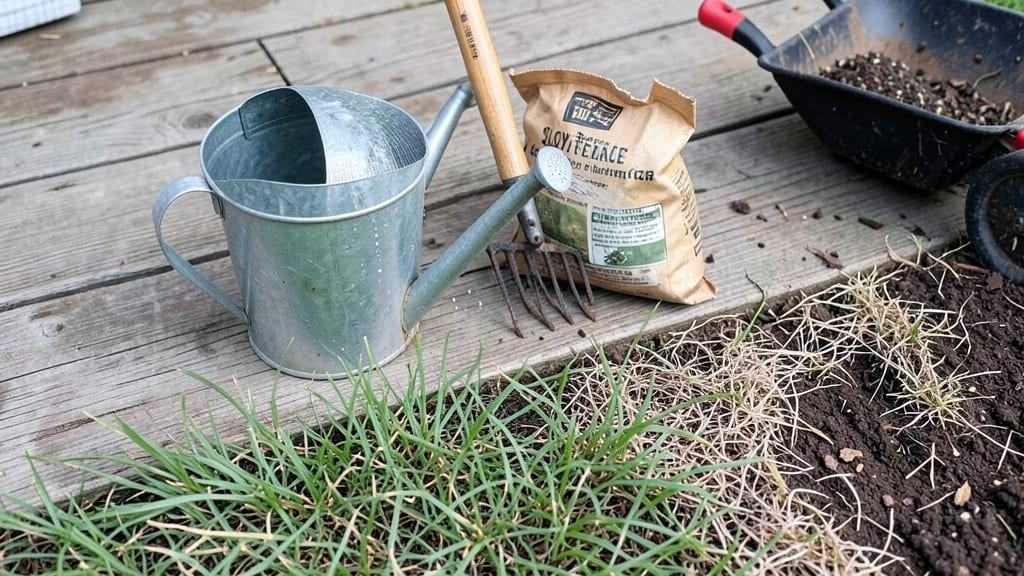
Your lawn might look like a crispy desert after drought or chemical damage, but fixing burnt grass in 24 hours starts with the right first move. I’ve turned patches of brown death back to green using just water, patience, and a few simple tools—no magic, just science.
The key is acting fast before heat stress or chemicals kill the roots completely.
First, check what caused the burn: was it drought, over-fertilizing, or herbicide drift? Water deeply for 15-20 minutes twice daily until the soil is moist 3 inches down—this revives roots faster than you’d think.
Then, rake away dead patches gently to expose fresh soil underneath. Most lawns bounce back within a week if you stop stressing them immediately.
For stubborn spots, spread a thin layer of compost over the bare soil before reseeding with shade-tolerant grass like fine fescue or buffalo grass. These varieties recover better than Kentucky bluegrass after damage.
You’ll see new growth in 7-10 days if the roots are still alive—just keep watering lightly until the grass fills in.
Long-term, adjust your routine: water deeply 2-3 times a week instead of daily shallow sprinkles, mow high (3-4 inches), and test soil before fertilizing. Your lawn will thank you with thick, green resilience next season—no more panic after summer heat waves.
Understanding The Root Causes
When your lawn looks like it’s been through a brush fire, it’s not just bad luck—it’s usually the result of specific, preventable factors.
Whether it’s a sudden heatwave, a misstep with the mower, or even a pet’s playful antics, knowing why your grass turns crispy can help you avoid future disasters. Let’s break down the most common culprits and the science behind them.
Your lawn isn’t built for a sudden shift from shade to scorching sunlight. When temperatures spike—especially during dry spells—grass blades lose moisture faster than roots can replenish it. This triggers a process called photosynthesis shutdown, where chlorophyll production halts, leaving grass vulnerable to oxidative stress.
Think of it like a plant having a heatstroke: without water, cells dehydrate, and the grass turns brown or white.
- Key triggers:
- Extended 100°F+ temperatures (common in late summer or early fall droughts).
- Sudden clearing of tree shade (e.g., after a storm or pruning).
- Reflective surfaces like driveways or sidewalks that amplify heat.
- Science in action: Grass species like Kentucky Bluegrass or Fescue have shallow roots. When soil temps exceed 85°F, root activity slows by 50%, cutting off hydration.
Your trusty mower, trimmer, or even a weed eater can turn your lawn into a crime scene—if you’re not careful. Scalar damage (when blades tear instead of cleanly cutting) exposes grass stems to fungal infections and rapid moisture loss.
Meanwhile, scalding (from hot engine exhaust or metal parts) can instantly kill grass in a 3-inch radius.
- Common mistakes:
- Mowing too low (removing >1/3 of blade height at once).
- Using dull blades (tearing instead of slicing).
- Running equipment over wet grass (compacting soil and crushing stems).
- Pro tip: Sharpen blades every 20 hours of use—dull edges crush grass, not cut it.
Watering is a tightrope walk. Underwatering leaves grass thirsty, while overwatering (especially in heat) can suffocate roots by displacing oxygen. The worst offense? Surface-level watering (like a sprinkler on low), which evaporates before reaching roots. This creates a false sense of hydration while the soil stays bone-dry below.
- Red flags:
- Watering daily for short bursts (e.g., 5 minutes in the morning).
- Ignoring the 6-inch soil test: Stick a screwdriver in—if it’s dry, your lawn is thirsty.
- Watering after sunset (promotes fungal growth like Brown Patch).
- Science fact: Grass needs 1–1.5 inches of water per week. Most sprinklers deliver only 0.1–0.2 inches per cycle.
Not all lawn damage is man-made. Grubs (caterpillar larvae), chinch bugs, and even deer urine can turn your lawn into a patchwork of dead spots.
Grubs, for example, munch on roots from below, causing grass to pull up easily like a rug. Meanwhile, chinch bugs inject toxic saliva that disrupts photosynthesis.
- Tell-tale signs:
- Grubs: Thinning grass that lifts like carpet when pulled.
- Chinch bugs: Brown, irregular patches (often near sidewalks).
- Deer/rabbits: Straight-line grazing or urine burns (yellowed, crispy grass).
- Quick check: Dig up a 6-inch square of sod. If grubs outnumber 5–10 per square foot, you’ve got a problem.
Too much of a good thing can be disastrous. Over-fertilizing (especially with high-nitrogen or synthetic blends) creates a salt buildup in soil, which osmoses water out of grass cells. Meanwhile, herbicides like 2,4-D can drift or be misapplied, killing desirable grass while leaving weeds untouched.
- Avoid these blunders:
- Applying fertilizer before a rain (washes away nutrients but leaves salt residue).
- Using weed-and-feed on drought-stressed lawns (herbicides work by disrupting growth, which stressed grass can’t recover from).
- Skipping the soil pH test before fertilizing (ideal range: 6.0–7.0).
- Recovery tip: Flush soil with 1 inch of water after fertilizing to dilute salts.
From ice melt to hailstorms, sudden environmental shifts can shock your lawn into dormancy. Freeze-thaw cycles (like winter ice melting into standing water) create anaerobic conditions, where roots suffocate. Meanwhile, hail punctures cell membranes, causing plasmolysis—a process where grass cells shrink and die from water loss.
- Seasonal threats:
- Spring: Snow mold (white, cottony fungus) from wet, cold soil.
- Fall: Early frosts while grass is still growing.
- Summer: Lightning strikes (can carbonize grass instantly).
- Prep ahead: Aerate before winter to improve drainage and reduce ice damage.
Revive Your Lawn Fast
A burnt lawn can feel like a disaster, but with the right steps, you can nurse your grass back to health—sometimes even within 24 hours. The key is acting quickly and addressing the root cause (literally!).
Below are practical, step-by-step solutions tailored to the most common culprits behind scorched grass, plus pro tips to keep your lawn lush long-term.
Symptoms: Yellow patches, mushy texture, or a foul smell.
How to Treat It:
- 🚰 Drain the Excess Water
- If your lawn is soggy, use a garden hose with a gentle spray or a drainage tool to redirect water away from roots. For severe cases, consider a French drain if water pools consistently.
- ✂️ Aerate the Soil
- Rent a core aerator (or use a manual spike aerator in a pinch) to poke holes in compacted areas. This helps oxygen reach roots and speeds up recovery.
- 🌱 Reseed Bare Spots
- Once the soil dries slightly, sprinkle fast-growing grass seed (like ryegrass) over thin areas. Lightly rake to ensure contact with soil.
- ⏰ Monitor Moisture
- Water lightly every 2–3 days (early morning) until new growth appears. Avoid deep watering—roots need air, not a swamp!
💡 Prevention Tip: Install a smart sprinkler system with soil moisture sensors to avoid overwatering. Test drainage by digging a 6-inch hole—if water doesn’t drain in 6 hours, amend soil with sand or compost.
Symptoms: Crunchy blades, brown tips, or wilting despite adequate water.
How to Treat It:
- 🌧️ Water Deeply at Night
- Run sprinklers for 15–20 minutes when temps drop below 85°F (29°C). This reduces evaporation and cools roots.
- 🛡️ Shade Temporarily
- Set up lightweight shade cloth (30–50% coverage) over severely burnt areas for 3–5 days to block intense sunlight.
- 🍃 Mow Higher
- Raise your mower blade to 3–4 inches to protect leaf surfaces and reduce water loss.
- 🌿 Fertilize Gently
- Apply a low-nitrogen, high-potassium fertilizer (like 5-10-10) to strengthen recovery. Avoid fast-release fertilizers—they stress roots further.
💡 Prevention Tip: Water early morning (4–8 AM) to let grass dry before evening heat. Consider drought-resistant grass varieties (e.g., Buffalo grass or Zoysia) if your climate is scorching.
Symptoms: Bleached, crispy patches or slow, uneven regrowth.
How to Treat It:
- 🚫 Stop Further Damage
- Avoid reapplying herbicides until new growth appears. If the burn is recent (<48 hours), rinse the area with water to dilute chemicals.
- 🧼 Flush with Vinegar or Baking Soda
- Mix 1 gallon of water + 1 cup white vinegar (for mild burns) or 1 tbsp baking soda per gallon (for synthetic herbicide burns). Spray lightly to neutralize residues.
- 🌱 Overseed Aggressively
- Choose herbicide-resistant grass seed (like Centipede or St. Augustine) and cover with straw mulch to retain moisture.
- 🔄 Soil Test & Amend
- Check pH levels—herbicides often disrupt soil bacteria. Add compost or peat moss to restore balance.
💡 Prevention Tip: Always follow label instructions for herbicides, and never mix chemicals unless approved. Spot-treat weeds with vinegar + dish soap (organic alternative) for small areas.
Symptoms: Blackened, brittle patches or exposed soil.
How to Treat It:
- 🔌 Safety First
- If damage is from an electrical spark or fire, ensure the area is completely cool before touching. Call a professional if you suspect buried wires.
- 🧹 Remove Debris
- Rake away charred grass and ash to prevent mold. Discard severely burnt clumps—they won’t recover.
- 💧 Hydrate Heavily
- Soak the area with water + a root stimulator (like Sea90) for 3 days straight. This jumpstarts regrowth.
- 🌱 Patch with Sod or Seed
- For large gaps, lay sod (it establishes faster). For smaller spots, use quick-germinating seed (e.g., Annual Ryegrass).
💡 Prevention Tip: Install ground-fault circuit interrupters (GFCIs) near outdoor outlets and keep fire extinguishers handy. Clear dry debris from your lawn regularly.
- 🌿 Use a Lawn Reviver Spray: Mix 1 tsp liquid seaweed extract + 1 gallon water and spray on stressed grass.
- ⏳ Be Patient: New growth may take 7–14 days—avoid mowing until blades are 3+ inches tall.
- 🌡️ Time It Right: Wait until evening to treat burnt areas to reduce heat stress.
🎯 Pro Tip: Keep a "Lawn First Aid Kit" ready with: ✅ Core aerator ✅ Fast-growing grass seed ✅ Root stimulator fertilizer ✅ Shade cloth ✅ Vinegar/baking soda mix
Frequently asked questions
How quickly can I expect to see results after fixing burnt grass?
With immediate action, you may notice slight improvement in 24-48 hours—like softened edges on burnt patches. However, full recovery typically takes 7-14 days for new growth to appear. The key is consistent moisture and avoiding further stress. For severe burns, expect 3-4 weeks for complete restoration.
Can I use regular garden soil to cover burnt spots?
No, regular garden soil is too heavy and can suffocate grass roots. Instead, use a lightweight topsoil or compost mix (50/50 blend) to promote better drainage and aeration. Spread it ¼-inch thick over bare spots before seeding. This helps prevent compaction while encouraging new growth.
What's the best time of day to water a burnt lawn?
Water in the early morning (4-8 AM) to minimize evaporation and fungal risks. Avoid evening watering, as damp grass overnight encourages Brown Patch disease. For scorched lawns, split watering into two 15-minute sessions—once in the morning and once in the late afternoon—to maximize absorption.
Will my lawn ever look the same after a severe burn?
With proper care, most lawns recover to 90% of their original appearance. However, severely burnt areas may need resodding for full restoration. Choose drought-resistant grass types (like Buffalo grass or Zoysia) if your climate is prone to heat stress. The key is patience—roots take time to rebuild after trauma.
How do I know if my burnt lawn is beyond saving?
If the soil beneath is completely bare with no green shoots after 3 weeks of care, the roots may be dead. Test by gently pulling a small patch—if it comes up like a rug, it's time to reseeding or resodding. Dark, crumbly soil with no resistance indicates irreversible damage.