
How To
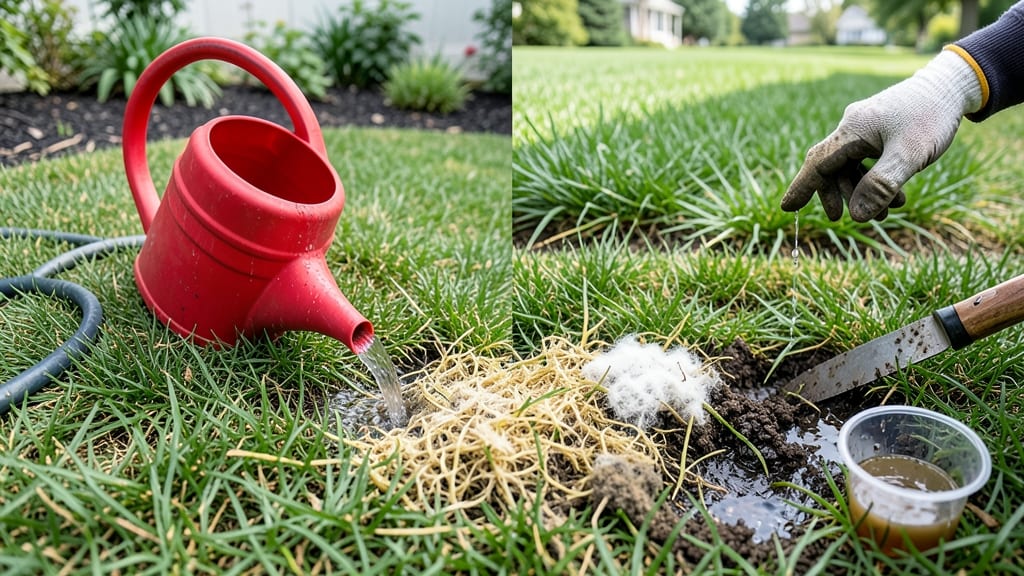
How to tell if your lawn is overwatered—it’s easier than you think, and the clues are hiding in plain sight. A vibrant green carpet can turn into a mushy mess in just days, with yellow patches, spongy soil, and that unmistakable foul smell when you step on it. I’ve seen this happen after overzealous watering, and the fix starts with recognizing these red flags before roots suffocate.
Start by pressing your foot into the grass—if it leaves a deep imprint or feels squishy, that’s your first warning. Yellowing blades with a grayish tint? Fungal growth like mold or mushrooms?
Those are classic overwatering symptoms. Even the soil tells the story: compacted, waterlogged, and smelling like wet socks. The roots need air, not a permanent swamp.
Recovery begins with cutting back water immediately—let the top inch of soil dry out between sessions. Aerate the lawn to break up compacted soil, then adjust your watering schedule to deep, infrequent soakings instead of daily sprinkles.
Within a week, you’ll see the grass stand up straighter, and the spongy feel will disappear as roots breathe again.
For stubborn cases, a core aeration session in spring or fall works wonders. Pair that with a light layer of compost to improve drainage, and you’ll transform that soggy lawn into a resilient, healthy green space.
The key is patience—overwatered grass bounces back, but it needs the right conditions to prove it.
The Real Culprits Behind Overwatering
Overwatering isn’t just about turning on the sprinklers too long—it’s a mix of human habits, environmental factors, and even lawn biology working against you. Understanding these root causes helps you fix the problem before your grass turns into a swamp.
Let’s break down why your lawn might be drowning in water.
Many homeowners rely on smart controllers or pre-set sprinkler timers, but these systems don’t account for real-time weather. If your timer runs for 15–20 minutes daily without checking for rain, your lawn could be getting 2–3x more water than it needs.
- Why it happens: Most timers use a one-size-fits-all schedule, ignoring:
- Rainfall (1 inch of rain = ~0.6 gallons per sq. ft. of water—enough for most lawns).
- Soil type (clay holds moisture longer than sandy soil).
- Seasonal needs (cool seasons need less water than peak summer heat).
💡 Pro Tip: Upgrade to a smart irrigation controller that adjusts based on local weather data (like Rain Bird’s ET-based systems). Or, at minimum, manually override the timer after heavy rain.
If your yard feels like a muddy boot camp after rain, drainage is the villain. Water either ponds on the surface or saturates the soil from poor subsoil structure.
- Why it happens:
- Clay-heavy soil acts like a sponge, holding water instead of letting it drain.
- Compacted soil (from foot traffic or heavy equipment) crushes air pockets, reducing drainage.
- Low-lying areas naturally collect runoff, creating permanent soggy spots.
✨ Fix It: Test drainage with a percolation test—dig a 12-inch hole, fill it with water, and time how long it takes to drain. If it’s slower than 4 hours, you’ve got a drainage issue.
Solutions: - Aerate the lawn (core aeration pulls out plugs to create drainage channels). - Add organic matter (compost or peat moss) to improve soil structure. - Grade the yard to slope water away from foundations and low spots.
Not all grasses are created equal—some thrive in moisture, while others drown easily. If you’ve got fine fescue or Kentucky bluegrass, they’re more prone to overwatering than tall fescue or Bermuda grass, which have deeper roots.
- Why it happens:
- Shallow-rooted grasses (like cool-season varieties) can’t handle excess water—their roots suffocate from lack of oxygen.
- Thatch buildup (a layer of dead grass between soil and green blades) blocks water absorption, leading to runoff and pooling.
- Newly seeded lawns need less frequent but deeper watering—light sprinkles keep seeds too wet, causing fungal diseases like Pythium.
🔥 Action Step: Mow higher (3–4 inches) to encourage deeper roots. For thick thatch (>0.5 inches), dethatch in early fall.
Even the best sprinklers can waste water if they’re misaligned, clogged, or running at the wrong pressure.
- Why it happens:
- Overlapping sprinkler heads lead to double watering in some zones.
- Nozzle clogs or wrong spray pattern cause uneven distribution (some areas get drenched, others dry).
- High pressure from old pipes or improper PSI settings causes runoff instead of absorption.
- Wind interference (common with rotor sprinklers) blows water away from the lawn.
🎯 Check Your System:
- Walk the yard after watering—look for dry spots or puddles.
- Measure output with a rain gauge (1 inch per week is ideal for most lawns).
- Adjust sprinkler heads so they spray evenly and no more than 6–12 inches from the base.
You might think your lawn needs water, but humidity, temperature, and wind can trick you into overdoing it.
- Why it happens:
- High humidity (common in summer) reduces evaporation, so the soil stays wet longer.
- Cooler nights slow water absorption, leading to surface runoff.
- Wind can evaporate water mid-air, making it seem like more is needed.
💡 Adjust for Weather:
- Water early morning (4–8 AM) to minimize evaporation.
- Reduce watering by 25–50% if humidity is above 70%.
- Skip watering if 0.5 inches of rain has fallen in the past week.
Some homeowners water daily because they’re afraid of drought—or they forget to turn off the sprinklers. Others overcompensate after a dry spell, leading to waterlogging.
- Why it happens:
- Fear of drought → overwatering to "keep it safe."
- Ignoring soil moisture tests → guessing instead of checking.
- Using a hose end sprinkler (which often oversprays and wastes water).
⏰ Simple Fixes:
- Stick your finger in the soil—if the top 1–2 inches are damp, hold off.
- Set phone reminders to check sprinklers.
- Use a moisture meter ($20 at garden centers) for real-time data.
Fixing a Soggy Lawn Step by Step
Overwatering can turn your lush lawn into a swampy mess, but the good news is that with the right approach, you can revive it and prevent future issues. Here’s how to tackle the problem based on the root cause—plus some smart prevention tips to keep your grass healthy and happy.
If your lawn is drowning, the first step is to cut off the excess water. Here’s how:
- 🚰 Turn off sprinklers or irrigation systems – Even if it’s set on a timer, overwatering continues until you intervene.
Check for leaks or misaligned sprinkler heads that might be spraying unevenly. - 🌧️ Avoid rainwater overload – If heavy rain is the culprit, resist the urge to water afterward.
Let the soil dry out naturally before adding more moisture. - 🚧 Redirect runoff – If water pools in low spots, use a shovel to create gentle slopes or install small drainage channels to guide excess water away.
Pro Tip: 💡 If you’re unsure how much water your lawn needs, follow the "1-inch rule"—water deeply 1-2 times per week (depending on climate) rather than light daily doses.
Poor drainage is often the real villain. Fix it with these practical steps:
🔨 Aerate Compacted Soil
- 🌱 Rent or buy a core aerator (or hire a lawn service) to pull small soil plugs, allowing water and air to penetrate deeper.
- 📅 Best time to aerate: Early morning or late afternoon on a warm, slightly damp day.
Avoid aerating if the ground is waterlogged or frozen.
🌡️ Test and Amend Soil Composition
- 📊 Get a soil test (available at garden centers or through local extensions) to check pH and drainage. Clay-heavy soil?
Mix in compost or sand (50/50 ratio) to improve texture. - ✨ Top-dress with organic matter – Spread a thin layer (¼ inch) of compost or peat moss over the lawn, then lightly rake it in. This boosts drainage and microbial activity.
🏗️ Install French Drains (For Severe Cases)
If water pools persistently in certain areas:
- Dig a 4-inch-wide trench along the problem spot.
- Fill it with gravel, then insert a perforated drain pipe, and cover with more gravel and soil.
- Direct the pipe to a dry area or storm drain.
Overwatered grass often turns yellow, mushy, or develops fungus. Here’s how to nurse it back to life:
🌿 Mow High and Less Often
- Set your mower to 3–4 inches to shade roots and reduce evaporation.
- ⏰ Mow when grass is dry—never when soggy, as it clogs the mower and stresses the lawn.
💊 Treat Fungal Issues (If Present)
- 🍄 Identify the fungus (e.g., brown patch, dollar spot) by its appearance (circular patches, slimy texture).
- Apply a fungicide (like copper-based or propiconazole) following label instructions.
For organic options, use baking soda (1 tbsp/gallon of water) as a preventive spray. - 🌡️ Improve airflow by spacing out plants or thinning dense areas.
🌱 Overseed Bare Spots
- 🌱 Choose drought-tolerant grass seeds (like tall fescue or Bermuda) for your climate.
- 🌧️ Water lightly 2x/day (morning and evening) for 10–15 minutes until seeds germinate (usually 7–21 days).
- ✨ Use a starter fertilizer (high in phosphorus) to encourage root growth.
An ounce of prevention saves gallons of grief. Try these habits:
🌡️ Check Soil Moisture Before Watering
- 👆 The "squeeze test": Grab a handful of soil—if it crumbles when dry and sticks slightly when moist, it’s hydrated enough. If it’s muddy, wait.
- 📏 Use a moisture meter (or a screwdriver—if it pushes in easily, the soil’s too wet).
🕒 Adjust Your Watering Schedule
- 🌅 Water early morning (4–8 AM) to reduce evaporation and fungal growth.
- ⏰ Avoid evening watering—wet grass overnight invites disease.
- 🌧️ Skip watering if rain is forecasted (check a weather app for updates).
🎯 Upgrade Your Irrigation System
- 🔍 Fix leaks or broken sprinkler heads—wasted water adds up fast.
- 📱 Install a smart irrigation controller (like Rachio) to adjust watering based on real-time weather data.
- 🌱 Switch to drip irrigation for flower beds or new plantings to deliver water directly to roots.
- 🌿 Mow regularly (never remove more than ⅓ of the grass blade at once).
- 💪 Fertilize seasonally (spring and fall) to strengthen roots.
- 🌱 Leave grass clippings as natural mulch to retain moisture (but avoid this if fungus is present).
By addressing drainage, adjusting watering habits, and giving your lawn the right care, you’ll turn that spongy mess into a vibrant, resilient turf. Your future self (and your lawn) will thank you! 🌱💦
Frequently asked questions
What does spongy grass feel like when overwatered?
Spongy grass feels mushy and squishy underfoot—like stepping on a wet sponge. Press your thumb into the lawn: if it leaves a deep imprint that doesn’t bounce back within 10–15 seconds, your grass is waterlogged. This happens when roots suffocate from excess moisture and can’t support the blades properly.
Why does my lawn smell bad after watering?
A foul, musty odor after watering signals anaerobic conditions—meaning soil bacteria are thriving without oxygen. This happens when water sits too long, creating an ideal environment for sulfur-producing microbes. The smell is especially strong in clay-heavy soils or after heavy rain when drainage fails.
How long does it take to fix an overwatered lawn?
Recovery time varies, but you’ll see improvement within 1–2 weeks if you stop watering immediately and aerate. For severe cases (like fungal growth), it may take 4–6 weeks to fully revive. The key is patience—roots need time to establish in well-drained soil before grass stands upright again.
Can I still mow an overwatered lawn?
Yes, but wait until the grass is dry to avoid clogging your mower. Mow at 3–4 inches to shade roots and reduce evaporation. Never mow waterlogged grass—it tears blades and compacts soil further. If the lawn feels too spongy, wait 24–48 hours for the soil to firm up before mowing.
What’s the difference between overwatered and underwatered grass?
Overwatered grass feels spongy, smells foul, and may develop grayish-yellow patches or fungal growth. Underwatered grass appears blue-gray, feels crispy, and pulls up easily when tugged. The key difference: overwatered grass stays damp for hours, while underwatered grass dries out quickly and may show footprint marks that don’t recover.