
Pests
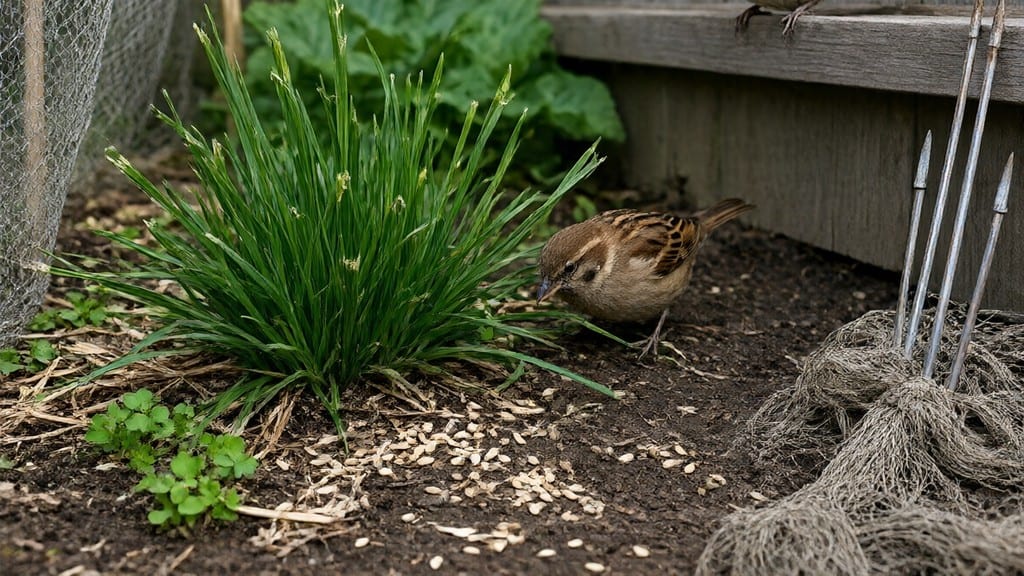
Discovering how to keep birds from eating grass seeds after my Kentucky Bluegrass vanished overnight taught me the hard way that nature’s little thieves strike fast—here’s what worked. snack bar is always open—especially when your lawn looks like a buffet.
The good news? You don't need harsh chemicals or expensive gadgets to outsmart them.
Natural barriers work better than anything store-bought, and they won't turn your yard into a wildlife-free zone. Think reflective tape on stakes, wind chimes that create unpredictable noise, or even a simple layer of straw mulch (about ¼ inch thick) to block their view.
These methods keep birds away without harming them—just like how we avoid overwatering because we learned the hard way it does more damage than good.
What you'll end up with is a lawn that establishes properly, with uniform germination and fewer bare patches. The secret is combining visual deterrents with timing—planting when birds are less active (like early morning or overcast days) gives seeds a fighting chance.
Plus, you'll save money on reseeding and reduce frustration for future seasons.
Works for both small patches and full lawns, whether you're dealing with sparrows, finches, or even hungry squirrels. Here's how to set up defenses that actually work—without turning your yard into a bird-free wasteland.
Why it happens
Birds feasting on your freshly sown grass seeds might seem like a frustrating act of nature, but there’s actually a perfectly logical reason behind it. 🌱🐦 Unlike pests that destroy plants for shelter or territory, birds are primarily motivated by survival, nutrition, and instinct.
Understanding these drivers is the first step to outsmarting them. Let’s break down the key reasons why your lawn becomes an all-you-can-eat buffet for feathered visitors.
🌾 1. High Nutritional Value of Grass Seeds
Grass seeds are a nutrient powerhouse for birds, offering a mix of proteins, fats, and carbohydrates essential for their diet. Here’s why they’re so appealing:
- Protein-rich: Seeds contain crude protein (up to 20% in some varieties), which is critical for muscle development, especially during breeding season when birds need extra energy to care for chicks.
- Easy to digest: Unlike tough insects or fibrous plants, seeds are soft and packed with starches and oils that birds can metabolize quickly—ideal for high-energy needs.
- Balanced fats: Many grass seeds (like rye or wheat) contain healthy fats, providing long-lasting energy for migration or cold weather survival.
💡 Pro Tip: If you’ve noticed birds flocking after you’ve just seeded, they’re not just hungry—they’re strategically stocking up for future energy demands.
🐦 2. Instinctual Seed-Foraging Behavior
Birds are hardwired to forage for seeds, a behavior honed over millennia for survival. Here’s how instinct plays a role:
- Evolutionary advantage: Seeds are a reliable food source that persists through seasons, unlike insects or fruits that may disappear. Birds that evolved to exploit seeds had a survival edge.
- Ground-feeding efficiency: Many bird species (like sparrows, doves, and juncos) have short, sturdy beaks designed to crack open seeds while standing on the ground—making your lawn a perfect hunting ground.
- Social learning: Birds observe and mimic each other. If one bird discovers a seed-rich area, others will swarm it within hours, creating a feedback loop of destruction.
🔥 Did You Know? Some birds, like European starlings, can remember seed locations for weeks, returning to the same spots even after you’ve reseeded!
🌧️ 3. Seasonal and Environmental Triggers
Birds don’t raid grass seeds randomly—they’re responding to specific environmental cues that signal food availability:
| Season | Why It Spikes | Bird Species Involved |
|---|---|---|
| Spring | New seed germination provides a fresh, protein-rich food source as birds prepare to nest. | Sparrows, doves, finches |
| Fall/Winter | Natural food sources (insects, berries) dwindle, forcing birds to rely on stored seeds for survival. | Juncos, cardinals, chickadees |
| After Rain or Mowing | Exposed seeds (from disturbed soil) become easily accessible, triggering a feeding frenzy. | Pigeons, grackles, starlings |
🌡️ Temperature Matters: Cooler mornings slow bird activity, but seeds left on the surface after dew evaporates become a magnet for midday feeders.
🏡 4. Lack of Natural Predators or Competition
In urban and suburban areas, birds often face less competition and fewer predators than in the wild, making them bolder in their foraging:
- Fewer competitors: Native wildlife (like rodents or insects) may be absent, giving birds uncontested access to seeds.
- Human-altered landscapes: Lawns provide open, seed-rich zones with minimal obstacles, unlike dense forests where seeds are harder to find.
- Reduced fear of humans: Birds in suburban areas often lose their natural wariness of people, leading to more aggressive feeding behaviors.
✨ Fun Fact: Studies show that birds in cities are 20% bolder when foraging than their rural counterparts due to lower predator presence.
🚫 5. Human Activity Accelerates the Problem
Ironically, our own gardening habits can make the problem worse. Common practices that invite birds include:
- Over-seeding: Planting more seeds than needed creates a surplus that birds can’t resist.
- Thin soil coverage: Lightly raked or patchy seed distribution leaves seeds exposed and vulnerable.
- Frequent mowing: Cutting grass too soon after seeding stirs up seeds, making them easier to spot and eat.
- Watering schedules: Overwatering can float seeds to the surface, while underwatering leaves them dry and crunchy—both signals to birds that food is ready.
🎯 Key Takeaway: Birds aren’t "attacking" your lawn—they’re responding to opportunities we create. The good news? Small adjustments can make your lawn less appealing to them.
Practical Fixes for Bird-Proof Grass
Now that you understand why birds are feasting on your grass seeds, it’s time to turn the tables! 🦜🚫 The good news? There are effective, natural, and often low-cost solutions to protect your lawn while keeping wildlife happy elsewhere.
Below, we’ve mapped common causes to targeted fixes, so you can pick the best strategy for your situation.
🌱 Cause: Birds Are Simply Hungry
Birds, especially sparrows, finches, and doves, are attracted to grass seeds because they’re an easy, high-energy snack—especially during migration or cold weather. If your yard is a buffet, they’ll keep coming back.
🔥 Fix: Outsmart Their Foraging Habits
- 🍽️ Offer Alternative Food Sources
- Set up bird feeders with sunflower seeds, millet, or nyjer (birds prefer these over grass seeds).
- Place feeders at least 20 feet away from your lawn to lure them away.
- Pro tip: 💡 Use platform feeders for ground-feeding birds like doves—they’ll ignore your grass if they find a better spot!
- ⏰ Use Timers or Motion-Activated Sprinklers
- Install automatic sprinklers (like the ScareCrow brand) that spray water when motion is detected.
- Birds hate getting wet—this startles them without harming them.
- Schedule sprinklers during dawn or dusk when birds are most active.
- 🌿 Plant Bird-Deterring Ground Covers
- Replace thin grass in high-traffic bird areas with dense ground covers like clover, creeping thyme, or moss.
- Birds won’t dig through thick foliage to reach seeds.
- Bonus: These plants often require less water than grass!
🦜 Cause: Your Lawn Is an Open Invitation
If your grass is sparse, newly seeded, or freshly mowed, birds see it as a free all-you-can-eat zone. They’ll peck until the seeds are gone—leaving bald patches behind.
👨🍳 Fix: Make Your Lawn Less Appealing
- 🔪 Mow Strategically
- Keep grass taller (3-4 inches)—birds struggle to reach seeds in longer blades.
- Avoid mowing right after seeding—wait 5-7 days to let seeds establish roots.
- Pro tip: ✨ Use a mulching mower to spread seed debris back into the soil—birds won’t bother with tiny, scattered seeds.
- 🛡️ Use Physical Barriers (Temporarily)
- Row covers or lightweight fabric (like frost cloth) stretched over new seedings can block birds.
- Hairpin wire or chicken wire (bent into a low fence) works for small areas.
- Remove barriers once grass is 2-3 inches tall—birds won’t dig through mature blades.
- 🌡️ Apply Bird Repellent Sprays (Non-Toxic)
- Sprays with capsaicin (chili pepper) or garlic extracts (like Bird-X) create an unpleasant taste.
- Reapply after rain—it washes off quickly.
- Avoid chemical repellents—they can harm pets and beneficial insects.
🏡 Cause: Your Yard Is a Bird Magnet
If your property has water sources, dense shrubs, or tall trees, birds will nest and forage in your yard year-round. Without competition, they’ll monopolize your grass seeds.
🎯 Fix: Redesign Your Yard for Balance
- 💦 Remove Standing Water
- Birds gather around birdbaths, puddles, or leaky sprinklers.
- Keep water features clean and shallow (birds prefer moving water).
- Alternative: Add a small fountain—birds avoid splashing water.
- 🌳 Prune for Visibility
- Trim tall bushes and trees near your lawn so birds can’t perch and scan for seeds.
- Install bird spikes or netting on ledges where birds might land.
- Pro tip: 🔥 Plant thorny shrubs (like barberry) near seed beds—birds avoid prickly areas!
- 🏠 Provide Distractions Elsewhere
- Create a wildlife-friendly zone in another part of your yard with:
- Native plants (birds prefer natural seeds).
- A small patch of bare soil (some birds dig for insects instead).
- Result: Birds will split their time between your lawn and their new favorite spot.
- Create a wildlife-friendly zone in another part of your yard with:
🛠️ Prevention Tips for Long-Term Success
Once you’ve implemented fixes, lock in your progress with these low-maintenance habits:
| Tip | How It Helps | Effort Level |
|---|---|---|
| 📅 Seed at the right time (early fall or spring) | Birds are less active during cooler months. | ⭐⭐ (Easy) |
| 🌿 Use a pre-emergent herbicide (if weeds are a seed source) | Reduces extra food for birds. | ⭐⭐⭐ (Moderate) |
| 🐕 Let pets patrol (gently!) | Dogs’ presence can deter birds—without chasing them away. | ⭐ (Passive) |
| 🎶 Play bird distress calls (ultrasonic devices) | Mimics predators to scare birds off. | ⭐⭐ (Low-tech) |
| 🌍 Join a community effort | If neighbors also struggle, coordinate seeding times so birds don’t hit multiple buffets. | ⭐⭐⭐⭐ (Community) |
Final Thought: 🌟 The key is layering solutions—combine food alternatives, physical barriers, and yard redesign for the best results. Birds are persistent, but with patience, you’ll reclaim your lawn without harming them!
(Next: Common Mistakes to Avoid – because even well-meaning fixes can backfire!)
Frequently asked questions
Why do birds suddenly start eating grass seeds after I plant them?
Birds target fresh grass seeds because they're packed with proteins and fats—perfect for nesting season or migration fuel. When seeds are exposed (like after rain or mowing), birds see them as an easy, high-energy snack. They're not just hungry—they're instinctively stocking up for survival needs.
Will taller grass actually keep birds away from my seeds?
Yes! Keeping grass at 3-4 inches tall makes it harder for birds to spot and reach seeds. Longer blades create visual barriers, and birds prefer easier access. Just avoid cutting right after seeding—wait 5-7 days to let seeds establish roots first.
Are motion-activated sprinklers safe for birds?
Absolutely—these are one of the most humane options! They spray water when motion is detected, startling birds without harming them. Schedule them for dawn/dusk when birds are most active, and avoid overwatering your lawn in the process.
Can I use chicken wire as a temporary bird barrier?
Yes, but bend it into a low fence (not flat on the ground) to prevent birds from perching on top. For small areas, hairpin wire works better—just remove it once grass reaches 2-3 inches tall. Row covers or frost cloth also work temporarily until seeds germinate.
What's the best time of year to seed my lawn to avoid birds?
Early fall or late spring when birds are less active. Cooler temperatures reduce their foraging, and established plants provide more cover. Avoid seeding during migration seasons (fall/spring) when birds are most aggressive about finding food.