
Lawn
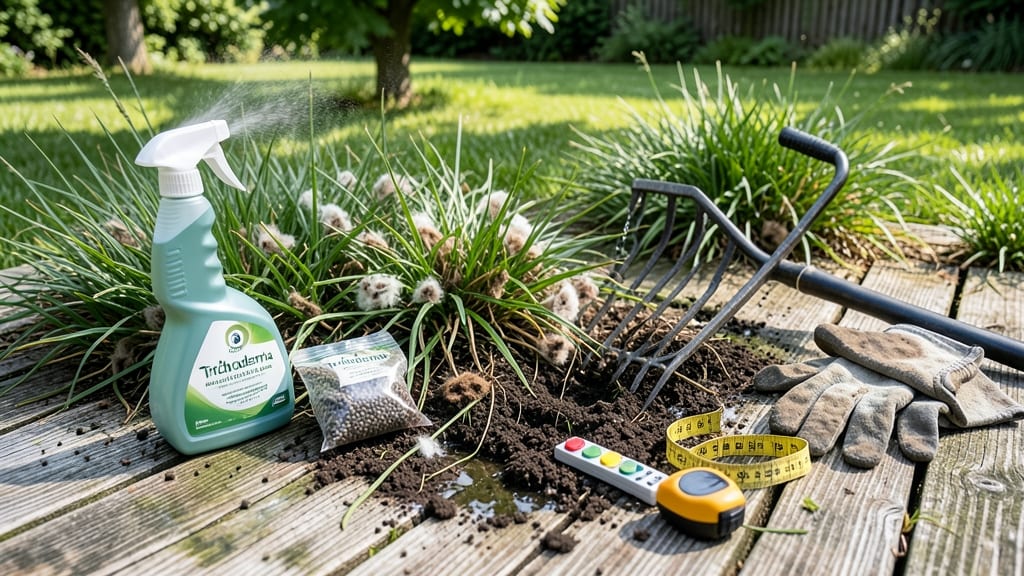
That crusty, rock-hard fungus creeping across your lawn isn’t just unsightly—it’s stealing your grass’s life. 🌱 I’ve seen it turn lush green lawns into brittle, patchy wastelands, but the good news?
You can fight it without killing the grass underneath. The key is spot-targeted action that breaks the fungus’s grip while keeping your lawn healthy.
Overwatering, compacted soil, and too much nitrogen create the perfect fungus party. That’s why I always check soil moisture with my fingers before watering—damp soil is an open invitation for fungal growth.
The first step is identifying the type: dollar spot leaves yellowish patches, while fairy rings create concentric circles of mushrooms and discolored grass.
You’ll tackle it with a mix of organic fixes like baking soda or hydrogen peroxide for small spots, and targeted fungicides for stubborn patches. Aerating compacted soil and adjusting mowing height (never below 3 inches) gives your grass a fighting chance.
Within a few weeks, you’ll see new green shoots pushing through, and that hard crust will crumble away.
For severe cases, don’t hesitate to call a pro—sometimes the fungus has dug in too deep for DIY fixes. But in most cases, this method works like a charm, even for beginners. Let’s get that lawn back to its vibrant best without the harsh chemicals or the guilt.
Root Causes of Stubborn Lawn Fungus
If your lawn is battling hard fungus—those tough, crusty patches that resist treatment—understanding the why behind it is half the battle. Fungal growth isn’t random; it thrives due to specific conditions your grass may be creating. Let’s break down the key culprits and the science behind them.
Fungi love moisture, but too much of it turns your lawn into a fungal buffet. When soil stays soggy—whether from heavy rainfall, poor drainage, or overzealous watering—it creates the perfect anaerobic (low-oxygen) environment that fungi adore.
- Why it happens: Excess water displaces oxygen in soil pores, weakening grass roots and inviting pathogenic fungi like Rhizoctonia or Fusarium to move in. These fungi produce thick, leathery mycelial mats that harden over time.
- Actionable clue: If fungus appears after rain or in low-lying areas, drainage is likely the issue. Step on the patch—if water pools or the soil feels squishy, you’ve got a moisture trap.
💡 Pro Tip: Test your soil’s drainage by digging a 6-inch hole, filling it with water, and timing how long it takes to drain. If it’s slower than 6 hours, amend with organic matter (compost, sand) or consider French drains for chronic issues.
Thatch—a layer of dead grass, roots, and debris between soil and green blades—can be a double-edged sword. While a ¼-inch layer is normal, anything thicker acts as a fungal insulator, trapping moisture and blocking sunlight.
- Why it happens: Fungi like Brown Patch (Rhizoctonia solani) thrive in thick thatch because:
- ✅ Moisture retention: Thatch holds water like a sponge, keeping fungal spores hydrated.
- ✅ Nutrient richness: Decomposing organic matter feeds fungi faster than grass.
- ✅ Shaded roots: Less sunlight weakens grass, making it easier for fungi to colonize.
- Actionable clue: Run your hand over the lawn—if you feel a spongy, rubbery layer (not just dry grass clippings), thatch is likely the problem.
🔥 Fix It: Dethatch in early fall or spring using a vertical mower or raking. For severe cases, top-dress with sand or compost to break it down naturally.
Fungi are opportunistic—when your grass is starving for micronutrients but getting a nitrogen overdose, it weakens, making it an easy target. Over-fertilizing (especially with quick-release nitrogen) creates a sugar rush for fungi, fueling their growth.
- Why it happens:
- ⚖️ Nitrogen-heavy fertilizers promote top growth but starve roots of phosphorus and potassium, which grass needs to fight stress.
- 🍄 Fungi like Dollar Spot (Clarireedia tritici) thrive in high-carbon, low-nitrogen conditions—ironically, they “steal” nitrogen from weakened grass.
- Actionable clue: If fungus appears after fertilizing or in streaks (common with spreader patterns), you’re likely overdoing it.
✨ Solution: Switch to a balanced fertilizer (e.g., 10-10-10 or 8-3-9) and test soil pH (fungi love acidic soil, pH < 6.0). Aim for 6.0–7.0 with lime if needed.
Stressed grass is fungi’s best friend. When roots are damaged—from drought, pests, or disease—they can’t absorb water or nutrients efficiently, creating entry points for fungal invaders.
- Why it happens:
- 🌞 Drought stress forces grass to shut down roots, leaving them vulnerable to Fairy Ring fungi (Marasmius oreades), which thrive in dry, compacted soil.
- 🐜 Grub damage (from Japanese beetles or chafer grubs) creates root gaps where fungi like Necrotic Ring Spot take hold.
- 🔥 Herbicide burn (e.g., from pre-emergent overuse) weakens grass, making it 3x more susceptible to fungal infections.
- Actionable clue: Pull up a small patch of turf—if roots are brown, mushy, or missing, your grass is already fighting a losing battle.
💪 Recovery Plan:
- 🌧️ Deep water (1–1.5 inches per week) to revive roots.
- 🐜 Treat grubs with beneficial nematodes or milky spore.
- 🌱 Aerate to break compaction and improve root oxygen.
🎯 Bottom Line: Hard fungus doesn’t appear out of nowhere—it’s a symptom of deeper lawn health issues. By addressing drainage, thatch, nutrients, and grass strength, you’ll starve out fungi before they harden into stubborn patches. Next up: How to Remove It Without Harming Your Grass.
How to Fix Stubborn Lawn Fungus
Tackling hard fungus in your lawn doesn’t have to mean sacrificing your grass—with the right approach, you can restore a healthy, green yard while keeping the fungus at bay. Below, we break down targeted solutions based on the most common causes, along with prevention tips to stop future outbreaks.
Problem: Fungus thrives in soggy, compacted soil where air and water can’t circulate properly.
How to Fix It:
- 🔪 Aerate Your Lawn – Rent a core aerator (or hire a pro) to pull small plugs of soil, allowing oxygen, water, and nutrients to reach the roots. Do this in early fall or spring when grass is actively growing.
- 🌱 Top-Dress with Sand or Compost – After aerating, spread a ¼-inch layer of coarse sand or compost over the lawn. This improves drainage and adds organic matter.
- ⏰ Reduce Foot Traffic – Avoid walking on wet grass, especially during heavy rain. If you have kids or pets, designate a play area to prevent further compaction.
💡 Prevention Tip:
- Test your soil (DIY kits are cheap!) to check drainage. If it’s too clay-heavy, mix in gypsum (calcium sulfate) to break up particles naturally.
Problem: Fungus loves excess moisture, especially if water pools on the surface.
How to Fix It:
- 💦 Adjust Your Watering Schedule – Water deeply but infrequently (1–1.5 inches per week, including rain). Early morning (4–8 AM) is best to allow grass to dry before evening.
- 🔧 Check Your Sprinklers – Misaligned heads can create wet spots where fungus spreads. Adjust sprinklers to deliver even coverage.
- 🌿 Mow High & Leave Clippings – Set your mower to 3–4 inches to shade the soil and retain moisture. Leave grass clippings (they decompose into natural fertilizer).
💡 Prevention Tip:
- Install a rain gauge to monitor moisture levels. If your lawn stays damp for more than 48 hours, it’s time to aerate or adjust watering.
Problem: Fungus attacks stressed grass lacking nitrogen, potassium, or micronutrients.
How to Fix It:
- 📊 Soil Test First – Before fertilizing, test your soil (local extension offices often offer affordable tests). Look for low nitrogen (N) or phosphorus (P).
- 🌱 Apply a Balanced Fertilizer – Use a slow-release, organic fertilizer (like 16-4-8 or 10-10-10) in early spring and fall. Avoid high-nitrogen fertilizers in summer—this encourages fungal growth.
- 🍄 Spot-Treat with Fungicide (If Needed) – For severe cases, use a selective fungicide (like propiconazole or myclobutanil) on affected patches. Follow label instructions carefully—overuse can harm beneficial microbes.
💡 Prevention Tip:
- Mulch properly – If you’re using grass clippings, ensure they’re finely chopped (not in thick layers) to prevent thatch buildup, which traps moisture.
Problem: Thatch (a layer of dead grass and roots) traps moisture and blocks airflow, creating a fungal paradise.
How to Fix It:
- 🔪 Dethatch in Early Fall – Rent a vertical mower or dethatching rake to remove ¼-inch or less of thatch. Avoid going deeper—you’ll damage roots!
- 🧹 Clean Up Debris – Remove leaves, twigs, and dead grass from the lawn surface. These act as fungal food sources.
- 🌿 Overseed Bare Spots – After dethatching, sprinkle grass seed (matching your lawn type) and lightly rake it in. This fills gaps where fungus can take hold.
💡 Prevention Tip:
- Aerate annually to prevent thatch from thickening. A light layer (≤½ inch) is normal—any thicker needs attention.
To keep fungus from returning, make these habits part of your lawn care routine: ✅ Mow high (3–4 inches) to shade soil and reduce stress. ✅ Water wisely—deep and early, never late at night. ✅ Aerate & overseed every 1–2 years for a resilient lawn. ✅ Test soil annually to adjust pH and nutrients. ✅ Clean up debris promptly—don’t let leaves or clippings smother the grass.
Final Thought: Fungal issues don’t have to be a death sentence for your lawn.
By addressing the root causes (literally!) and adjusting your care routine, you’ll create an environment where grass thrives—and fungus can’t take hold. Start with one fix this season, and watch your lawn bounce back!
Frequently asked questions
Why does my lawn fungus feel like hard crust when I walk on it?
That crusty texture comes from thick fungal mycelial mats—tangled root-like structures that harden as they mature. Common in fairy rings or dollar spot, these mats trap moisture and block grass growth, creating that rock-hard feel underfoot. Break them up by aerating or raking before treating.
Can I just pull up the hard fungus patches and replant?
Not recommended! Pulling removes the visible fungus but leaves behind spores in the soil that will regrow. Instead, treat the area with hydrogen peroxide (3%) or a fungicide, then overseed. The key is fixing drainage first—otherwise, new grass will just get infected again.
Will baking soda really kill lawn fungus?
Yes, but it’s best for small, early-stage patches only. Mix 1 tablespoon baking soda + 1 gallon water in a spray bottle and apply to damp grass. The alkaline solution disrupts fungal cell walls. For stubborn crusty fungus, combine with 1 tablespoon dish soap to help it stick. Reapply every 7-10 days until gone.
How do I know if my hard fungus is fairy rings vs. dollar spot?
Fairy rings form concentric circles with mushrooms at the edges and often have darker green grass inside the ring (from excess nutrients). Dollar spot creates small, straw-colored patches with reddish-brown margins and thrives in warm, humid weather. Check the soil—fairy rings often have hard, crusty soil beneath.
Is it safe to use vinegar on hard lawn fungus?
Vinegar (5% acetic acid) can kill fungus but will also burn your grass if used undiluted. For spot treatment, mix 1 part white vinegar + 3 parts water and apply only to affected areas on a dry day. Test a small patch first—most lawns need gentler treatments like neem oil or copper fungicide to avoid damage.