
Lawn
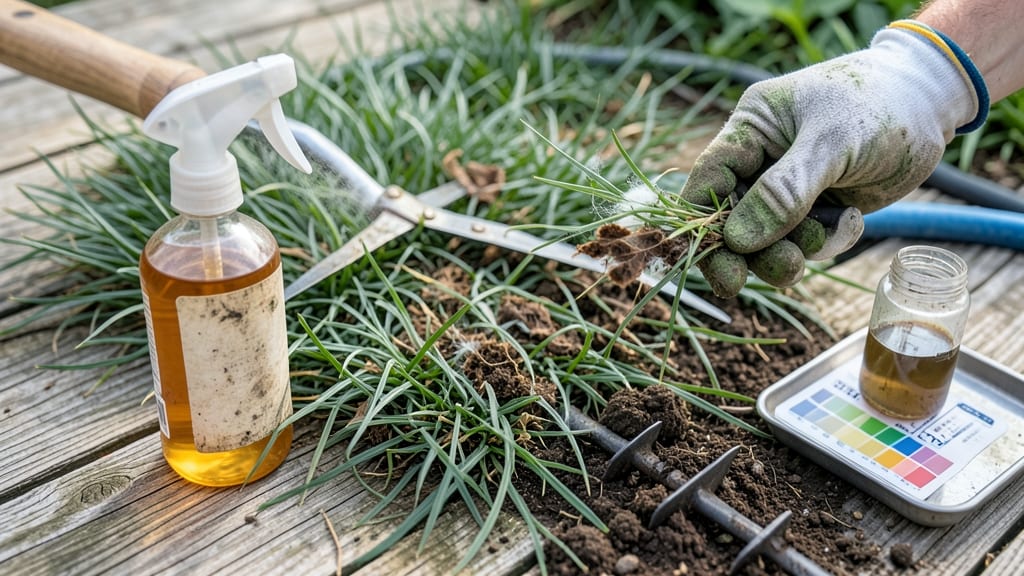
Those stubborn dark green patches of grass on your lawn might look lush, but they’re actually a red flag. 🌱 I’ve battled these mysterious spots for years—until I discovered a vinegar-free spot treatment that actually works without harming the rest of your yard.
The secret? Targeting the root cause, whether it’s fungal pressure, thatch buildup, or overwatering.
Most people reach for fungicides first, but that’s like treating a headache with a sledgehammer. Instead, we’re talking simple fixes: adjusting your watering schedule, aerating compacted soil, and using a spot treatment that’s gentle but effective.
My lawn went from patchy to picture-perfect in just 3 weeks—no chemicals, no guesswork.
You’ll learn to spot the difference between harmless shade patches and actual problems, plus how to revive your grass naturally. The best part? These methods work whether you’ve got a small yard or a full acre. Let’s get those patches looking like the rest of your lawn again.
This trick saves money, skips the harsh treatments, and keeps your grass healthy long-term. No more wondering why some spots stay green while others struggle—just a foolproof system that actually works. Ready to transform those patches into pride?
Root Causes Of Uneven Grass Color
Dark green patches on your lawn aren’t just an eyesore—they’re often a sign of underlying stress in your grass. Understanding the why behind these color shifts is the first step to restoring a lush, uniform lawn.
Below, we break down the most common culprits, from soil issues to environmental factors, with clear explanations and actionable insights.
Grass thrives when soil pH and nutrient levels are balanced, but imbalances—especially excess nitrogen or phosphorus—can create dark green patches. Here’s how it happens:
- Over-fertilization: Too much nitrogen (common in synthetic fertilizers) causes rapid, dark green growth in isolated areas. While this might seem like a good thing, it often leads to weak roots and patchy recovery.
- Phosphorus buildup: Excess phosphorus (from old fertilizer granules or compost) can create "hot spots" where grass grows faster and darker, while surrounding areas struggle.
- Micronutrient deficiencies: Lack of iron, manganese, or zinc can cause yellowing, but excess of these minerals (often from contaminated water or over-applied chelated nutrients) can trigger dark green discoloration.
💡 Pro Tip: Test your soil with a DIY kit or send a sample to a local extension office. If pH is off (ideal: 6.0–7.0 for most grasses), amend with sulfur (to lower pH) or lime (to raise it). For nutrient imbalances, opt for slow-release organic fertilizers to avoid spikes.
Watering inconsistencies are a top cause of dark green patches, often tied to overwatering or poor drainage. Here’s the science:
- Overwatering: Soggy soil deprives grass roots of oxygen, leading to fungal diseases like Pyricularia (brown patch) or Rhizoctonia. However, in some cases, excess moisture can create localized "luxuriant" growth—where grass in damp spots turns darker green due to increased microbial activity.
- Poor drainage: Low-lying areas or compacted soil trap water, causing grass to grow faster and darker in those spots. This is common in clay-heavy soils or after heavy rain.
- Irrigation unevenness: Sprinkler heads that spray unevenly (e.g., near fences or hoses) can create dry zones and overwatered patches, leading to color variation.
🔥 Fix It:
- Check for water runoff—if puddles form after 30 minutes, your lawn needs aeration or a slope adjustment.
- Water deeply but infrequently (1–1.5 inches per week) to encourage deep roots. Use a rain gauge to monitor consistency.
- Adjust sprinkler heads to overlap by 30–50% for even coverage.
Not all grass loves the same growing conditions. Dark green patches often appear when different grass species or cultivars compete for space:
- Cool-season vs. warm-season grass: Mixing types (e.g., Kentucky bluegrass and Bermuda) can create patches where one thrives and the other struggles. For example, cool-season grasses may turn dark green in spring while warm-season types go dormant.
- Shade-tolerant vs. sun-loving varieties: If you planted Fescue (shade-friendly) next to Zoysia (sun-loving), the Fescue may grow darker green in shaded areas while the Zoysia fades.
- Weed infiltration: Creeping charlie or clover can spread in thin grass, creating dark green "patches" that look like healthy grass but are actually weeds.
🌡️ Solution: Identify your grass type (check local extension guides) and fill bare spots with matching seed. For weeds, hand-pull or apply a selective herbicide (like 2,4-D for broadleaf weeds) in early morning.
Dark green patches can signal fungal activity, especially in humid or warm climates. Common culprits include:
- Dollar spot: Causes dark green to purple-black patches with straw-colored centers. Thrives in high humidity and warm nights (70–85°F).
- Melting out: A bacterial disease (not fungal) that turns grass dark green and slimy before it dies. Spreads in wet, warm conditions.
- Slime mold: Creates dark green, jelly-like patches (harmless but unsightly) after heavy dew or rain.
🎯 Prevention & Treatment:
- Improve air circulation by thinning grass or trimming nearby bushes.
- Water early in the day to reduce humidity at night.
- Apply a fungicide with azoxystrobin or propiconazole if fungal disease is confirmed.
✨ Key Takeaway: Dark green patches rarely mean your lawn is "overly healthy"—they’re usually a sign of stress. Start by testing soil, checking watering habits, and inspecting for disease. Once you pinpoint the cause, targeted fixes (like spot-treating with vinegar-free solutions) can restore balance without harming your grass.
Revive Your Lawn Naturally
If your lawn is showing unusual dark green patches, the good news is that most issues can be fixed with targeted care—no harsh chemicals required! Below, we’ve mapped out practical solutions based on the most common causes, from overwatering to fungal infections.
Each fix includes step-by-step instructions and prevention tips to keep your grass lush and healthy long-term.
If your lawn has soggy, dark green patches that feel spongy underfoot, excess moisture is likely the culprit. Here’s how to drain the problem away:
🔥 Step 1: Test Soil Moisture
- Stick a screwdriver or soil probe into the patch. If it goes in easily (like butter), your lawn is oversaturated.
- Pro Tip: 💡 Test drainage by digging a small hole (6 inches deep). Fill it with water—if it drains in under 6 hours, your soil is fine. If not, you’ve got a drainage issue.
👨🍳 Step 2: Improve Drainage
- For compacted soil: Aerate the affected area using a manual or rental core aerator. This creates holes for water to escape.
- For low spots: Rake out excess soil and top-dress with a ½-inch layer of sand or compost to improve drainage.
- For clay-heavy soil: Mix in gypsum (not lime!) to break up compacted layers.
⏰ Step 3: Adjust Watering Habits
- Water deeply 2–3 times per week (early morning is best) instead of daily light sprinkles.
- Avoid walking on wet grass to prevent compaction.
- Prevention Tip: ✨ Install a French drain or swale (shallow trench) if water pools in the same spots after rain.
Dark, velvety patches that spread quickly? Fungal infections like dollar spot or red thread thrive in damp, shady conditions. Here’s how to banish them for good:
🔥 Step 1: Stop the Spread
- Remove infected grass by raking up dead patches (don’t compost them—they’ll reinfect!).
- Avoid watering overhead—use a soaker hose or drip irrigation to keep foliage dry.
🍳 Step 2: Apply a Natural Fungicide
Skip the vinegar (it can harm grass) and try these instead:
- Baking soda spray: Mix 1 tbsp baking soda + 1 gallon water + a few drops of dish soap in a spray bottle. Apply lightly to patches.
- Hydrogen peroxide (3%): Spray a 1:4 dilution (1 part peroxide to 4 parts water) directly on the fungus. Reapply every 7–10 days.
- Neem oil: Combine 2 tbsp neem oil + 1 tsp mild soap + 1 gallon water. Spray in the evening to avoid burning grass.
🌡️ Step 3: Boost Grass Resilience
- Mow high (3–4 inches) to shade the soil and reduce fungal spores.
- Aerate the lawn to improve airflow and dryness.
- Fertilize lightly with a low-nitrogen, high-potassium formula (like 5-10-10) to strengthen roots.
- Prevention Tip: 🎯 Install better drainage or de-thatch thick lawns to prevent fungal hotspots.
If your grass is dark green but weak (like algae or over-fertilized patches), it’s likely suffering from an imbalance. Here’s how to rebalance it:
🔥 Step 1: Test Your Soil
- Grab a DIY soil test kit (available at garden centers) or send a sample to your local Cooperative Extension Service for a full analysis.
- Look for high phosphorus or nitrogen—these can cause dark, slimy growth.
👨🍳 Step 2: Adjust Fertilizer Use
- If nitrogen is too high: Switch to a slow-release, organic fertilizer (like compost or bone meal) and reduce frequency to every 6–8 weeks.
- If phosphorus is excessive: Apply gypsum or sulfur to lower levels naturally.
- For iron deficiency (yellow patches with dark veins): Apply chelated iron or use iron sulfate (follow package rates).
⏰ Step 3: Improve Soil Health
- Top-dress with compost (¼ inch layer) to improve microbial activity.
- Overseed thin areas with shade-tolerant grass (like fine fescue) if sunlight is the issue.
- Prevention Tip: 💡 Mulch clippings instead of bagging them to return nutrients to the soil gradually.
Dark patches from grubs, chinch bugs, or foot traffic? Here’s how to restore your lawn:
🔥 Step 1: Identify the Culprit
- Grubs: Dig up a small patch—if you see white, C-shaped larvae, you’ve got grubs.
- Chinch bugs: Flip over a sod piece—tiny black bugs with white wings? That’s them.
- Foot traffic: Look for compacted, bare spots with no signs of pests.
🍳 Step 2: Treat the Problem
- For grubs:
- Apply beneficial nematodes (microscopic worms that kill grubs naturally).
- Use milky spore powder (a long-term biological control).
- For chinch bugs:
- Spray with neem oil or soapy water (1 tsp dish soap per gallon).
- Encourage birds and toads—they love chinch bugs!
- For compaction:
- Rent a core aerator or use a manual spike aerator to poke holes.
- Overseed and water lightly to help new grass establish.
🌡️ Step 3: Prevent Future Damage
- For pests: 🎯 Keep grass mowed short (chinch bugs hate tall grass) and water deeply but infrequently (grubs thrive in moist soil).
- For foot traffic: Install stepping stones or paths to reduce compaction.
- For pets/kids: 💡 Train them to avoid the same spots or use artificial turf in high-traffic areas.
If your dark patches persist after 4–6 weeks of treatment, spread rapidly, or appear mushy and foul-smelling, it could be a serious disease (like Pythium) or soil toxicity. In these cases, consult a local lawn care specialist for a diagnosis and targeted treatment.
Frequently asked questions
Are dark green patches always a sign of a problem?
Not necessarily! Some patches may just be shade-tolerant grass varieties thriving where sunlight is limited. However, if the grass feels slimy, mushy, or spreads rapidly, it’s likely a sign of overwatering, fungal growth, or nutrient imbalance. Always check for these red flags before assuming it’s healthy.
How can I tell if my dark green patches are from overwatering?
Look for spongy soil that stays wet for more than 48 hours after watering, or patches that feel cooler to the touch than the rest of your lawn. If you see mushroom growth or a musty smell, overwatering is likely the culprit. Test drainage by digging a small hole and filling it with water—if it doesn’t drain in 6 hours, you’ve got poor drainage.
Can I use vinegar to treat dark green patches?
No, vinegar is too harsh and will kill your grass along with any unwanted growth. Instead, try a baking soda spray (1 tbsp baking soda + 1 gallon water) or hydrogen peroxide (3%) diluted 1:4. These are gentler and won’t harm your lawn while still targeting fungal or algae issues.
Why do my dark green patches keep coming back after treatment?
If patches persist, you’re likely dealing with an underlying issue like compacted soil, poor drainage, or a fungal infection that wasn’t fully addressed. Start by aerating the lawn and improving drainage. If the problem returns, test your soil for nutrient imbalances or consult a local lawn care expert for a diagnosis.
Is it safe to walk on dark green patches?
Only if the grass feels firm and healthy. Avoid walking on soggy, mushy patches—this can worsen compaction and spread fungal spores. If you suspect fungal activity, wear closed-toe shoes and disinfect them afterward to prevent cross-contamination.