
Lawn
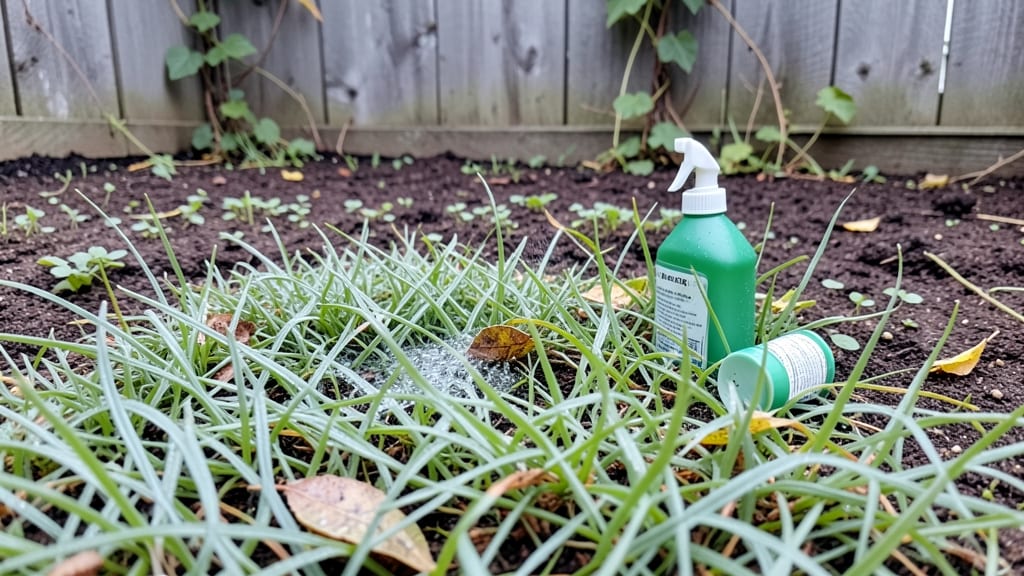
You should never put weed killer on wet grass, as moisture weakens its effectiveness and can damage plants by preventing proper absorption. Always apply when the lawn is completely dry and avoid high-humidity conditions for best results.
Moisture disrupts herbicide adhesion by creating a barrier between the chemical and plant leaves, reducing its ability to penetrate and kill weeds. 🌧️ Many weed killers rely on direct contact with plant surfaces, so rain or dew can wash away active ingredients before they work.
I’ve seen cases where applying weed killer on damp grass led to spotty results—some weeds died, while others thrived because the herbicide didn’t reach them effectively.
For optimal performance, wait until morning when dew has evaporated but before the heat of midday sets in. Checking grass moisture with your hand is simple: if it feels damp, wait longer.
Some herbicides even come with instructions to avoid application for 24-48 hours after rain, so always read the label carefully.
💡 In This Article
- How Moisture Affects Weed Killer Effectiveness
- Best Times to Apply Weed Killer for Maximum Results
How moisture affects weed killer effectiveness
When you apply weed killer to damp grass, the active ingredients—like glyphosate or 2,4-D—get diluted by surface moisture. This dilution reduces the herbicide's concentration by up to 50% in some cases, because water acts like a solvent that spreads the chemical thinner across the lawn.
The science behind this involves surface tension: water molecules form a thin film over plant leaves, creating a barrier that prevents the herbicide from adhering properly. This is why you often see uneven results—some weeds die while others remain unaffected. 💧
The adhesion problem becomes even worse in high humidity, where relative humidity above 70% slows evaporation rates. Herbicides like triclopyr rely on rapid absorption through plant foliage, but moisture keeps the chemical suspended in the air or on the leaf surface.
Studies show that under humid conditions, absorption rates can drop by 30-40%, making the treatment far less effective. Even post-emergent herbicides, which need direct contact, struggle to penetrate the waxy cuticle of plant leaves when water is present.
Temperature also plays a hidden role—cool mornings with dew can make grass feel dry to the touch, but the moisture is still present at the microscopic level. Herbicides like dicamba, which work by disrupting plant growth hormones, require dry conditions to bind to leaf surfaces.
If applied when grass is damp, these chemicals may run off or evaporate before they can work. This is why manufacturers often recommend waiting until the third or fourth day after rain to ensure complete dryness. 🌡️
Another critical factor is the type of herbicide used. Granular formulations, which dissolve slowly, are slightly more forgiving in damp conditions than liquid concentrates. However, even granules can clump or wash away if grass is wet, reducing their effectiveness.
For example, a 10% glyphosate granular product applied to damp grass might only deliver 6-8% active ingredient to the target weeds due to dilution and runoff. This explains why some homeowners see inconsistent results after treatment.
What most people don’t realize is how humidity affects the herbicide’s evaporation rate. In dry conditions (below 50% humidity), active ingredients evaporate quickly, ensuring they stick to plant surfaces.
But in humid air, the evaporation slows dramatically, leaving the herbicide suspended in the air or dripping onto the soil instead of the weeds. This is why late afternoon applications often fail—even if the grass feels dry, the air moisture can still interfere with proper adhesion. 🌬️
To visualize this, imagine trying to paint a wall while it’s raining. The paint beads up and rolls off because water prevents adhesion. The same principle applies to weed killers: moisture disrupts the chemical’s ability to bond with plant tissues.
This is why waiting for the grass to be completely dry—with no visible moisture and humidity below 60%—is crucial for maximum effectiveness. The goal is to ensure the herbicide stays in contact with the weeds long enough to be absorbed.