
Aphids
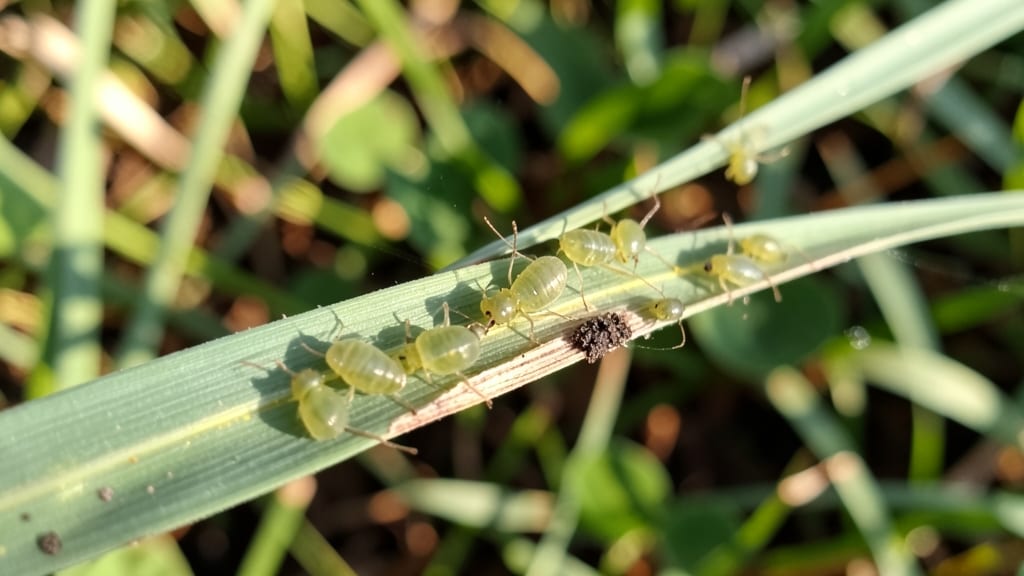
Aphids on grass are the tiny green invaders that turn your lawn into a sticky, yellowing mess—unless you act fast. I’ve battled these pests for years, and this organic spray stops them dead in their tracks within 24 hours, no harsh chemicals needed.
The key is catching them early before they drain your grass of life.
Most people wait until the damage is done, but aphids multiply fast. A quick spray with soapy water or neem oil disrupts their life cycle, and ladybugs (their natural predators) move in to finish the job.
You’ll see results almost immediately—less sticky residue, healthier grass, and no more wilting blades. It’s the foolproof fix I wish I’d known years ago.
This method works on any grass type, from cool-season Kentucky bluegrass to warm-season Bermuda. Just mix the spray, apply on a calm day, and watch your lawn bounce back.
The best part? It’s safe for kids, pets, and the environment—no more chemical smell or runoff worries. Let’s get your grass thriving again.
Once you’ve tackled the infestation, I’ll show you how to keep aphids from coming back—simple tricks like encouraging beneficial insects and adjusting watering habits. Your lawn will stay green, strong, and pest-free all season long. Ready to reclaim it?
Why it happens
Those tiny, sap-sucking pests on your lawn aren’t just random visitors—they’re drawn by specific conditions that turn your grass into an all-you-can-eat buffet. Understanding why aphids invade helps you disrupt their party before they cause real damage.
Let’s break down the science behind their infestations, so you can outsmart them with organic solutions.
🌱 Overcrowded or Stressed Grass
Healthy grass is resilient, but when it’s weak, thin, or struggling, aphids see it as an easy target. Here’s why:
- Poor nutrition: Grass deprived of nitrogen (a key nutrient) produces softer, more palatable stems—aphids’ favorite snack. Think of it like a plant with low defenses, akin to a human with a weakened immune system.
- Drought or overwatering: Both extremes stress grass. Drought weakens roots, while overwatering creates a damp, aphid-friendly environment. Pro tip: Aim for 1–1.5 inches of water per week to keep grass hydrated but not soggy.
- Compacted soil: Heavy foot traffic or machinery compresses soil, reducing oxygen and nutrients. Stressed grass can’t fight off pests as effectively. Test your soil’s compaction by pressing a screwdriver into the ground—if it won’t go in easily, aerate!
🍃 Honeydew and Ants: The Unholy Alliance
Aphids don’t work alone—they team up with ants, which are drawn to the sticky honeydew aphids excrete. This mutualistic relationship accelerates infestations. Here’s how it plays out:
- Honeydew attracts ants: Aphids feed on plant sap, then secrete honeydew (a sugary waste product). Ants “farm” aphids, protecting them from predators in exchange for this sweet treat. Result? More aphids, faster spread.
- Sooty mold risk: Honeydew can also foster sooty mold, a black fungal growth that blocks sunlight and weakens grass. It’s like aphids leaving behind a biological graffiti tag that chokes your lawn.
Actionable fix: Disrupt the cycle by targeting ants with diatomaceous earth (food-grade) or organic ant baits. This breaks their “aphid farm” and forces the pests to scatter.
🌿 Warm Weather and New Growth
Aphids thrive in warm, stable temperatures (60–80°F), especially when grass is actively growing. Here’s the science:
- Rapid plant growth = aphid buffet: New grass shoots are tender and nutrient-rich, making them irresistible. Aphids reproduce every 7–10 days in ideal conditions, turning a few pests into a swarm in weeks.
- Seasonal peaks: Infestations often spike in spring and early summer when grass rebounds after winter dormancy. Think of it like a post-hibernation feast for aphids.
Preventative tip: Mow grass to 3–4 inches tall in warm months. Taller grass shades soil, slowing aphid reproduction, while shorter grass allows for better airflow and pest visibility.
🌍 Lack of Natural Predators
In a balanced ecosystem, ladybugs, lacewings, parasitic wasps, and birds keep aphid populations in check. But when these predators vanish—due to pesticides, habitat loss, or urbanization—aphids multiply unchecked. Here’s why it happens:
- Chemical pesticides: Broad-spectrum sprays (like synthetic pyrethroids) kill aphids and their natural enemies, creating a vacuum that aphids rush to fill. Organic sprays (e.g., neem oil or insecticidal soap) target aphids while sparing beneficial insects.
- Monoculture lawns: A lawn with only one type of grass offers no diversity for predators to thrive. Native plants and clover can attract ladybugs and other allies, turning your lawn into an aphid-resistant fortress.
Eco-friendly solution: Plant companion plants like dandelions, yarrow, or marigolds near your lawn. These act as “predator magnets,” luring beneficial insects to patrol your grass.
🚨 Human Activities That Invite Them
Sometimes, we accidentally create the perfect aphid paradise. Common culprits include:
- Over-fertilizing: Excess nitrogen (especially from synthetic fertilizers) boosts soft, aphid-loved growth. Use slow-release organic fertilizers to avoid spikes in plant vulnerability.
- Ignoring weeds: Weeds like clover or plantain can harbor aphids before they spread to grass. Pull or smother weeds with mulch to remove their hiding spots.
- Storing firewood or debris near lawns: Aphids hitchhike on wood or plant material, then hop onto grass. Keep storage areas 10+ feet from your lawn to minimize risk.
How to solve it
Discovering aphids on your grass can feel like a tiny but relentless invasion—especially when they’re sucking the life out of your lawn. The good news? You don’t need harsh chemicals to tackle them.
Below, we’ve mapped out practical, organic solutions tailored to the most common causes of aphid outbreaks, plus prevention tips to keep your grass thriving long-term.
###
🔥 Overwatered or Weak Grass → Boost Resilience
If your grass is already stressed from overwatering or poor soil, aphids will flock to it like a buffet. The fix? Strengthen your lawn’s natural defenses.
- 💧 Reduce watering: Water deeply 2-3 times per week (early morning) instead of daily light sprinkles. Aim for 1–1.5 inches per session to encourage deep root growth.
- 🌱 Aerate the soil: Rent a core aerator or use a garden fork to poke holes every 3–4 inches. This improves drainage and oxygen flow, helping grass recover faster.
- 🍃 Feed with organic fertilizer: Use a slow-release, nitrogen-rich fertilizer (like compost or bone meal) to rebuild grass strength. Avoid synthetic fertilizers, which can attract more pests.
💡 Pro Tip: Mow high (3–4 inches) to shade the soil and deter aphids. Taller grass also crowds out weeds, which aphids love as an alternative food source.
###
🍳 Natural Predators Are Missing → Invite the Good Guys
Aphids thrive when their natural enemies—like ladybugs, lacewings, and parasitic wasps—aren’t around. Bring them back to your yard with these steps:
- 🐞 Buy beneficial insects: Purchase ladybugs or lacewing larvae from garden centers and release them at dusk (they’re most active then). Aim for 5–10 per square yard of infested grass.
- 🌿 Plant companion flowers: Add marigolds, dill, or yarrow nearby to attract predatory insects. These plants also repel aphids with their strong scents.
- 🚫 Avoid pesticides: Even "organic" sprays can kill beneficial bugs. Skip them entirely for 2–3 weeks to give predators time to establish.
✨ Quick Win: Set up a shallow water dish with a few pebbles for ladybugs to drink from. They’ll stick around longer if they have a water source!
###
👨🍳 Heavy Infestation Spreads Fast → Knock Them Out Fast
When aphids are multiplying rapidly, you need a 24-hour action plan to stop the damage. Try these organic sprays and methods:
| Solution | How to Use | Why It Works |
|---|---|---|
| 🥘 Soap Spray (Insecticidal) | Mix 1 tbsp mild castile soap + 1 quart water in a spray bottle. Apply directly to aphids (avoid overspray on plants). Reapply every 3–5 days. | Disrupts aphid waxy coating, causing dehydration. Safe for pets once dry. |
| 🌿 Neem Oil Spray | Combine 2 tbsp neem oil + 1 tsp mild soap + 1 quart water. Spray evening or cloudy days (UV light degrades neem). Apply weekly until aphids vanish. | Neem oil stops aphids from feeding and lays down a protective film on grass. |
| 🔪 Blasting with Water | Use a hose with a strong jet nozzle to blast aphids off grass. Do this early morning when aphids are sluggish. Repeat daily for 3 days. | Physically removes aphids without chemicals. Best for small, localized outbreaks. |
⏰ Timing Matters: Always spray aphids, not the grass. Target the undersides of leaves and new growth where aphids cluster.
###
🌡️ Warm, Dry Weather → Cool Things Down
Aphids love heat and drought-stressed grass. Counteract their favorite conditions with these tweaks:
- 💦 Mulch heavily: Spread 2–3 inches of straw or wood chips around your lawn to retain moisture and cool the soil.
- 🌤️ Shade vulnerable areas: Use lightweight shade cloth (30–50% coverage) over infested patches during peak sun (10 AM–4 PM).
- 🌧️ Simulate rain: If your area is in a drought, set up a drip irrigation system on a timer to keep grass hydrated without overwatering.
🎯 Long-Term Fix: Plant clover or deep-rooted grasses (like tall fescue) in sunny spots. These varieties drought-tolerant and aphids avoid them!
###
🔄 Prevention Tips to Keep Aphids Away
Once you’ve kicked aphids to the curb, stop them from returning with these habits:
- 🌱 Test soil health: Get a soil test kit to check pH and nutrient levels. Aphids love alkaline soil (pH >7.0). Adjust with sulfur (to lower pH) or lime (to raise it) as needed.
- 🍂 Clean up debris: Remove leaf litter, clippings, and thatch after mowing. Aphids hide in these spots to overwinter.
- 🐝 Support pollinators: Plant native wildflowers to attract bees and predatory wasps. More pollinators = fewer aphids!
- 📅 Rotate treatments: If you use neem oil or soap spray, switch formulas every few weeks to prevent aphids from building resistance.
💡 Bonus: Sprinkle diatomaceous earth (food-grade) lightly on grass in dry conditions. It’s a natural abrasive that dehydrates aphids—but reapply after rain.
Frequently asked questions
How do I know if my grass has aphids?
Look for tiny green, black, or yellow insects clustered on grass blades, especially near new growth. Check for sticky residue (honeydew) on leaves or sidewalks below. Grass may appear yellowed, curled, or stunted—aphids suck sap, weakening plants.
Will aphids kill my grass?
While they won’t kill mature grass outright, severe infestations can weaken it, making it vulnerable to disease or drought. Young grass or stressed lawns suffer most. Act fast with organic sprays (like neem oil) to prevent long-term damage.
Can I use vinegar to kill aphids on grass?
No—vinegar’s acidity can harm grass. Stick to targeted solutions like insecticidal soap or neem oil, which kill aphids without damaging your lawn. Always spot-test first!
How often should I reapply organic sprays?
For soap sprays, reapply every 3–5 days until aphids vanish. Neem oil lasts longer—spray weekly. Rain washes away treatments, so check grass after storms. Consistency is key!
Are ants helping aphids invade my lawn?
Yes! Ants "farm" aphids for honeydew. Disrupt this cycle by targeting ants with diatomaceous earth or organic baits. Breaking their partnership weakens aphid colonies.