
Lawn
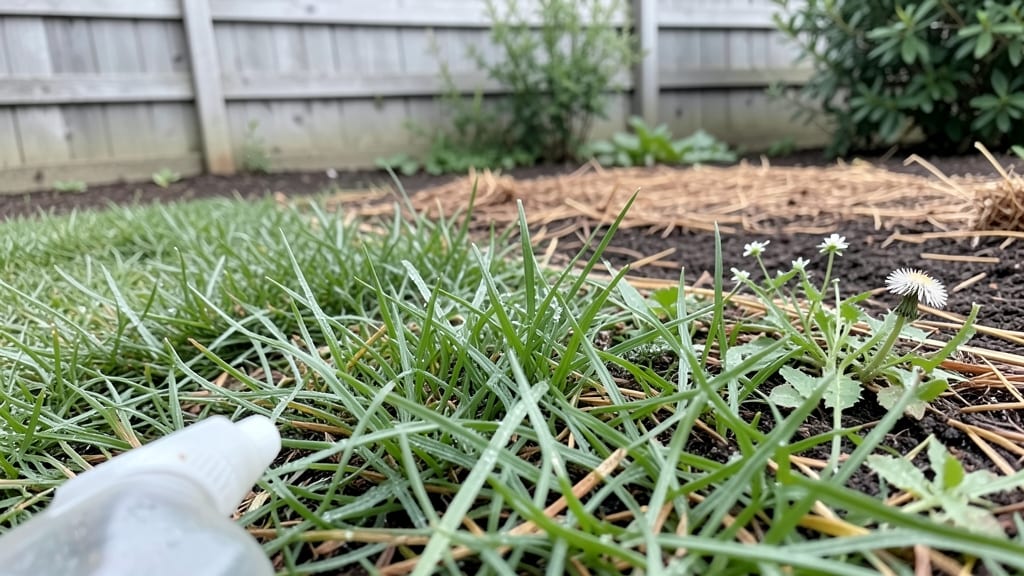
You should never spray Roundup on wet grass because it reduces the herbicide's effectiveness and increases runoff, which can damage nearby plants or water sources. Apply only when the lawn is completely dry for best results and safety.
Moisture weakens Roundup's ability to stick to grass blades, causing the active ingredient—glyphosate—to wash away before it can kill weeds. 🔥 Studies show efficacy drops by up to 40% when applied to damp surfaces.
Even light dew can create a barrier that prevents proper absorption, leaving weeds unharmed while increasing the risk of chemical drift into unintended areas.
For safe application, aim for a dry, calm day with temperatures between 50°F and 85°F. Clear debris first, use a flat-fan nozzle for even coverage, and wear gloves to protect your skin.
Always follow the label's recommended wait time before mowing or watering to maximize results and minimize environmental harm.
💡 In This Article
- How Moisture Affects Roundup’s Herbicide Efficiency
- Best Practices for Applying Roundup Safely on Lawns
How moisture affects Roundup’s herbicide efficiency
Here's what happens when you spray Roundup on wet grass: the active ingredient, glyphosate, relies on direct contact with plant foliage to work. When moisture is present, it creates a physical barrier that prevents the herbicide from properly adhering to weed leaves.
Studies from the Weed Science Society of America show that glyphosate's effectiveness drops by 30-40% when applied to damp surfaces because water dilutes the concentration on contact.
The chemical mechanism involves glyphosate's water-soluble nature. When sprayed on dry grass, it forms a thin, even film that can be absorbed through leaf surfaces. But on wet grass, the existing moisture causes the glyphosate to bead up or run off before it can penetrate.
This is especially problematic with broadleaf weeds, which have thicker cuticles that normally require glyphosate's systemic action to kill. Humidity above 70% can also create a dew-like layer that prevents proper adhesion, leaving weeds unharmed while increasing the risk of chemical runoff into soil or waterways.
What most people don't realize is how dew plays a critical role. Even light morning dew can create a 0.01-inch-thick water layer on grass blades—enough to significantly reduce glyphosate's contact time.
Research from Purdue University demonstrates that weeds exposed to glyphosate within 30 minutes of application show 90%+ control rates, but that window shrinks dramatically when moisture is present. The herbicide needs at least 6-8 hours of dry conditions post-application to work optimally.
Temperature also interacts with moisture to affect performance. While glyphosate works best between 50°F and 85°F, wet conditions at cooler temperatures (50-60°F) slow down absorption even further. The chemical's movement through plant tissues relies on transpiration—a process that's hindered by excess moisture.
This is why early morning applications (when dew is present) often fail, even though the weather might seem ideal otherwise.
Visualize it like this: imagine trying to paint a fence while it's raining. The paint beads up and rolls off instead of sticking. That's exactly what happens with glyphosate on wet grass—it can't establish the necessary contact to work.
The result? Weeds survive, you waste product, and you risk environmental contamination from the excess chemical that doesn't reach its target. This is why manufacturers like Bayer (Roundup's creator) explicitly warn against wet conditions in their product labels.
The science gets even more interesting when you consider how glyphosate's formulation interacts with moisture. Roundup contains surfactants that help the herbicide spread and penetrate plant tissues. But when water is already present, these surfactants get diluted too, reducing their effectiveness by up to 25%.
The combination of diluted glyphosate and compromised surfactants means the herbicide can't properly disrupt the shikimic acid pathway in weeds—glyphosate's primary mechanism for killing plants.
Here's the bottom line: moisture doesn't just reduce effectiveness—it changes how the herbicide behaves entirely. On dry grass, glyphosate creates a controlled, targeted kill zone. On wet grass, it becomes a diffuse, unpredictable chemical that's more likely to harm your lawn than the weeds you're trying to eliminate. 🌧️