
Pests and Diseases
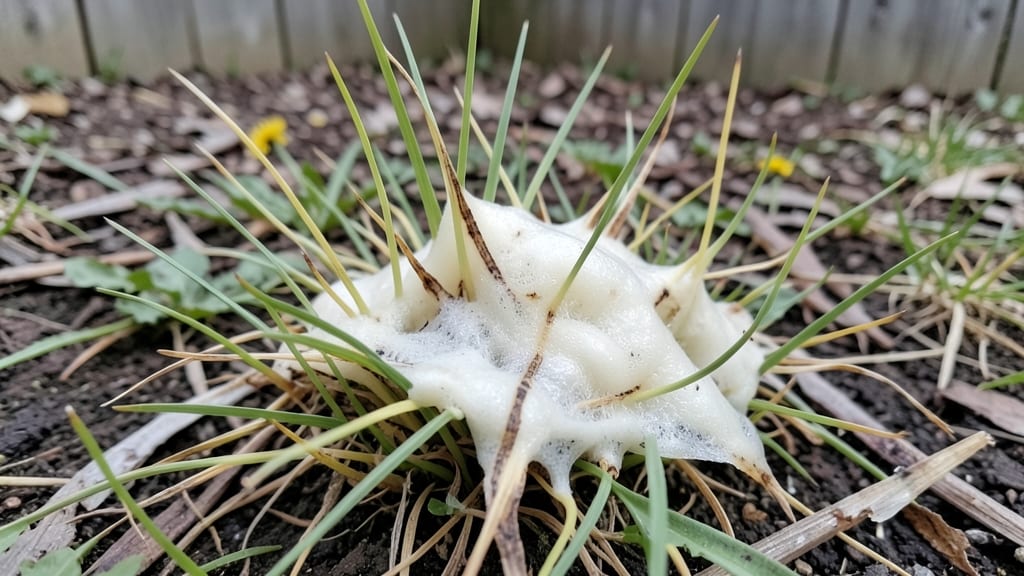
That ghostly white slime mold on grass isn’t moss—it’s slime mold, and it spreads faster than you think. 🌱 I’ve watched it turn a perfect green yard into a ghostly white mess overnight, but there’s a way to banish it. in hours without harsh chemicals.
The key is acting fast before it settles deeper into the thatch.
Slime mold thrives when grass stays damp for days, smothered under fallen leaves or clippings. It’s not a fungus or disease—just a weird, temporary organism—but if you ignore it, your lawn will look like a science experiment gone wrong.
The good news? A stiff rake and a sunny afternoon are all you need to wipe it out.
Within minutes of scraping it off, your grass will breathe again. For stubborn patches, a mix of water and vinegar (1:1 ratio) sprayed directly kills the spores without harming the turf. Repeat after heavy dew, and you’ll keep it from staging a comeback.
This works for all grass types, from St. Augustine to Kentucky bluegrass. The secret? Staying one step ahead of moisture. Let’s get that lawn looking fresh again—no chemicals, no fuss.
Why it happens
That creamy, white, jelly-like substance creeping across your lawn isn’t just an eyesore—it’s a sign your grass is sending out an _SOS_. Understanding the root causes of this slimy invader helps you tackle it faster and prevent its return.
Let’s break down the science behind why your grass suddenly looks like a science experiment gone wrong.
🌧️ Overwatered or Poorly Drained Soil
Slime mold thrives in damp, humid conditions—think of it as the lawn’s version of a soggy sponge. When your grass gets too much water (whether from rain, sprinklers, or poor drainage), the soil stays saturated for long periods.
This moisture creates the perfect breeding ground for Fuligo septica (the most common white slime mold) and its relatives.
- Why it happens: Slime mold spores lie dormant in soil until moisture triggers their growth. Excess water also weakens grass, making it easier for the mold to spread across blades.
- Actionable fix: Improve drainage by aerating compacted soil or installing French drains. Water deeply but less frequently—aim for 1 inch per week (including rain) to let the soil dry between waterings.
🍄 Organic Debris Buildup
Leaves, thatch, and even grass clippings aren’t just clutter—they’re a buffet for slime mold. When organic matter piles up, it decomposes slowly, creating a warm, moist microclimate that slime mold loves. Think of it like a compost pile, but for pests.
- Why it happens: Decomposing plant material releases nutrients and heat, which speeds up slime mold’s growth. The mold’s spores hitchhike on decaying matter, landing on your grass like a slow-motion snowfall.
- Actionable fix: Rake up leaves and debris regularly, especially in fall and spring. Mow high (3–4 inches) to reduce thatch buildup, and consider a light dethatching if your lawn feels spongy.
🌡️ Warm, Shady, and Humid Conditions
Slime mold isn’t a fan of the desert—it’s a tropical creature at heart. Warm temperatures (60–80°F), high humidity, and shade create the ideal conditions for it to explode across your lawn overnight. Ever noticed it after a warm rain? That’s no coincidence.
- Why it happens: Slime mold reproduces via spores that float on air currents or hitch rides on insects. When humidity spikes (like after a summer storm), these spores germinate rapidly, forming the familiar white, slimy networks.
- Actionable fix: Trim overgrown trees or bushes to improve airflow and sunlight exposure. If your lawn stays damp for days, consider a soil test to check for compaction or clay-heavy soil that traps moisture.
🔄 Nutrient Imbalances in Soil
Just like too much sugar feeds yeast in bread, excess nitrogen in your soil can trigger slime mold outbreaks. Fertilizers (especially fast-release ones) create a nutrient-rich environment that the mold feasts on, while also weakening grass resilience.
- Why it happens: High nitrogen levels promote lush, soft grass—perfect for slime mold to spread unchecked. The mold breaks down organic matter, but in doing so, it competes with your grass for nutrients, leading to patchy, weak growth.
- Actionable fix: Switch to a slow-release, balanced fertilizer (look for a 3-1-2 or 4-1-2 ratio). Avoid over-fertilizing in spring and fall when moisture levels are high. A soil test can help you dial in the right nutrients.
🌱 Stress from Fungal or Bacterial Infections
If your grass is already battling other pests (like dollar spots or brown patch), slime mold moves in like a opportunistic roommate. Weakened grass can’t fight back, so the mold spreads unchecked.
- Why it happens: Fungal infections create micro-tears in grass blades, releasing sugars that slime mold consumes. It’s a vicious cycle: the mold thrives on decay, and the decay invites more mold.
- Actionable fix: Treat existing fungal issues with fungicidal sprays (like propiconazole) and improve lawn health with beneficial microbes (like Trichoderma fungi). Strengthen grass with core aeration and proper mowing.
Pro Tip: 💡 Slime mold isn’t harmful to grass—it’s more like a lawn’s temporary houseguest that overstays its welcome. The real damage comes from the conditions that let it take over. By fixing moisture, debris, and nutrient imbalances, you’ll send it packing for good.
How to solve it
Discovering that white, slimy mold has taken over your lawn can feel like a nightmare—especially when you’re trying to keep your yard pristine. The good news? Most cases of white slime mold (often dog vomit fungus or cub fungus) are harmless to grass and people, but they’re still unsightly.
The key to removal is acting fast and using the right methods. Below, we’ve mapped out practical solutions based on the most common causes, so you can tackle the problem without harsh chemicals.
###
🔥 Cause 1: High Humidity or Recent Rain
When moisture lingers on grass blades, white slime mold thrives like a sponge. If your lawn is damp from rain, morning dew, or even overwatering, this slimy invader will appear overnight.
How to Fix It:
- 🍳 Scrape It Off Gently
Use a stiff plastic rake or a putty knife to carefully scrape the mold off the grass blades. Avoid metal tools—they can damage the grass. Work in small sections for best results.
- 👨🍳 Let the Sun Do the Work
Slime mold hates sunlight. If possible, wait until the lawn dries out naturally—direct sun will kill the mold within 24–48 hours. Mowing the grass slightly shorter can also help expose it to more sunlight.
- 🔪 Avoid Watering at Night
If humidity is the issue, adjust your watering schedule. Water early in the morning so the grass has time to dry before evening. This reduces the perfect breeding conditions for mold.
💡 Prevention Tip:
Install a rain gauge or smart sprinkler system to monitor moisture levels. Aim for 1 inch of water per week, including rainfall. If your lawn stays soggy for more than 48 hours, consider aerating compacted soil to improve drainage.
###
🌡️ Cause 2: Thatch Buildup or Poor Drainage
Thatch—a layer of dead grass, roots, and debris—traps moisture and creates the ideal environment for slime mold. If your lawn has thick thatch or clay-heavy soil, mold will keep returning unless you address the root issue.
How to Fix It:
- 🔪 Dethatch Your Lawn
Rent a dethatching rake or use a lawn mower with a thatch-clearing blade to remove the top layer of debris. Focus on areas where mold appears most frequently. For severe cases, consider core aeration to break up compacted soil.
- ⏰ Improve Drainage
If your yard has low spots or poor drainage, redirect water away from the lawn using French drains or by sloping the soil slightly. For clay soil, mix in compost or sand to improve water absorption.
- 🌱 Overseed Bare Spots
Thin or patchy grass allows mold to spread more easily. Overseed bare areas with a disease-resistant grass seed to create a denser, healthier lawn that resists moisture buildup.
💡 Prevention Tip:
Test your soil’s pH and nutrient levels—imbalanced soil can weaken grass, making it more susceptible to mold. Apply a slow-release fertilizer in early spring to promote strong, resilient growth.
###
🎯 Cause 3: Organic Debris or Shady Areas
Leaves, twigs, and other organic matter create a damp, shaded microclimate where slime mold loves to hide. If your yard has lots of shade or debris, mold will keep reappearing until you break the cycle.
How to Fix It:
- 🍳 Clear Debris Regularly
Rake up leaves, twigs, and other organic matter from your lawn at least once a week during wet seasons. Pay extra attention to areas under trees or near fences where shade lingers.
- 🌿 Trim Overhanging Branches
If slime mold is concentrated in shady spots, trim back branches to allow at least 6 hours of sunlight per day. This disrupts the mold’s favorite conditions.
- ✨ Use a Vinegar Spray (Optional)
For stubborn patches, mix 1 part white vinegar with 3 parts water in a spray bottle. Lightly mist the affected area (avoid over-saturating the grass). The acidity helps dissolve the mold without harming the lawn.
💡 Prevention Tip:
Install mulch mowers to finely chop grass clippings, which can be left on the lawn as natural fertilizer—just avoid letting them pile up in thick layers. For shady lawns, choose shade-tolerant grass varieties like fine fescue or creeping red fescue.
###
✨ When to Call a Pro
While white slime mold is usually harmless, if your lawn also shows signs of brown patches, fungal rings, or excessive thinning, you may have a deeper issue like dollar spot or brown patch disease.
In these cases, consult a local lawn care professional for a soil test and targeted treatment.
Frequently asked questions
Is white slime mold harmful to my grass or pets?
White slime mold is completely harmless to grass, pets, and humans. It won’t damage your lawn permanently, but it can make it look unsightly. The mold feeds on organic debris and disappears when conditions dry out. Just remove it promptly to keep your yard looking its best.
Why does white slime mold keep coming back after I remove it?
If it keeps returning, your lawn likely has excess moisture or organic buildup. Check for poor drainage, thick thatch, or shaded areas where debris collects. Fixing these issues—like improving airflow or raking up leaves—will prevent future outbreaks.
Can I use bleach or fungicides to kill white slime mold?
No, bleach is unnecessary and can harm your grass. Fungicides aren’t needed either since slime mold isn’t a fungus. Instead, use a mix of 1 part vinegar to 3 parts water for stubborn patches, or simply rake it off and let the sun dry the area.
Does white slime mold spread to other plants in my garden?
While it primarily thrives on grass and organic debris, it can spread to nearby plants if conditions are right (high humidity, shade, or moisture). Keep garden beds clear of leaves and clippings, and ensure good airflow to prevent cross-contamination.
How long does it take for white slime mold to disappear naturally?
With dry, sunny conditions, it typically fades within 24–48 hours. If humidity persists, it may linger for a few days. Speed up the process by raking it off and improving drainage in affected areas.