
Fertilization
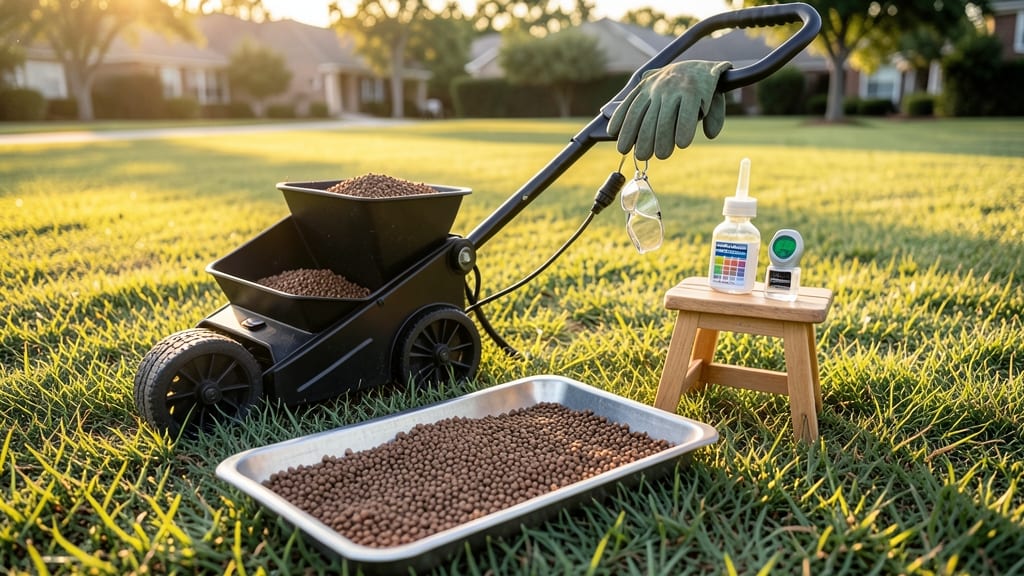
Fertilizing your lawn in Texas at the right time can mean the difference between a lush green carpet and a patchy, struggling yard 🌱 — and the best months depend on your grass type.
Picture this: You’ve just seeded a new lawn in March, only to watch it turn brown by May because you fertilized too late. Or you apply a heavy dose in July, and your grass burns under the Texas sun.
Timing is everything, and one wrong move can cost you money, water, and months of recovery.
Texas’s 8a-10a climate throws extra challenges—alkaline soil, brutal summers, and mild winters—that demand a smarter approach than just following a generic calendar. Warm-season grasses like Bermuda and St. Augustine thrive with spring and fall feedings, while cool-season types like Fescue need a different rhythm.
Below, I break down the exact months to fertilize for each, plus how to read your soil’s signals and avoid the costly mistakes that derail even the best-laid plans.
You’ll learn how to sync your schedule with Texas’s weather, which fertilizers to use (and when to skip them), and the one trick that keeps your lawn resilient through droughts, heatwaves, and everything in between. Let’s get started.
Texas lawn fertilization schedule by grass type (cool-season vs warm-season)
Texas lawns thrive when you match fertilization to their grass type and seasonal needs. Warm-season grasses like Bermuda and St. Augustine dominate the state, while cool-season Fescue handles North Texas winters.
Each type demands a different schedule to avoid burned grass or wasted fertilizer during Texas’ extreme heat or drought.
Timing is everything—apply high-nitrogen fertilizer in early spring to kickstart growth, but shift to slow-release formulas in summer to prevent stress. Pre-emergent herbicides should go down in late winter (February) to stop weeds before warm-season grasses wake up. Skip fertilizing in winter when grass is dormant.
🌱
| Grass Type | Best Fertilization Months | Key Notes for Texas | Pre-Emergent Timing |
|---|---|---|---|
| Bermuda | March, May, July, September | High heat tolerance; use slow-release N in summer | February (2-4 weeks before sprouting) |
| St. Augustine | April, June, August, October | Needs iron supplements for chlorosis; water deeply after feeding | February (avoid in frost-prone areas) |
| Zoysia | April, June, September | Drought-resistant; reduce feeding in 100°F+ heat | Late February (soil temps 65°F+) |
| Fescue (Cool-Season) | September, November, February | Active only in cooler months; avoid summer feeding | N/A (cool-season; no pre-emergent) |
For warm-season grasses, start fertilizing in March when soil temps hit 65°F. Bermuda and Zoysia can handle monthly feeds during peak growth (April–October), but switch to low-nitrogen formulas in summer to prevent heat stress. St. Augustine, however, needs iron-rich fertilizer to combat chlorosis in Texas’ alkaline soil.
Cool-season Fescue is a North Texas staple—fertilize in early fall (September) and late winter (February) to capitalize on cooler temps. Skip spring feeding; Fescue goes dormant by June. Pre-emergent herbicides don’t apply here since Fescue isn’t a warm-season grass.
Texas’ summer droughts demand adjustments: water deeply after fertilizing to activate nutrients, and avoid feeding when temperatures exceed 90°F. Use a soil test to check pH—Texas soils are often alkaline (7.5+), which locks out iron and manganese. Amend with sulfur or peat moss if needed.
💧
Pro tip: Apply fertilizer in the early morning or late afternoon to reduce leaf burn from Texas sun. For new lawns, wait 6–8 weeks after seeding before fertilizing.
Overdoing it leads to fertilizer burn, which weeds love to invade. Time your pre-emergent in February to stop crabgrass before warm-season grasses sprout.
Adjust for your region: North Texas (e.g., Dallas) can fertilize 2 weeks earlier than South Texas (e.g., Houston) due to later frost dates. Always check your local extension office for microclimate tweaks—Texas’ 100+°F summers and unpredictable rains mean one-size-fits-all schedules fail.
☀️
Signs your Texas lawn needs fertilizer (beyond calendar timing)
Your Texas lawn sends clear distress signals when nutrients are lacking—long before you check your calendar. Yellow patches that refuse to green up, slow growth despite regular watering, or thin spots where weeds take over are all signs your grass is starving.
Unlike cool-season lawns in northern states, Texas grasses face unique challenges like alkaline soil (pH 7.5+) and fungal stress from summer humidity, which mask traditional deficiency symptoms.
Don’t rely on seasonal schedules alone. Soil tests reveal hidden issues like iron chlorosis (yellow leaves with green veins) or potassium deficiency (brown leaf tips), common in Texas clay soils.
Even if your grass looks green, slow recovery after mowing or pale blades in shaded areas signal it’s time to feed—especially for warm-season grasses like Bermuda or St. Augustine that thrive in Texas heat.
⚠️ Texas-Specific Red Flags
Chlorosis (yellowing) in alkaline soil? Iron supplements are often needed—don’t just add nitrogen. Fungal stress (grayish patches) from summer humidity? Switch to slow-release fertilizer to avoid burning roots. Weed outbreaks in thin spots? Your grass lacks phosphorus for root strength.
Start with a soil test to diagnose the root cause. If results show low nitrogen (below 0.2%), opt for a quick-release fertilizer (like 30-0-4) for immediate green-up.
But if your soil is high in phosphorus (above 60 ppm), avoid high-P blends and focus on micronutrients like zinc or manganese, which Texas clay often lacks.
Slow-release fertilizers (like polymer-coated urea) are ideal for summer, as they prevent burn damage from Texas’s intense heat. Look for sulfur-coated urea—it releases nutrients gradually and helps lower soil pH over time. For fall fertilization, a balanced blend (16-4-8) strengthens roots before winter dormancy, while winter applications are rarely needed unless you’re overseeding cool-season grass.
Watch for seasonal shifts in symptoms. Spring yellowing often means nitrogen deficiency, while summer browning could signal drought stress or fungal issues. If your lawn turns purplish in late summer, it’s craving phosphorus for energy. Adjust your fertilizer NPK ratio accordingly—Texas lawns rarely need the same blend year-round.
Pro tip: Divide and conquer large areas. Test soil in three zones (sunny, shady, and transition areas) and fertilize each separately. Shaded spots may need lower nitrogen to avoid fungal growth, while sunny patches can handle higher doses.
Always water deeply after applying fertilizer to activate nutrients and prevent runoff—a critical step in Texas’s heavy clay soils.