
Lawn
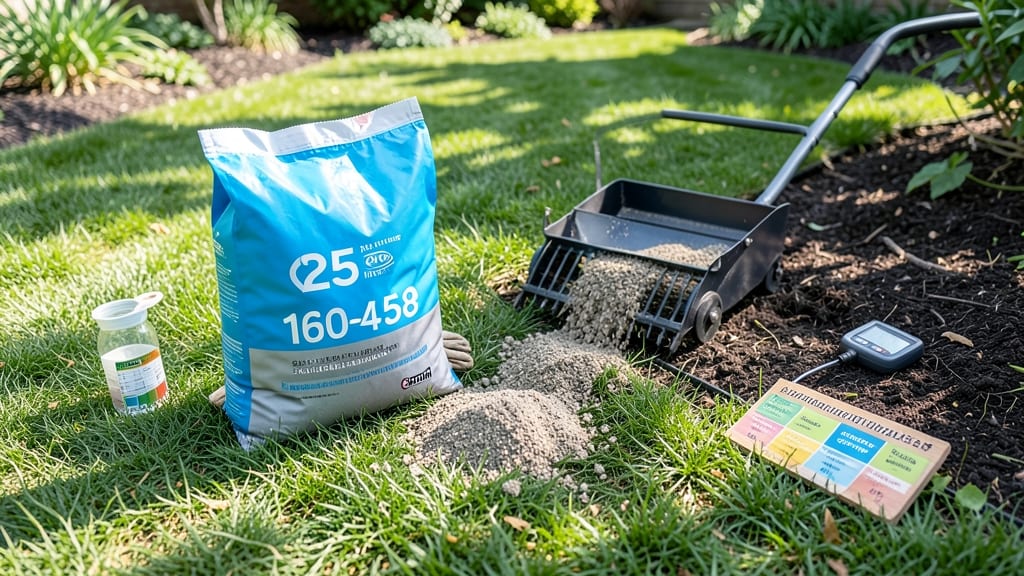
To fertilize lawns in Minnesota, time applications to early spring (April–May) when soil temperatures hit 40–50°F, then again in late summer (August) for cool-season grasses like Kentucky bluegrass. Warm-season grasses like zoysia instead need feeding in late spring (June).
Minnesota's climate creates a delicate balance for lawn care, where timing directly impacts grass health. Cool-season grasses thrive when fertilized in spring to kickstart growth after winter dormancy, while warm-season varieties need the boost as temperatures rise.
The 40–50°F soil temperature threshold ensures nutrients activate properly, preventing waste during Minnesota's unpredictable spring weather. 🔥 I've found that splitting applications—once in early spring and again in late summer—gives cool-season grasses the steady nutrition they need to outperform weeds and handle frost better.
For warm-season grasses like zoysia, that June timing aligns with their natural growth cycle, preventing over-fertilization when summer heat arrives. This approach also helps avoid fertilizer burn during Minnesota's frequent summer droughts. The key is matching your grass type to the season's natural rhythms rather than following a one-size-fits-all schedule.
💡 In This Article
- Minnesota Soil Temperature and Grass Type Fertilization Timing
- Step-by-Step Minnesota Lawn Fertilization Schedule by Season
Minnesota soil temperature and grass type fertilization timing
Soil temperature acts like a biological switch for grass roots and fertilizer effectiveness. When Minnesota's soil warms to 40–50°F, cool-season grasses like Kentucky bluegrass wake from winter dormancy and begin actively absorbing nutrients.
This temperature range also activates soil microbes that break down fertilizer into usable nitrogen, phosphorus, and potassium. Below 40°F, these microbes become sluggish, leaving fertilizer sitting unused—wasted money and potential runoff into local waterways.
The 50°F upper limit prevents nutrient burn during Minnesota's unpredictable spring thaws when roots are still vulnerable.
Cool-season grasses dominate Minnesota lawns, but their ideal fertilization windows shift dramatically between the state's climate zones. In the southern half (Zones 4b-5a), soil reaches 40°F by mid-April, allowing early spring fertilization.
Meanwhile, northern Minnesota (Zones 3b-4a) often waits until late May due to later snowmelt and colder soils.
Warm-season grasses like zoysia, which only thrive in Zone 5+ areas, need the June timing because their growth cycle peaks when soil temperatures consistently exceed 60°F—a threshold that triggers their natural dormancy mechanisms in fall.
The science behind these timings involves grass physiology. Cool-season grasses store carbohydrates in their roots during summer, using them for early spring growth. Fertilizing at 40–50°F replenishes these reserves while avoiding the shock of sudden nutrient uptake in cold soil.
Warm-season grasses, however, rely on summer heat to activate their growth hormones—hence the June window. Minnesota's August fertilization for cool-season grasses provides a late-season boost to strengthen roots before frost, while warm-season varieties typically receive their final feeding in early September to prepare for winter.
Here's what most homeowners miss: The 40–50°F soil temperature rule isn't just about grass type—it's about microbial activity. Soil microbes need this temperature range to convert fertilizer into forms grasses can absorb. At 35°F, microbial activity drops by 50%, and below 32°F, it nearly stops.
This explains why early spring applications in cold years can fail spectacularly—even with the right fertilizer. A soil thermometer (available for $15–$25) becomes your most valuable tool for precision timing in Minnesota's variable climate.
Consider this real-world example: In Minneapolis (Zone 4b), I've seen lawns fertilized in March show no growth until May because the fertilizer simply sat in cold soil. The same lawns fertilized in early May when soil hit 45°F showed visible green-up within 10 days.
The difference? Microbial activity finally converted the nutrients into plant-available forms. This timing principle applies whether you're using organic compost or synthetic blends—soil temperature is the true limiting factor.
For homeowners, this means checking soil temperature before fertilizing—especially in Minnesota's transition zones where spring arrives early in some years but late in others. A simple probe inserted 4 inches deep (where most grass roots grow) gives you the real story.
This depth matters because surface temperatures can be misleading after sunny days followed by cold nights. When you combine this with your grass type, you've got the perfect formula for Minnesota lawn success.