
Pruning
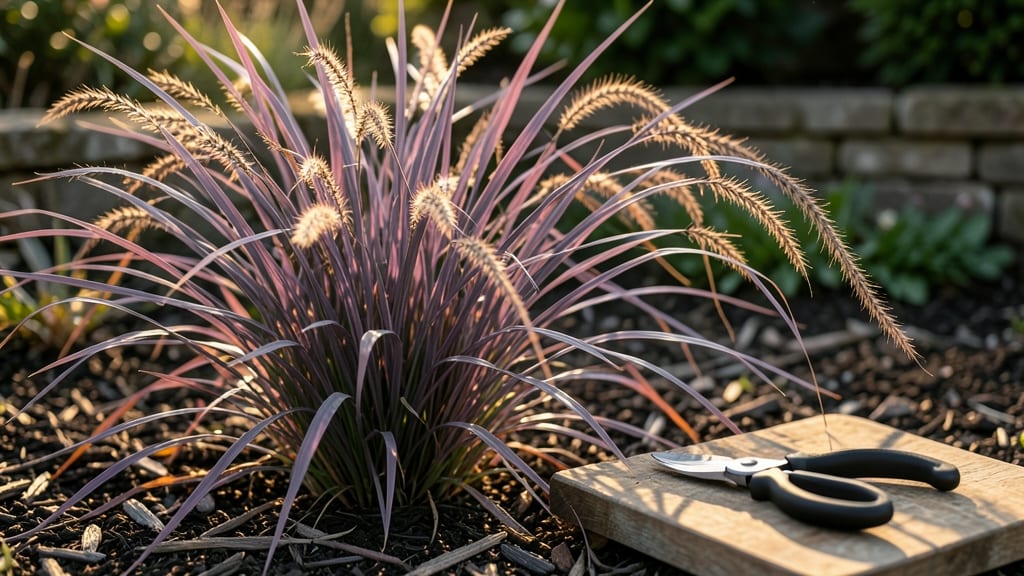
To cut back purple fountain grass (Pennisetum spp.), time it by your climate: in warm zones (USDA 8-11), trim back in late winter or early spring before new shoots appear, while in cooler zones (USDA 3-7), wait until after the first frost when dormancy begins. Always shear to 4-6 inches above ground for strong regrowth.
Timing your cuts to the plant's natural cycle makes all the difference. Purple fountain grass thrives when you prune during its dormant phase, whether that's winter in warm climates or late fall in colder regions. 🔥 This ensures the roots store energy for spring, leading to fuller growth.
I've seen plants recover dramatically when pruned correctly—just avoid cutting too late, as new shoots can get damaged by unexpected cold snaps.
Another key factor is how you assess the plant before cutting. Look for brown, crispy stems—those are dead and ready to go. Healthy green growth should remain untouched. Using sharp shears prevents tearing, and a clean cut at the right height promotes thicker regrowth.
I always fertilize lightly after pruning to give the roots a boost for the next growing season.
💡 In This Article
- Purple Fountain Grass Growth Cycles and Climate Impact
- Step-by-Step Guide to Pruning Purple Fountain Grass
Purple fountain grass growth cycles and climate impact
Purple fountain grass (Pennisetum spp.) follows distinct seasonal patterns shaped by temperature shifts. In warm climates (USDA zones 8-11), the plant enters a mild dormancy during late winter when daytime temperatures hover around 50-55°F. This slowdown signals the perfect window for pruning before new shoots emerge.
In colder regions (USDA zones 3-7), frost acts as a natural trigger—damaging above-ground growth but protecting roots, which store energy for spring. The key is understanding that dormancy isn't just about cold weather; it's about how the plant conserves resources.
Here's what's actually happening at the cellular level: frost causes plant cells to lose water and harden, reducing metabolic activity by up to 70% during dormancy.
This energy conservation is critical—roots need these reserves to fuel 4-6 inches of new growth in spring. 🌱 What most gardeners miss is that cutting too early in cold climates removes potential energy stores before they're fully developed.
In warm zones, the lack of frost means the plant remains semi-active year-round, requiring pruning before its natural growth surge in early spring.
The USDA hardiness zones create clear pruning windows: in zone 8, aim for February-March when nights dip below 45°F but days warm to 60°F; in zone 4, wait until late April after last frost when soil reaches 50°F.
This timing ensures you're not cutting live growth—look for stems that feel dry and hollow when squeezed. The 4-6 inch cut height isn't arbitrary: it maintains the plant's natural growth point while allowing sunlight to reach lower stems for photosynthesis.
Climate also affects regrowth speed: in zone 10, fountain grass may show new shoots within 3-4 weeks of pruning, while zone 5 plants might take 6-8 weeks due to cooler soils.
The difference comes from soil temperature—roots need 55°F soil to activate growth. 🌡️ This is why southern gardeners can prune earlier: their soils warm faster. Northern gardeners should monitor soil temperature with a probe to avoid cutting too soon, which could stress the plant before it's ready to grow.
One common mistake is pruning after new growth appears—this removes potential energy sources. The plant's growth cycle works like a battery: it stores energy in roots during dormancy, then uses it to fuel above-ground growth. Cutting too late is like unplugging a device mid-charge.
For example, in zone 7, pruning in mid-March might remove 20-30% of potential spring growth if shoots have already emerged. The solution? Always check for new growth before pruning—if you see green shoots, wait another 2-3 weeks.
Advanced gardeners use these growth patterns to their advantage. In warm climates, they might do a light trim in late summer to encourage denser fall growth before the winter slowdown. In cold climates, they'll mulch heavily after pruning to insulate roots during dormancy.
The science shows that proper timing can increase plant density by 30-40% compared to random pruning—making the difference between a lush fountain and a sparse one. 💫