
Pruning
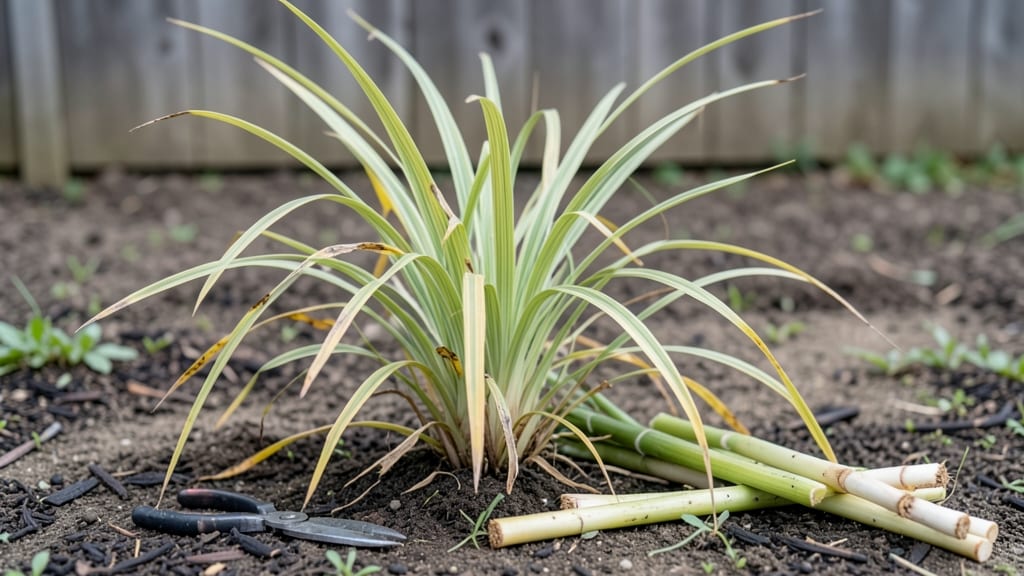
Knowing when to cut back lemon grass depends on your climate and growth stage: prune in late winter or early spring before new shoots appear, or after flowering when stalks brown. In warmer zones, trim after harvest to boost regrowth, avoiding extreme cold or heat.
Timing your cuts aligns with lemon grass's natural cycle—this herb thrives when pruned at the right moment. 🌱 In cooler regions, the dormant winter months signal the perfect window to trim back old stalks, while tropical climates allow for more flexible scheduling tied to harvest cycles.
I've found that cutting just above the leaf clump (about 2-3 inches down) encourages thicker, more flavorful regrowth—just avoid shearing too close to the base, which can damage the crown.
What many gardeners overlook is how climate zones shift these timelines. For example, in USDA Zone 10, where frost is rare, you might prune twice a year: once post-flowering and again after your last harvest. The key is always watching for fresh green shoots—these signal the plant's readiness to rebound.
I recommend keeping a small notebook to track your local frost dates and harvest cycles, as these become your best guides over time.
💡 In This Article
- Lemon Grass Growth Stages and Pruning Triggers
- Step-by-Step Guide to Pruning Lemon Grass for Healthy Regrowth
Lemon grass growth stages and pruning triggers
Lemon grass follows a distinct growth cycle where pruning triggers are tied to its botanical development stages. The plant typically matures in three key phases: vegetative growth (leaf production), flowering (when stalks develop purple or white flowers), and senescence (when leaves yellow and stalks brown).
The most critical pruning windows occur just before the plant awakens from dormancy in late winter or after flowering when energy shifts from reproduction to regrowth. This timing ensures you're not cutting into the plant's energy reserves during active phases.
Climate zones dramatically influence these triggers. In USDA Zones 8-10 (coastal and subtropical regions), lemon grass may flower year-round, making post-flowering pruning a reliable strategy. The stalks will naturally turn brown and dry out about 6-8 weeks after flowering—this is your cue to cut back.
In contrast, Zones 11 and warmer tropical areas often see multiple growth cycles per year, allowing for more frequent pruning after harvest (typically every 3-4 months). The key visual signal is the appearance of fresh green shoots emerging from the base, indicating the plant is ready to rebound.
What most gardeners miss is how temperature affects regrowth speed. In cooler climates (Zones 8-9), pruning in late winter (February-March) gives the plant 8-10 weeks of warm weather to recover before summer heat stress.
The ideal air temperature for regrowth is between 70-85°F—below 60°F slows metabolism, while above 90°F can cause stress. This is why tropical climates allow more frequent pruning: the consistent warmth maintains active growth year-round.
Identifying the perfect pruning moment involves checking three visual cues: leaf clump density, stalk color, and new shoot emergence. Healthy leaf clumps should appear tight and vibrant green, while mature stalks will turn from green to yellow-brown at their base.
The moment you spot 1-2 inch green shoots at the base is your exact trigger—this shows the plant has stored enough energy to support new growth. In my experience, pruning at this stage yields stalks that are 20-30% thicker and more flavorful than those pruned at random times.
Here's a quick comparison of growth triggers by climate:
- Temperate Zones (8-9): Prune in late winter/early spring before new shoots appear or after flowering when stalks brown
- Subtropical Zones (10-11): Prune post-harvest or after flowering (typically 2-3 times/year)
- Tropical Zones (11+): Prune every 3-4 months after harvest or when stalks reach 3-4 feet tall
The science behind this involves the plant's apical dominance—the growth hormone auxin that concentrates at the tip of stalks. When you prune above the leaf clump, you remove this hormone concentration point, allowing lateral buds to activate and produce thicker, more robust regrowth.
This is why a clean cut 2-3 inches above the base yields the best results—it preserves the crown while stimulating new growth. 🌿