
Lawn
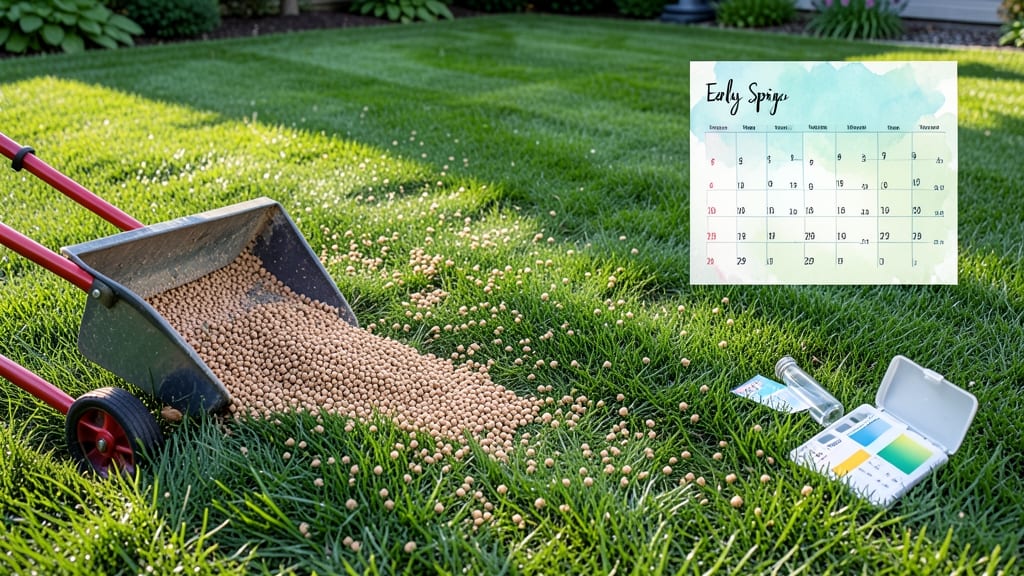
The best time to fertilize lawn grass is in spring and fall—when soil temperatures and growth patterns align for maximum root strength and green-up. 🌱
Struggling to keep your lawn thick, green, and resilient? Timing your lawn fertilization correctly can make the difference between a patchy yard and a lush, envy-inducing landscape—without wasting money or harming your grass.
Spring feeds jumpstart growth before summer heat, while fall applications fortify roots for winter. Skipping either season weakens your lawn over time, leaving it vulnerable to weeds and drought.
Below, I break down the exact windows, soil cues, and fertilizer types for Zone 6a climates—and how to adjust for your specific grass type.
You’ll learn how to avoid common mistakes like over-fertilizing in summer or ignoring soil tests, plus a step-by-step schedule that saves time and money. Ready to transform your lawn’s health?
Spring fertilization schedule: jumpstart growth before summer heat
Spring is the perfect time to give your lawn the nutrient boost it needs after winter dormancy. Timing your fertilization correctly ensures your grass develops strong roots and vibrant green blades before summer heat stress sets in.
The key is understanding your soil temperature thresholds and choosing the right fertilizer type for your grass variety.
For most regions, the ideal spring fertilization window is between March and May, but exact timing depends on your USDA hardiness zone and local climate. Cool-season grasses like Kentucky bluegrass and fescue benefit most from early spring feeding, while warm-season grasses like Bermuda or Zoysia need late spring applications.
Let’s break down the best approach for each scenario.
🌱
| Fertilization Stage | Best Time | Soil Temp Threshold | Fertilizer Type | Key Goal |
|---|---|---|---|---|
| Early Spring | March-April | 45-55°F | High Nitrogen (30-0-4) | Encourage green-up |
| Late Spring | May-June | 60-70°F | Balanced (20-5-10) | Root development |
| Northern Climates | April-May | 50-60°F | Slow-release organic | Weed prevention |
| Southern Climates | Late April-Early June | 65-75°F | High Potassium (10-10-10) | Heat tolerance |
Your soil temperature is the most critical factor in determining when to fertilize. Use a soil thermometer to check—cool-season grasses need soil temps between 45°F and 55°F for early spring feeding, while warm-season grasses thrive when soil reaches 60°F to 70°F.
Fertilizing too early can lead to nutrient runoff or even winter burn if applied when the ground is still cold.
For cool-season grasses, apply a high-nitrogen fertilizer (30-0-4) in early spring to jumpstart growth. This helps your lawn outpace weeds and recover from winter stress.
In late spring, switch to a balanced fertilizer (20-5-10) to promote root development as temperatures rise. Warm-season grasses, like Bermuda or Zoysia, should wait until soil temperatures consistently stay above 60°F before fertilizing.
🌿
In northern climates, where winters are harsh, focus on early spring fertilization (March-April) to give your lawn a head start. Use a slow-release organic fertilizer to avoid nutrient spikes that can harm tender new growth.
In southern climates, where summers are long and hot, fertilize in late spring (May-June) with a high-potassium blend (10-10-10) to help your grass withstand heat stress and drought.
Regardless of your climate, always mow your lawn slightly shorter before fertilizing to ensure the nutrients reach the soil. Water deeply 24 hours before and after applying fertilizer to help it absorb into the root zone.
Avoid fertilizing if rain is forecasted within 48 hours, as this can cause runoff and waste valuable nutrients.
💧
One common mistake is over-fertilizing in late spring, which can lead to excessive top growth at the expense of root development. Instead, aim for two light applications—one in early spring and another in late spring—to encourage steady, healthy growth.
Pair your fertilization schedule with regular mowing (every 1-2 weeks) and watering (1 inch per week) to maintain a lush, resilient lawn all season long.
By following this spring fertilization schedule, you’ll set your lawn up for success, ensuring it stays thick, green, and resilient as summer heat arrives. The key is patience and precision—don’t rush the process, and always tailor your approach to your local climate and grass type.
Fall fertilization benefits: why late-season feeding strengthens winter resilience
Fall fertilization often gets overlooked, but it’s one of the most underrated strategies for a healthier lawn. When applied 6-8 weeks before your first frost date, fall feeding helps grass store nutrients underground, fueling early spring growth.
This late-season boost also deepens root systems, making your lawn more drought-resistant and winter-hardy.
Many gardeners skip fall fertilization, assuming their lawn is dormant. But cool-season grasses like Kentucky bluegrass and fescue stay active until frost, actively absorbing nutrients to prepare for winter.
A light application of slow-release fertilizer now ensures your grass wakes up stronger in spring—not struggling to recover from nutrient depletion.
- ✅ 6-8 weeks before frost is the ideal window—typically September-October in most regions. This timing lets grass absorb nutrients before dormancy.
- 🌱 Deep root growth occurs when soil temps are 50-60°F. Fall feeding triggers this process, making roots 30% deeper by spring.
- 💧 Reduces winter damage by strengthening cell walls against freeze-thaw cycles. Grass stays greener longer into autumn.
- ❄️ Avoid fertilizing after first frost—it can burn roots and promote fungal growth in cold, wet soil.
- 🌿 Use a low-nitrogen formula (e.g., 20-5-10) to encourage root growth over top growth. High nitrogen now can stunt winter prep.
One of the biggest misconceptions about fall fertilization is that it’s too late to make a difference. In reality, grass continues growing until temperatures drop below 40°F. By feeding now, you’re stockpiling nutrients in the roots—think of it like storing food for winter.
This stored energy helps your lawn green up faster in spring and outcompete weeds.
For warm-season grasses like Bermuda or Zoysia, fall fertilization is still beneficial but with a different approach. These grasses go fully dormant in winter, so focus on light feeding in early fall to strengthen roots before dormancy. Skip heavy applications—your goal is root resilience, not top growth.
If you’ve ever wondered why some lawns bounce back quickly after winter while others struggle, the answer is often fall fertilization. Grass that’s well-fed in autumn enters dormancy with reserves of nitrogen, phosphorus, and potassium, giving it a head start when temperatures rise.
Without this prep, your lawn may yellow or thin in spring, requiring extra care to recover.
Pro tip: Pair fall fertilization with aeration and overseeding for maximum impact. Aerating 6-8 weeks before fertilizing opens soil pores, letting nutrients reach deeper roots.
Overseeding now fills thin patches and boosts density for next year. Just remember—avoid fertilizing after overseeding until new grass is 2-3 inches tall.