
Fertilization
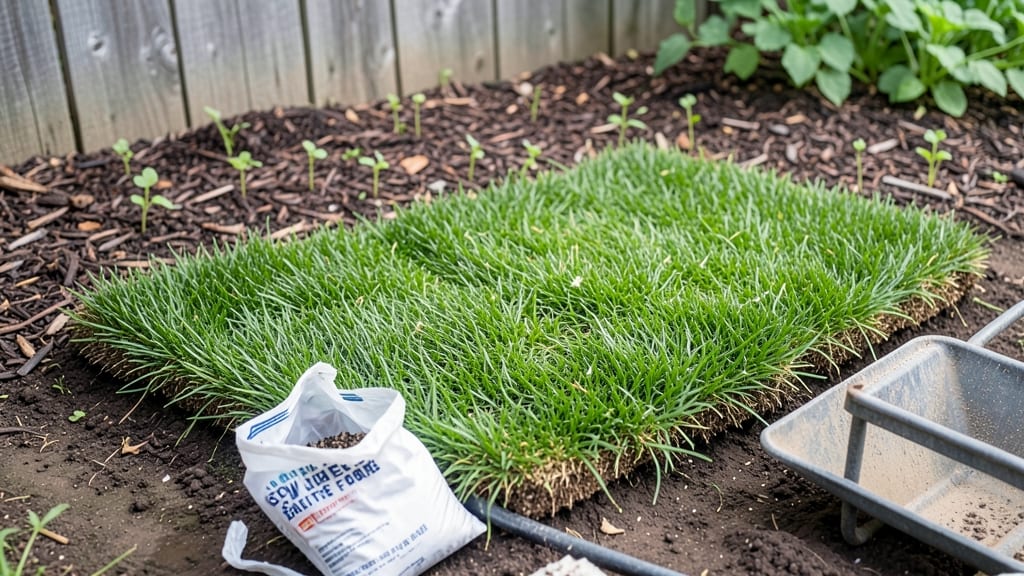
You can fertilize new sod after 4-6 weeks of installation once roots have established at least 1-2 inches deep, using a starter fertilizer with half the recommended rate to avoid burning tender grass.
Timing matters because young sod roots are still fragile during the first month after installation. The 4-6 week window ensures roots have developed enough resilience to absorb nutrients without stress.
I always perform a simple pull test—lifting a corner of the sod—before applying fertilizer to confirm roots are 1-2 inches deep. Over-fertilizing too soon can actually stunt growth by overwhelming the grass's delicate root system.
For best results, use a low-nitrogen starter fertilizer (around 20-20-20 ratio) at half-strength. This gives new grass the phosphorus boost it needs for root development while protecting against burn.
Warm soil temperatures (60°F+) speed up root growth, so early spring or late summer installations often require slightly adjusted timing. 🌱
💡 In This Article
- Root Establishment Timeline for New Sod Fertilization
- Choosing the Right Fertilizer for New Sod Installation
Root establishment timeline for new sod fertilization
New sod roots grow in distinct phases during the first six weeks after installation. In the first 1-2 weeks, roots develop primarily horizontally to establish contact with surrounding soil particles.
This initial growth relies heavily on soil moisture and temperature—ideal conditions include soil temperatures above 60°F and consistent moisture at 1-1.5 inches per week.
The roots grow at about 0.5 inches per week during this phase, creating a shallow network that anchors the sod but isn't yet deep enough to support fertilization.
Between weeks 3-4, roots begin growing vertically at a faster rate—approximately 0.75 inches per week—if conditions remain optimal. This downward growth is critical because it's when roots reach 1-2 inches deep, the threshold where they can access nutrients without stress.
You'll notice the sod feeling more firmly attached to the soil, and a gentle tug test should reveal roots rather than loose soil. Cool soil temperatures (50-59°F) slow this process significantly, which is why fall installations often require longer establishment periods.
Over-fertilizing before this stage harms grass because young roots lack the surface area to absorb excess nutrients efficiently. The salt content in fertilizers can dehydrate tender root tips, while high nitrogen levels promote top growth at the expense of root development.
I've seen cases where early fertilization led to yellowing tips or even root burn, where roots turn brown and brittle. The key is patience—roots need time to develop the vascular network required to process nutrients safely.
By week 6, most sod varieties have established roots at 2-3 inches deep, making them ready for their first fertilizer application. At this stage, roots have developed enough surface area to absorb nutrients without risk of burn.
You can test readiness by gently lifting a 6-inch square of sod—if roots resist pulling and show white, fibrous growth, it's time to fertilize. The transition from horizontal to vertical growth is what transforms fragile sod into a resilient lawn.
Soil type plays a surprising role in this timeline. Sandy soils drain quickly and may require more frequent watering to maintain moisture, while clay soils can suffocate roots if compacted. Amending the soil with 1-2 inches of compost before installation improves root penetration and nutrient availability.
This pre-treatment can shave 1-2 weeks off the establishment timeline by creating a more hospitable environment for root growth.
One common mistake is assuming all sod types follow the same schedule. Cool-season grasses like Kentucky bluegrass establish roots faster in spring (3-4 weeks) than warm-season grasses like Bermuda grass, which may need 6-8 weeks in summer heat.
Always check the specific variety's recommendations, as some hybrid grasses have been bred for accelerated root growth. The bottom line: timing your fertilizer application based on root depth—not just weeks—is what separates a thriving lawn from a struggling one. 🌱