
Watering
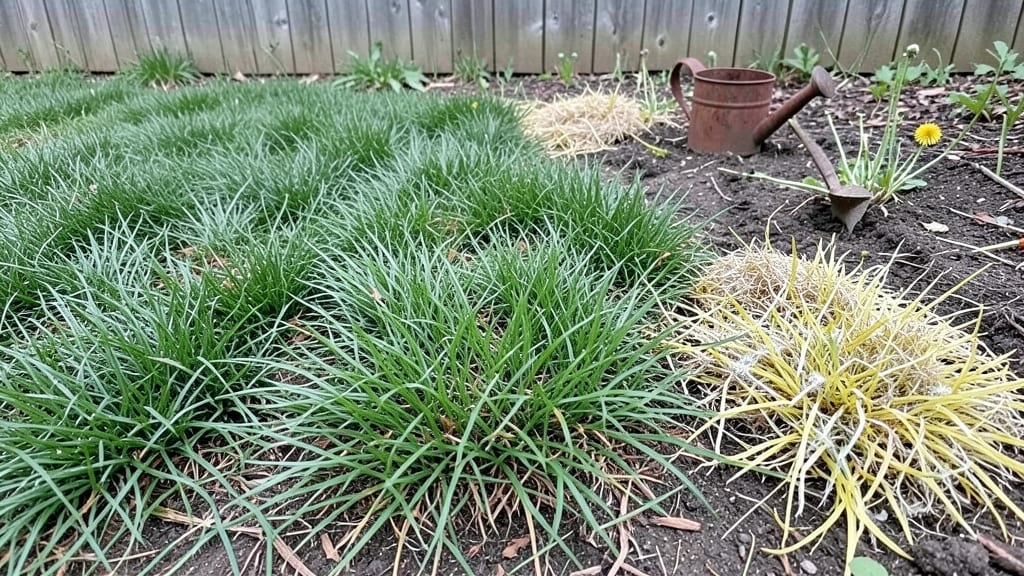
Your lawn’s telling you something when the grass turns dull or spongy—underwatered overwatered grass both look bad, but the fixes couldn’t be more different.
I’ve seen both in my own yard, and the difference between a patchy brown mess and a mushy, moldy swamp comes down to paying attention to the right clues. The color alone won’t cut it; you’ve got to check the roots and the soil too.
Underwatered grass pulls up like brittle straw, with roots clinging to dry soil and a grayish tint that’s almost silver underfoot. Overwatered grass, though, feels squishy—roots rot in soggy soil, and the blades turn a sickly yellow or even purple near the crown.
The worst part? Overwatering kills roots faster than drought ever will, and you won’t see the damage until it’s too late. My first mistake was assuming "more water = greener grass"—turns out, grass drinks through its roots, not its leaves.
You’ll fix underwatered grass by watering deep and slow—about 1 inch per week, split into two sessions—until the soil’s damp 6 inches down.
Overwatered grass needs drainage first: aerate compacted soil, mow higher to shade roots, and let the top 2 inches dry out before watering again. Both problems start with a soil check—stick your finger in. If it’s dry at 2 inches, water.
If it’s still wet after 48 hours, you’re drowning your lawn.
Climate and grass type matter too—cool-season grasses like Kentucky bluegrass hate heat stress, while Bermuda thrives in drought. Adjust your schedule: water early morning to cut evaporation, and skip weekends when rain’s in the forecast.
The goal isn’t a schedule—it’s healthy roots, and they’ll tell you when they’re happy. Trust the grass, not the calendar.
The first option explained
Meet Option A—your first line of defense against the dreaded underwatered or overwatered grass dilemma! 🌱 This method is all about precision watering, blending science with simplicity to keep your lawn lush without the guesswork.
Whether you're a seasoned gardener or a newbie with a green thumb (or lack thereof), this approach is designed to be your go-to strategy.
🔍 Key Characteristics
- Soil Moisture Monitoring: Uses tools like moisture meters or the classic "dig-and-check" method to gauge soil hydration levels accurately.
- Customized Watering Schedule: Tailors watering times and durations based on grass type, climate, and season—no one-size-fits-all here!
- Deep Watering Technique: Encourages roots to grow deeper by watering thoroughly (1-2 inches per week) rather than shallow, frequent sessions.
- Early Detection: Teaches you to spot subtle signs of stress (like blue-gray hues for underwatered grass or yellowing patches for overwatered) before they escalate.
🌟 Benefits
Why should you love Option A? Here’s why:
- Healthier Grass: Prevents both drought stress and root rot by striking the perfect balance.
- Water Conservation: Reduces waste by watering only when and where it’s needed.
- Time-Saving: No more daily checks—just consistent, informed care.
- Cost-Effective: Lowers water bills and minimizes the need for costly repairs (like reseeding or aeration).
🏡 Typical Use Cases
Option A shines in these scenarios:
- New Lawns: Ideal for establishing roots in freshly seeded or sodded grass.
- Drought-Prone Areas: Perfect for regions with water restrictions or hot, dry climates.
- High-Traffic Lawns: Helps maintain resilience in areas prone to foot traffic or pet activity.
- Eco-Conscious Homeowners: Aligns with sustainable practices for a greener (literally!) lifestyle.
Pro Tip: 💡 Pair this method with a morning watering routine (between 6 AM and 10 AM) to minimize evaporation and fungal risks. Your grass will thank you!
The second option explained
If you’ve ever watched your lawn turn into a soggy swamp or a crispy desert, you’ve likely experienced the classic struggle of overwatering. Option B—corrective watering—is your secret weapon for reviving grass that’s been drowned, damaged, or drowning in its own excess moisture.
This approach isn’t just about fixing the problem; it’s about resetting your lawn’s hydration balance for long-term health.
🌱 Key Characteristics
Corrective watering focuses on precision and recovery. Here’s what sets it apart:
- Deep, infrequent sessions: Instead of light, daily sprinkles, this method delivers longer, deeper watering (1–2 times per week) to encourage roots to grow deeper and strengthen.
- Drainage-first mindset: Before watering, check for waterlogging or compaction. Aerate if needed to help roots breathe.
- Adjustments based on grass type: Cool-season grasses (like Kentucky bluegrass) handle moisture better than warm-season varieties (like Bermuda grass), so tailor your approach.
- Signs it’s working: Look for faster green recovery, fewer fungal spots, and soil that smells fresh (not like a swamp!).
💧 Benefits of Corrective Watering
Why switch to this method? Because it:
- Prevents root rot by avoiding waterlogged soil.
- Saves water (and your utility bill!) by reducing wasteful evaporation.
- Boosts resilience—deep roots mean grass can handle droughts and heatwaves like a champ.
- Reduces weeds by starving shallow-rooted invaders of excess moisture.
🏡 Typical Use Cases
This option is perfect for:
- Lawns recovering from overwatering (think mushy, yellow patches or fungal rings).
- Newly seeded or sodded grass that needs consistent moisture without drowning.
- Clay-heavy or poorly draining soils where water pools instead of soaking in.
- Hot, dry climates where grass craves deep hydration but hates soggy conditions.
Pro tip: 💡 Pair corrective watering with a soil test to check pH and nutrient levels—sometimes, thirsty grass is just hungry, not just overwatered!
Key differences
🌱 Appearance & Color
Underwatered grass often looks dull, grayish, or bluish—think of a thirsty lawn begging for a drink. 💦 The blades may also appear thin and brittle, almost like they’re wilting under the heat.
On the flip side, overwatered grass tends to have a dark green, almost glossy sheen (like it’s been polished), but it can also look soggy or mushy in extreme cases. If you see patches of yellowing or brown spots, that’s usually a red flag for overwatering.
💧 Root & Soil Health
When grass is underwatered, roots shrink and retreat toward the surface in search of moisture, making the soil feel hard and dry when touched. Overwatered grass, however, has shallow, weak roots that struggle in waterlogged soil.
The soil may smell musty or sour (like wet socks 🧦), and you might even see fungus or mold creeping in. A quick test: Dig a small hole—if the soil crumbles easily (underwatered) or stays clumped and damp (overwatered), you’ve got your answer.
🌡️ Temperature & Touch Test
Here’s a handy trick: Touch the grass blades in the early morning. Underwatered grass feels crispy or papery to the touch, almost like it’s burning up in the sun. Overwatered grass, meanwhile, stays cool and squishy—sometimes even sticky if it’s severely saturated.
Pro tip: If your lawn feels too hot underfoot (like a desert 🏜️), it’s likely thirsty. If it’s unusually cold or damp, you might be drowning it in water.
🕳️ Pest & Disease Vulnerability
Stress from underwatering weakens grass, making it a magnet for grubs, chinch bugs, or armyworms. You might spot chewed blades or brown patches where pests have feasted. Overwatering, however, creates the perfect breeding ground for fungal diseases like brown patch or dollar spot.
Look for circular dead spots or a fuzzy white growth on blades—those are classic signs of overwatering-related issues.
💡 Recovery Speed
Underwatered grass can bounce back surprisingly fast with just a good soaking—sometimes within 24-48 hours, especially if the roots are still alive. Overwatered grass, however, takes much longer to recover because the roots may be rotting or suffocating.
In severe cases, it might even die off permanently if the soil becomes waterlogged for too long. Think of it like a plant in a swamp vs. one in a drought—one just needs a drink, while the other needs a complete rescue mission.
When to choose which
Knowing when to underwater or overwater your grass isn’t just about guesswork—it’s about matching your lawn’s needs to the conditions around it. Here’s how to decide which approach works best for your situation:
🌱 Choose Underwatering When:
- Your soil drains too quickly: Sandy or rocky soil loses moisture fast. Shallow, infrequent watering (like underwatering) encourages deeper root growth, helping grass survive droughts.
- You’re dealing with drought or heatwaves: 🌡️ Grass roots grow deeper when water is scarce, making your lawn more resilient long-term. Underwatering mimics natural dry spells, toughening up your turf.
- You have a new lawn or seed: Light, frequent watering can suffocate young grass. Underwatering (once roots establish) prevents rot while promoting strength.
💦 Opt for Overwatering When:
- Your soil is heavy clay or compacted: These soils hold water poorly, so deeper, more frequent watering (like overwatering) ensures roots get the hydration they need.
- You’re establishing a new lawn from sod: Sod roots take time to penetrate deep. Overwatering keeps the top layer moist until roots anchor.
- Extreme cold or wind is present: 🌬️ Grass loses moisture faster in harsh conditions. Extra water prevents wilting and keeps blades upright.
Pro Tip: 💡 Test your soil first! Dig a 6-inch hole—if water drains within 10 minutes, underwater; if it pools, overwater (but never flood). Adjust based on your grass type (cool-season vs. warm-season) for best results!
The bottom line
Spotting the difference between underwatered and overwatered grass is key to keeping your lawn lush and healthy! 🌱 Remember: underwatered grass shows up as dry, brown patches with crispy blades, while overwatered grass feels soggy, yellows, or develops mold—and even smells funky. Test your soil and adjust your watering schedule to match your grass type and climate.
Need a quick cheat sheet? Water deeply but less often—aim for 1–1.5 inches per week—and always water early in the morning to avoid waste and disease. With the right balance, your lawn will thank you with vibrant green blades all season long! 💦