
Light Requirements
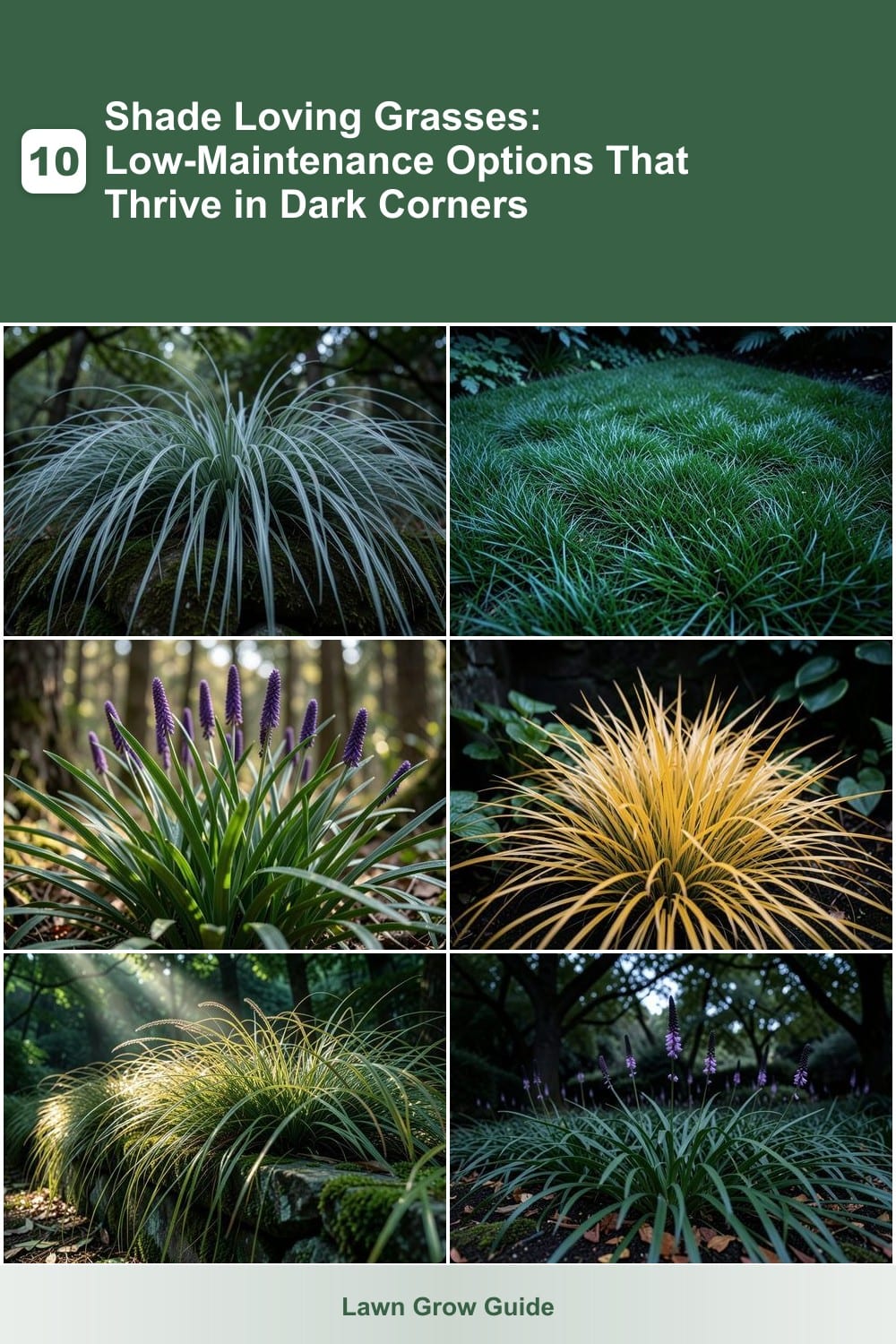
Struggling to keep your shady garden areas lush and green? These 10 shade-loving grasses transform dark corners into vibrant, low-maintenance landscapes without needing direct sunlight. Perfect for beginners and busy gardeners alike.
Japanese Forest Grass for Soft Textures
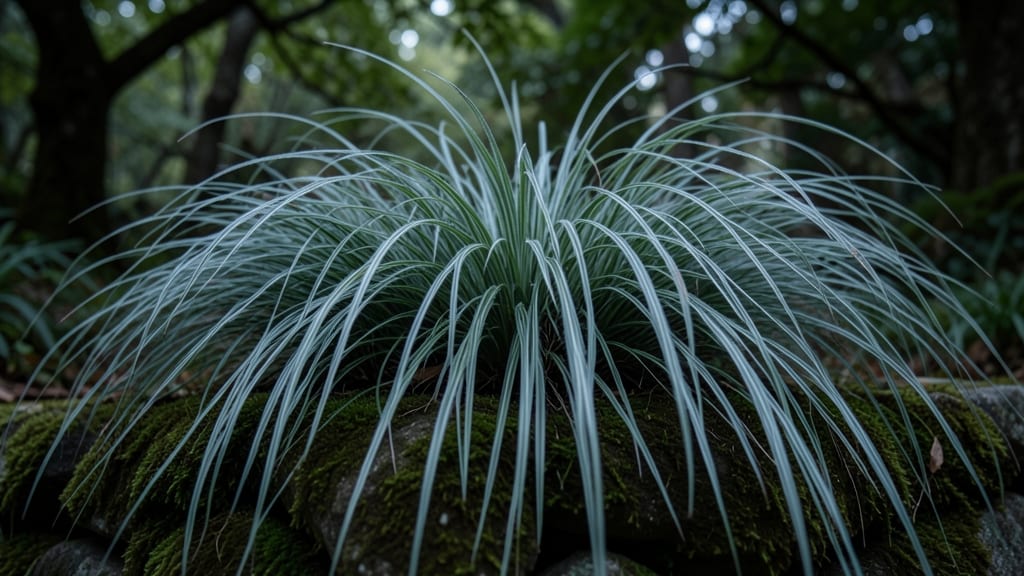
Tired of shady borders looking dull and lifeless? Japanese Forest Grass (Hakonechloa macra) brings soft, arching texture and gentle movement to your darkest corners—without needing sunlight. Its blue-green blades sway in the breeze, creating a natural, woodland feel that’s both calming and visually striking.
This slow-spreading grass thrives in deep shade (even under trees) and prefers moist, well-draining soil. Plant it in clusters along borders, near patios, or in containers to frame other shade-loving plants. A light trim in early spring keeps it tidy, but otherwise, it’s virtually maintenance-free. Perfect for cottage gardens or woodland settings where you want height and texture without the fuss.
Ideal for gardeners who love low-maintenance elegance, this grass adds year-round interest with minimal effort—no fertilizers or frequent watering required once established. 🌿
Dwarf Mondo Grass for Ground Cover
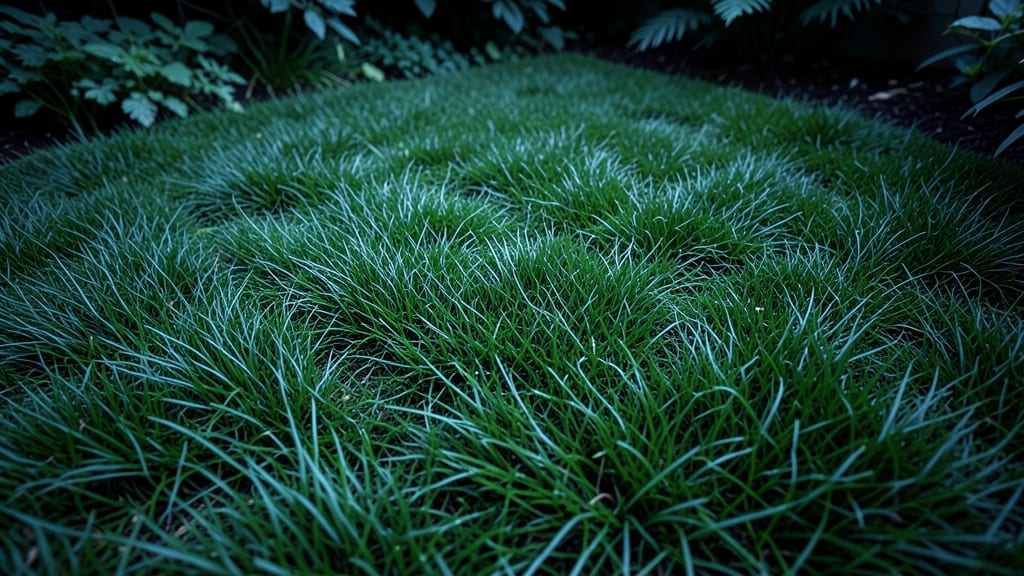
Want a weed-proof, lush carpet that thrives in deep shade without demanding your time? Dwarf Mondo Grass (Ophiopogon japonicus 'Nana') delivers exactly that—a dense, emerald-green mat just 2-3 inches tall that smothers weeds and stays vibrant year-round.
This low-maintenance grass spreads slowly (about 6 inches per year) but forms an impenetrable barrier against weeds, making it ideal for edging paths, filling gaps between shrubs, or replacing high-maintenance lawns in shady spots. It tolerates partial to full shade and prefers moist, well-draining soil, though it’s surprisingly drought-tolerant once established. Simply water occasionally and trim back any leggy growth in early spring.
Perfect for urban gardeners, beginners, or anyone tired of battling weeds in shady areas, Dwarf Mondo Grass turns neglected corners into a polished, green oasis with almost no effort. 🌱
Liriope Muscari for Tough Versatility
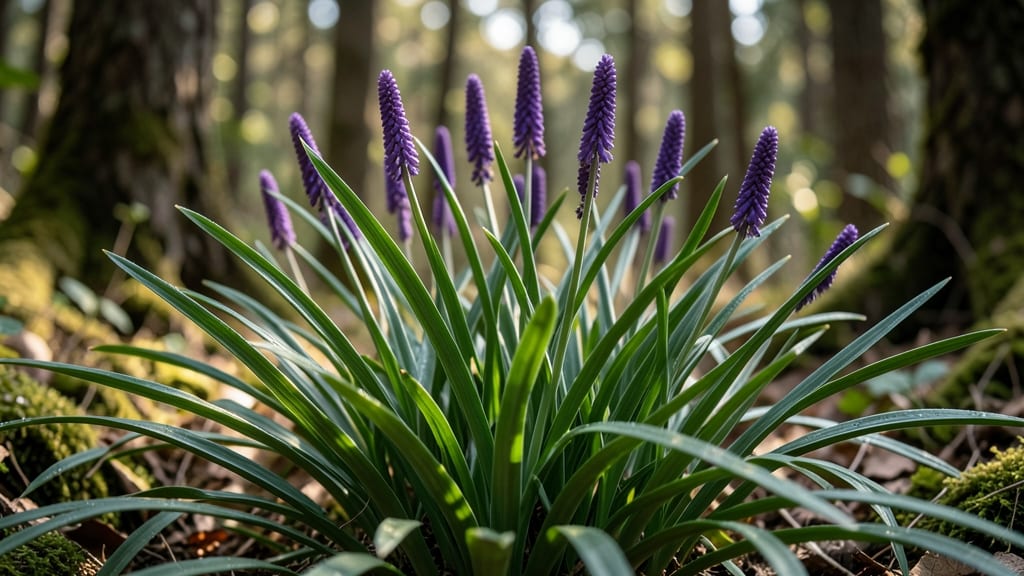
Need a shade-tolerant grass that doesn’t compromise on drama? Meet Liriope Muscari—the ultimate multi-purpose workhorse that thrives in shade to part sun while delivering striking purple flower spikes that pop against its lush green blades. Unlike picky shade grasses, this one adapts to almost any low-light spot, making it the secret weapon for urban gardens, containers, or tight spaces.
Plant it in well-draining soil (it tolerates clay if amended with compost) and give it 3–6 hours of sun for best flower production. Water moderately—it’s drought-tolerant once established—and watch it spread slowly into dense, clumping tufts. The late-summer blooms attract pollinators, and its arching foliage adds texture year-round. Perfect for small balconies, mixed borders, or even as a living mulch under trees.
This is the go-to grass for busy gardeners who want low-maintenance beauty without sacrificing color or resilience. Urban dwellers and container gardeners will love how it packs a punch in limited space. ✨
Carex oshimensis Evergold for Year-Round Color
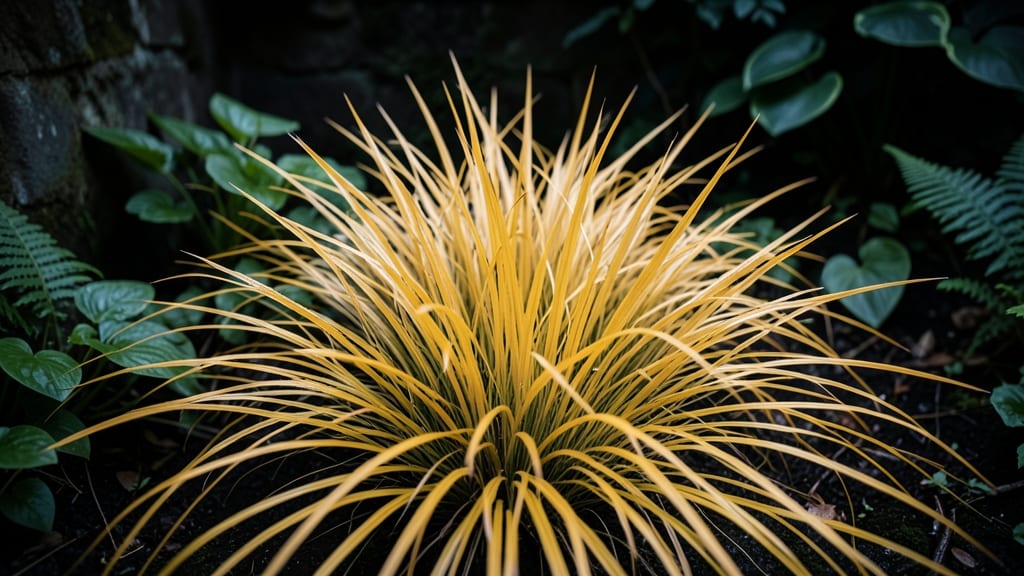
Want to banish dull, dark corners with a pop of color that lasts all year? Carex oshimensis 'Evergold' delivers golden-yellow foliage that thrives in shade, creating a warm focal point where other plants struggle. Unlike most shade grasses, this variety keeps its vibrant hue even in winter, making it a standout for modern landscapes and mixed borders.
This cold-hardy sedge handles temperatures down to -20°F and becomes drought-tolerant once established, reducing your watering chores. Plant it in clusters along pathways, near evergreens, or as a contrast to dark foliage like heuchera or hostas. A light trim in early spring keeps it tidy, but otherwise, it’s a carefree addition that brightens even the gloomiest spots.
Perfect for urban gardeners or anyone craving low-maintenance color, 'Evergold' proves that shade areas don’t have to be boring. Its cheerful foliage lifts the mood while demanding almost no effort. ✨
Hakonechloa macra for Graceful Cascades
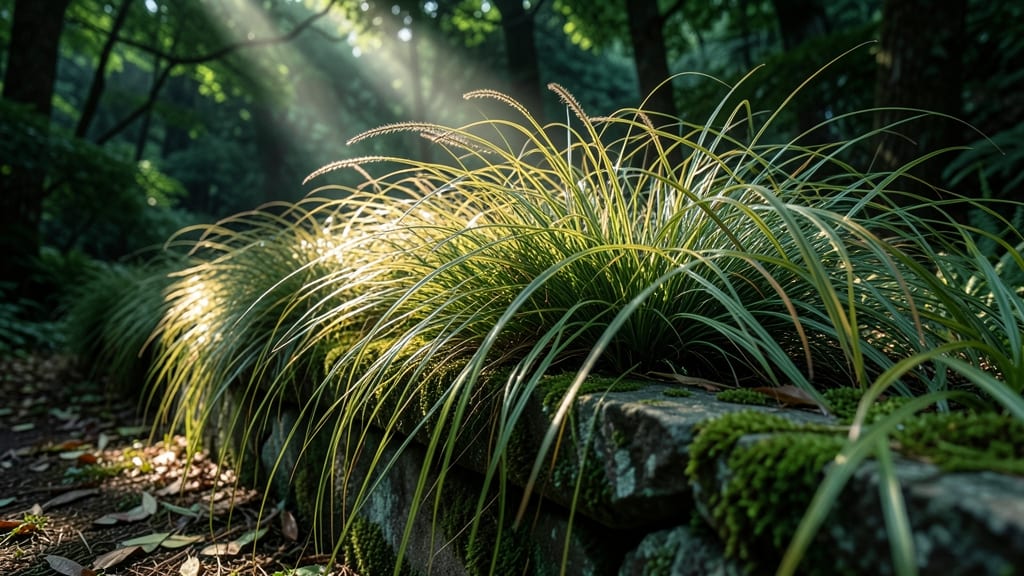
Want to add a touch of tropical elegance to your shady patio or woodland garden without the fuss? Hakonechloa macra—commonly called Japanese forest grass—spills over edges in fountain-like cascades, creating a lush, flowing effect that brightens dim corners. Its arching, golden-green blades sway gently in the breeze, mimicking a mini waterfall and bringing a serene, almost magical quality to containers or garden borders.
This shade-loving beauty thrives in moist, well-draining soil and partial to full shade, making it perfect for understory plantings, near north-facing walls, or even in hanging baskets where its cascading habit truly shines. Unlike other grasses, it prefers consistent moisture but avoids soggy roots—ideal for rain gardens or areas with natural drip irrigation. A light trim in early spring keeps it tidy, but it’s otherwise low-maintenance, rewarding you with year-round texture and a soft, tropical vibe.
Perfect for gardeners who love dramatic yet effortless design, Hakonechloa macra is a standout for small spaces, urban courtyards, or woodland gardens where you want to soften edges and add movement. Its delicate, arching form contrasts beautifully with ferns, hostas, or even dark foliage like heucheras. 🌿
Ophiopogon japonicus for Fine Texture
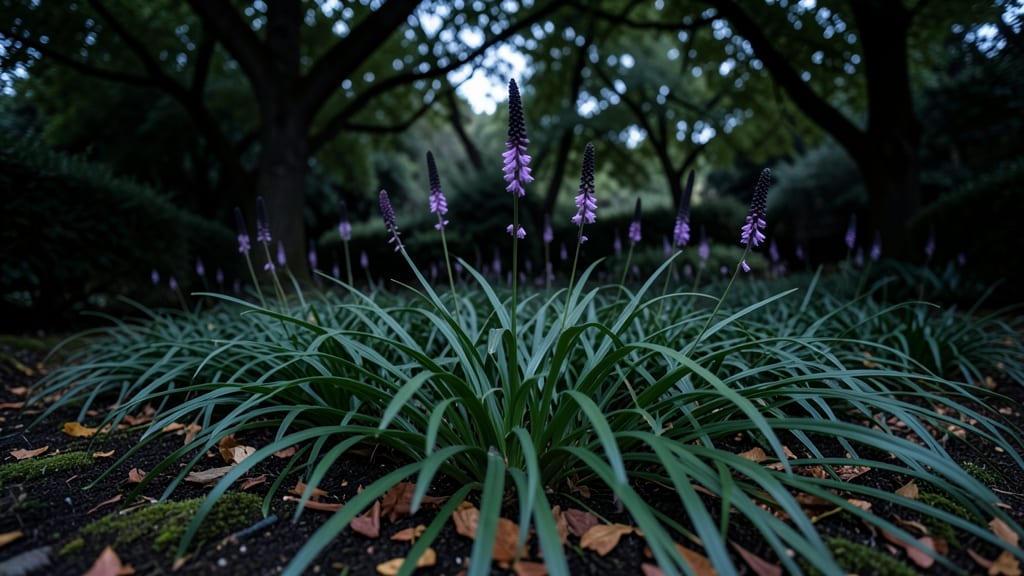
Want a subtle, lawn-like texture that thrives in shade without the upkeep? Ophiopogon japonicus—commonly called "mondograss"—delivers delicate, grass-like foliage with a bonus: striking purple-black flower spikes in late summer. Unlike traditional lawns, it stays lush in partial to full shade and handles foot traffic better than many alternatives.
This clumping perennial grows just 6–12 inches tall, making it ideal for rock gardens, tight borders, or even as a living mulch under trees. It prefers moist, well-draining soil but tolerates drought once established. For a polished look, shear back the flower spikes after blooming, but otherwise, it’s nearly maintenance-free. 💚
Perfect for urban gardeners, rockery lovers, or anyone tired of bare soil in shaded spots, this grass offers year-round interest with minimal effort—no mowing required! 🌱
Pennisetum alopecuroides for Compact Ornaments
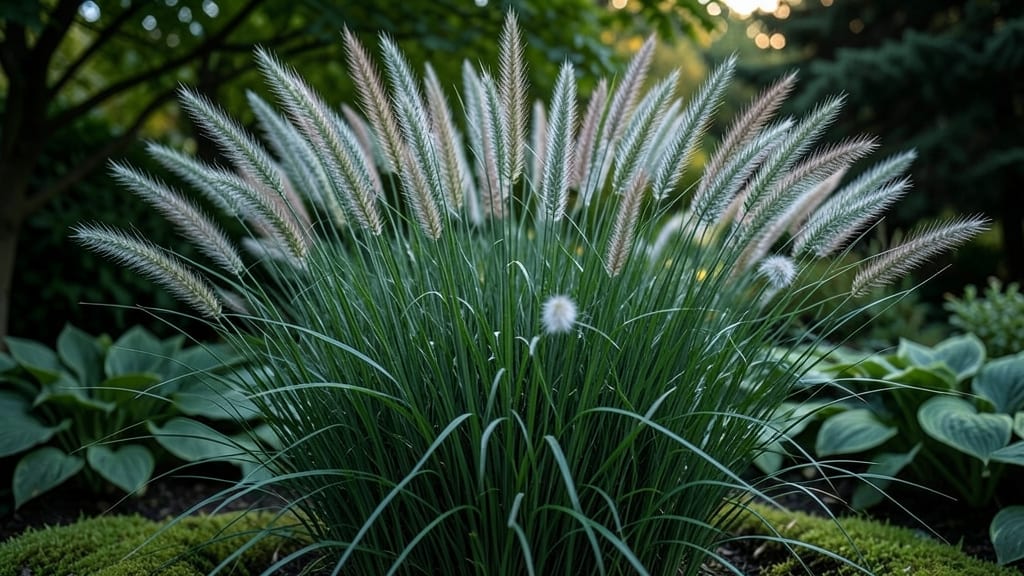
Looking for a shade-loving grass that delivers bold structure without sprawling out of control? Pennisetum alopecuroides—commonly called fountain grass—grows in neat, bottlebrush-like tufts that add architectural interest to shaded borders, containers, or small gardens. Unlike its sun-loving cousins, this variety thrives in partial to full shade, making it perfect for under trees or north-facing spots.
Once established, it’s drought-tolerant and requires minimal fuss—just water occasionally during dry spells. Its feathery plumes (especially in cultivars like Hameln) add winter interest, while the compact growth habit (1–3 feet tall) makes it ideal for tight spaces. Plant in clusters for drama or solo in pots to elevate patios.
This grass is a game-changer for urban gardeners or small-space enthusiasts who want high-impact, low-maintenance plants that don’t demand sunlight. 🌻
Carex comans for Dramatic Foliage
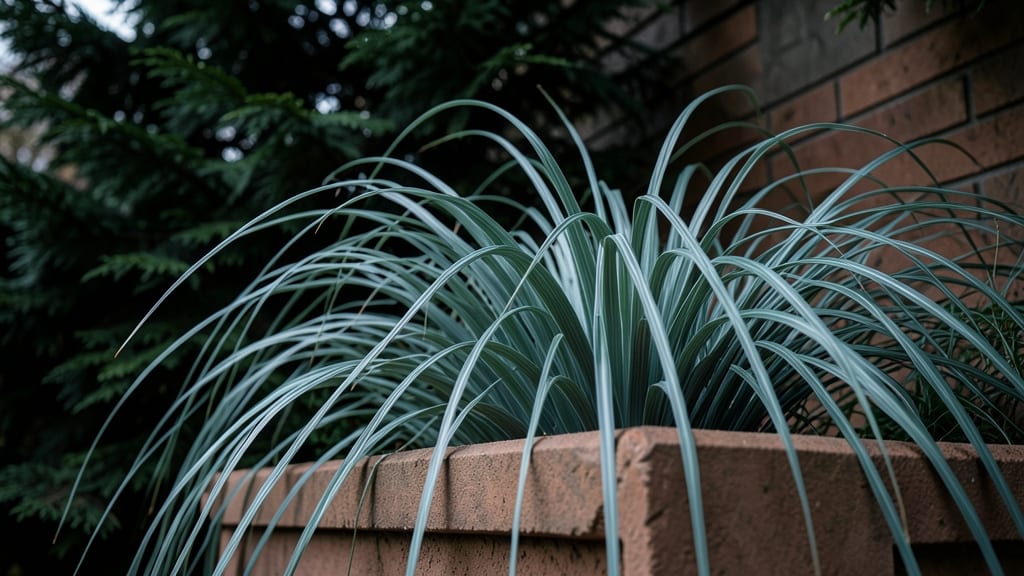
Want a bold statement plant that turns dull shade spots into a lush, architectural focal point? Carex comans delivers with its arching blue-green blades that cascade like a fountain, creating instant drama where other grasses fail. Unlike flat ground covers, this sedge grows in sweeping, layered clumps that catch light and movement—ideal for rain gardens, pond edges, or as a living accent near patios.
This moisture-loving grass thrives in shady, damp conditions (think bog gardens or areas with poor drainage) and tolerates partial sun too. Plant it in groups of 3-5 for maximum impact, spacing them 12-18 inches apart. A light trim in early spring keeps it tidy, but otherwise, it’s nearly self-sufficient—perfect for gardeners who want high visual payoff with low effort.
Best for those who love textural contrast in shady beds, Carex comans pairs beautifully with hostas, ferns, or dark-leaved shrubs. Its year-round structure ensures your garden stays interesting even in winter. 🌟
Deschampsia cespitosa for Airy Movement
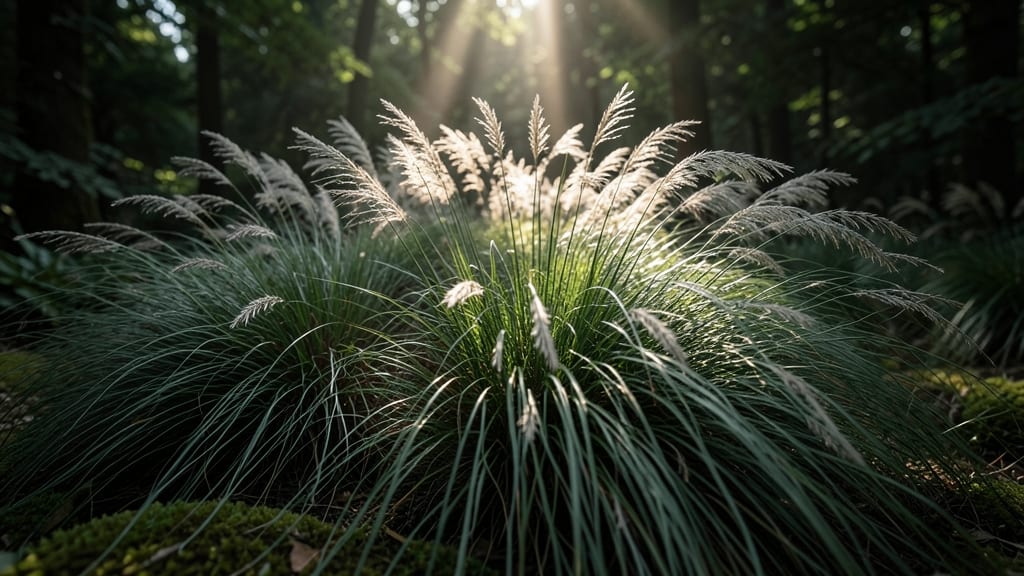
Want to bring ethereal movement to your shady garden without the fuss? Deschampsia cespitosa—commonly called tufted hairgrass—delivers feathery, wispy seed heads that dance in the slightest breeze, creating a dreamy, airy effect in even the darkest corners.
This clump-forming grass thrives in partial to full shade and handles dry soil once established, making it ideal for wildflower gardens or naturalistic landscapes. Its silvery-green blades and arching seed plumes (which persist through winter) add vertical interest and soft texture, contrasting beautifully with bold foliage plants. Simply divide clumps every 3–4 years to keep them vigorous.
Perfect for low-maintenance gardeners or those seeking a wild, meadow-like look, this grass pairs well with hostas, ferns, and shade-loving perennials. It’s also a pollinator magnet when in bloom! 🌻
Festuca glauca for Blue-Green Accents
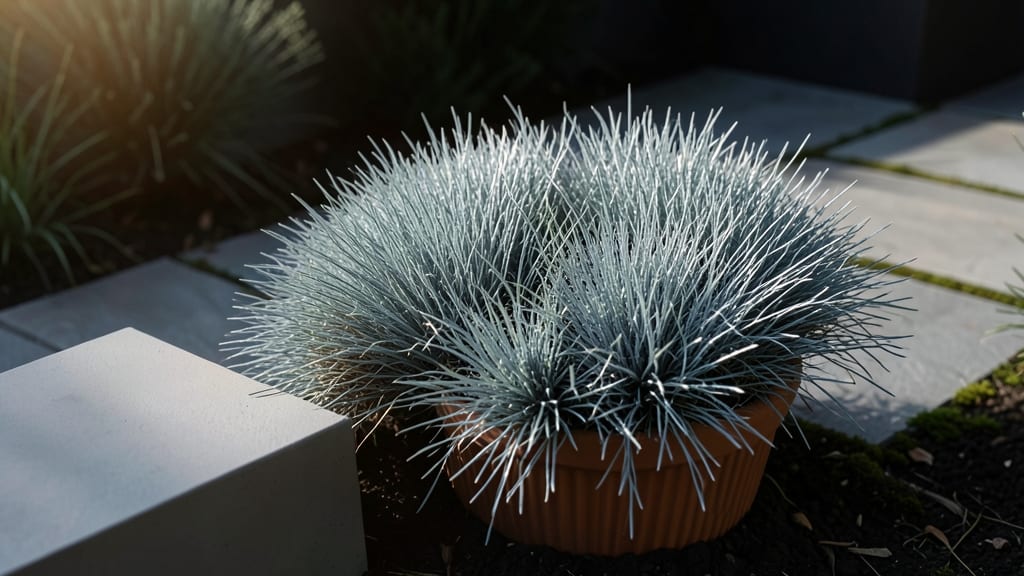
Want to add a bold pop of color to your garden without the fuss? Festuca glauca, or blue fescue, delivers striking blue-gray foliage that stands out against dark corners and complements modern or Mediterranean designs. Unlike other shade grasses, it thrives in full sun or partial shade, making it versatile for tricky spots.
This drought-tolerant grass requires almost no maintenance—just occasional trimming to shape its dense clumps. Plant it in well-draining soil with minimal watering once established, and watch it create a striking contrast with purple, yellow, or silver-leaved plants. Its compact size (12-18 inches tall) makes it ideal for borders, rock gardens, or container plantings.
Perfect for urban gardeners or those with low-water landscapes, blue fescue adds year-round structure and color with zero effort. 💡