
Watering
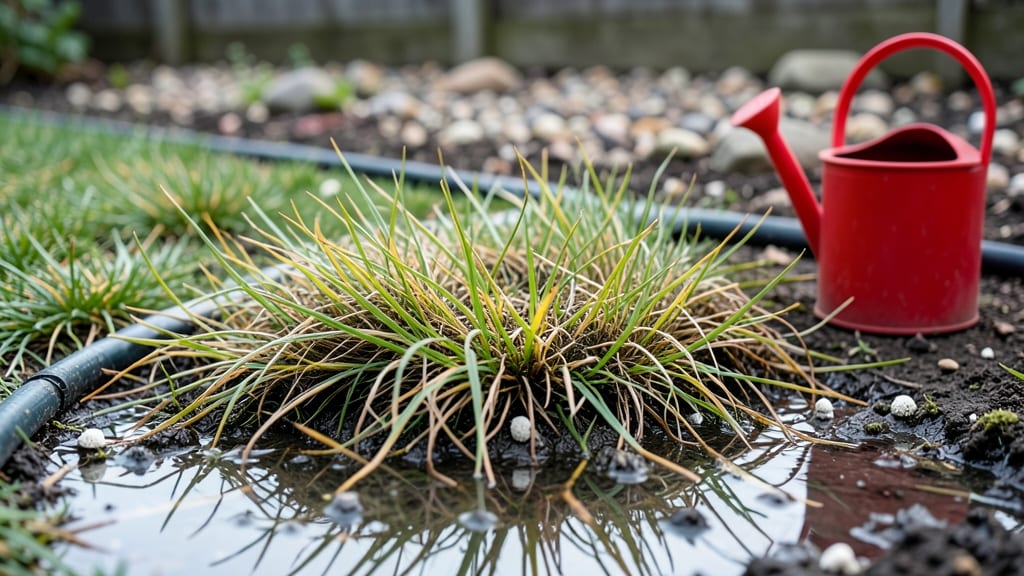
Overwatered new turf leaves you staring at a swampy lawn instead of lush green grass. I’ve turned soggy spots into thriving turf by fixing drainage and adjusting watering—here’s how to do it in under an hour.
The key isn’t just cutting back on water; it’s understanding why your lawn is drowning in the first place.
Yellowing patches, moldy smells, and roots struggling to breathe are dead giveaways. Most people overwater because they think grass needs constant moisture, but new turf actually thrives on deep but infrequent watering.
A simple soil test with your finger—if it’s still damp an inch down after 24 hours, you’re overdoing it.
Start by aerating compacted areas to help water drain faster, then adjust your schedule to twice a week with 1 inch per session. Within two weeks, you’ll see roots stretching toward the moisture instead of rotting in it.
The best part? Your lawn will start looking green again without needing extra fertilizer.
This works for any grass type, from Bermuda to fescue, and prevents future soggy spots. Once you’ve got the drainage right, maintaining healthy turf becomes straightforward—just keep an eye on the weather and your watering can.
Root Causes Of Soggy Grass
New turf is delicate—like a newborn plant, it needs just the right amount of water to thrive. But when it gets too much, the consequences can be messy, costly, and frustrating. Overwatering isn’t just about puddles; it’s a chain reaction of soil, grass, and environmental factors working against your lawn.
Let’s break down the real reasons your new turf is drowning in its own moisture.
🌧️ Poor drainage systems
If water can’t escape, it pools on the surface or lingers in the soil, suffocating roots. New turf is especially vulnerable because its root systems are still shallow and underdeveloped. Here’s why drainage fails:
- Compacted Soil: Heavy foot traffic, construction equipment, or even natural settling can compress soil, reducing pore space for water to drain. Think of it like a sponge that’s been squeezed—it can’t absorb or release water efficiently.
- Clay-Heavy Soil: Clay particles bind tightly, creating a waterproof barrier. Rain or overwatering turns the soil into a soggy mess, leaving grass roots gasping for air.
- Improper Slope or Grading: If your yard isn’t graded to slope away from the house or low-lying areas, water pools instead of flowing. A slope of just 1-2% (about 1 inch per 10 feet) can make a huge difference.
💡 Pro Tip: Before laying new turf, test your soil’s drainage by digging a 12-inch hole, filling it with water, and timing how long it takes to drain. If it takes more than 4 hours, you’ve got a drainage issue.
⏳ Overzealous watering schedules
New turf needs moisture to establish roots, but too much too soon is a recipe for disaster. Many homeowners make these common mistakes:
- Watering Daily: Frequent light watering keeps the surface wet but doesn’t encourage deep root growth. Turf roots need to stretch downward for stability—this only happens with infrequent, deep watering (1-1.5 inches per week, including rain).
- Ignoring Weather Conditions: Watering on rainy days or when humidity is high traps excess moisture in the soil. A simple soil moisture test (stick your finger 2 inches down—if it’s damp, skip watering!) can save your turf.
- Using Sprinklers Without Precision: Sprinkler systems often overwater by 20-30% due to overlap or misaligned heads. This leads to uneven saturation, with some areas drowning while others dry out.
🔥 Warning: Overwatering can also wash away nutrients and fertilizers, leaving your turf malnourished despite the excess H2O.
🌡️ Extreme weather & humidity traps
Mother Nature plays a big role in turf health. When conditions are already moist, your watering habits might be doing more harm than good:
- High Humidity: Air already saturated with moisture slows evaporation, keeping the soil damp longer. In humid climates (like the Southeast U.S.), turf can stay soggy for days after watering.
- Cool or Cloudy Weather: Low temperatures and lack of sunlight reduce the grass’s ability to transpire (release water vapor). This means the turf holds onto moisture longer, increasing the risk of fungal diseases like brown patch or dollar spot.
- Heavy or Frequent Rainfall: If your area gets more than 1 inch of rain per week, supplemental watering can turn beneficial into harmful. Always check a local weather app for rainfall forecasts before watering.
✨ Smart Fix: Install a smart rain sensor on your sprinkler system to automatically pause watering when it rains. It’s a small investment with big payoffs!
🏗️ Installation mistakes that seal the deal
Even the best turf can fail if it’s not installed correctly. These oversights trap water and strangle roots:
- Improper Soil Preparation: Skipping aeration or not amending clay soil with organic matter (like compost) leaves the base impermeable. Roots can’t penetrate compacted layers, leading to waterlogging.
- Wrong Turf Type for Your Climate: Cool-season grasses (like Kentucky bluegrass) thrive in northern climates but can rot in hot, humid Southern summers if overwatered. Match your turf to your USDA hardiness zone.
- Poor Seaming or Stitching: If turf rolls aren’t butted tightly together or seamed properly, water can pool in the gaps, creating soggy "valleys" between sections.
🎯 Action Step: If your turf was recently installed, ask the landscaper about soil prep and drainage layers (like sand or gravel) that should have been added. If missing, it’s a quick fix before problems worsen.
How to solve it
If your new turf looks more like a swamp than a lush green lawn, don’t panic—you can turn things around with the right steps. Overwatering new turf is a common mistake, but fixing it (and preventing future soggy spots) is simpler than you think.
Below, we’ve mapped out the most likely causes of your waterlogged grass and the practical fixes to revive it—plus tips to keep it thriving.
###
💦 Cause 1: Too Much Water at Once → Fix: Adjust Your Watering Schedule
If you’re watering daily or giving your turf a deep soak every time, you’re likely drowning it. New turf needs consistent moisture, not saturation.
- 🔥 Step 1: Check soil moisture by sticking your finger 1–2 inches into the soil. If it’s damp, skip watering.
- 🍳 Step 2: Water early in the morning (5–9 AM) for 10–15 minutes, 2–3 times per week. Use a rain gauge or tuna can to measure—1 inch per week is ideal for new turf.
- 👨🍳 Step 3: Use a soaker hose or sprinkler with adjustable settings to avoid runoff. Direct water at the base of the grass, not the leaves.
💡 Prevention Tip: Invest in a smart sprinkler timer to automate watering and avoid overdoing it. Most new turf only needs ¼ to ½ inch of water per session until roots establish (about 2–3 weeks).
###
🌧️ Cause 2: Poor Drainage → Fix: Improve Soil Aeration
If your yard has clay soil or sits in a low spot, water pools instead of draining. This is especially risky for new turf, which hasn’t had time to develop deep roots.
- 🔪 Step 1: Aerate the soil with a manual or rental core aerator. Poke holes 3–4 inches deep, spacing them 3–4 inches apart in a grid pattern.
- 🌱 Step 2: Top-dress with ½ inch of compost or sand to improve drainage. Mix it into the aeration holes for best results.
- ⏰ Step 3: Water lightly after aerating to help the soil settle. Avoid heavy watering for 48 hours to let the roots adjust.
💡 Prevention Tip: If your yard has persistent low spots, consider grading the soil slightly (¼ inch per foot) to encourage runoff. For clay-heavy areas, mix in perlite or coarse sand before laying new turf.
###
🌡️ Cause 3: Compacted or Uneven Soil → Fix: Level and Loosen the Base
New turf laid on rocky, compacted, or uneven ground struggles to absorb water properly, leading to puddles and rot.
- 🪓 Step 1: Remove any rocks, debris, or weeds from the area. Use a shovel or rake to break up compacted soil.
- 📏 Step 2: Check for low spots with a level or straight board. Fill dips with a soil-sand mix (60% topsoil, 40% sand) and tamp it down gently.
- 🌿 Step 3: Add a 1-inch layer of starter fertilizer (high in phosphorus) to encourage root growth before laying new turf.
💡 Prevention Tip: Always test your soil’s drainage before installing new turf. Dig a 12-inch hole, fill it with water, and time how long it takes to drain. If it takes more than 6 hours, amend the soil with organic matter.
###
⚠️ Cause 4: Ignoring Weather Conditions → Fix: Adapt to Rain and Humidity
Watering on rainy days or in high-humidity climates traps moisture in the soil, suffocating grass roots.
- 🌦️ Step 1: Check the forecast before watering. Skip irrigation if ½ inch of rain is expected in 24 hours.
- 🕒 Step 2: In humid areas, water only in the morning to allow excess moisture to evaporate.
- 🌡️ Step 3: If your turf feels squishy when walked on, it’s overwatered. Hold off until the top 1–2 inches of soil are dry.
💡 Prevention Tip: Use a weather-based irrigation controller that adjusts watering automatically based on local conditions. Apps like GrassTec or RainMachine can help.
✨ Bonus Recovery Tip: If your turf is already yellow or mushy, rake out waterlogged patches and let them dry in the sun for a day. Once dry, reseed or lay new sod over the area.
Frequently asked questions
How do I know if my new turf is overwatered?
Check for these signs: yellowing grass, a spongy feel when walked on, or moldy smells. If the top 1-2 inches of soil stays damp for more than 24 hours, you're likely overwatering. Also watch for fungus-like brown patches—this is a red flag for excess moisture.
Can overwatered turf recover?
Yes! First, stop watering and let the soil dry out completely. Aerate compacted areas and improve drainage with sand or compost. Within 2-3 weeks, you should see new growth as roots adjust. For severe cases, consider reseeding affected spots.
What's the best watering schedule for new turf?
Water deeply 2-3 times per week (early morning) for 10-15 minutes per session. Aim for 1 inch total per week (including rain). Use a soaker hose to avoid runoff. Always check soil moisture—if damp 1-2 inches down, skip watering.
Will overwatering kill my new turf?
Not immediately, but chronic overwatering suffocates roots by preventing oxygen flow. This leads to rot, fungal diseases, and poor establishment. The grass may survive short-term, but long-term damage weakens its ability to handle drought or pests. Act quickly to prevent permanent harm.
How can I fix poor drainage in my yard?
Start by aerating with a core aerator to create drainage channels. Mix ½ inch of sand or compost into the soil, then grade low spots to slope 1-2% away from the house. For clay soil, consider installing French drains in problem areas.