
Lawn
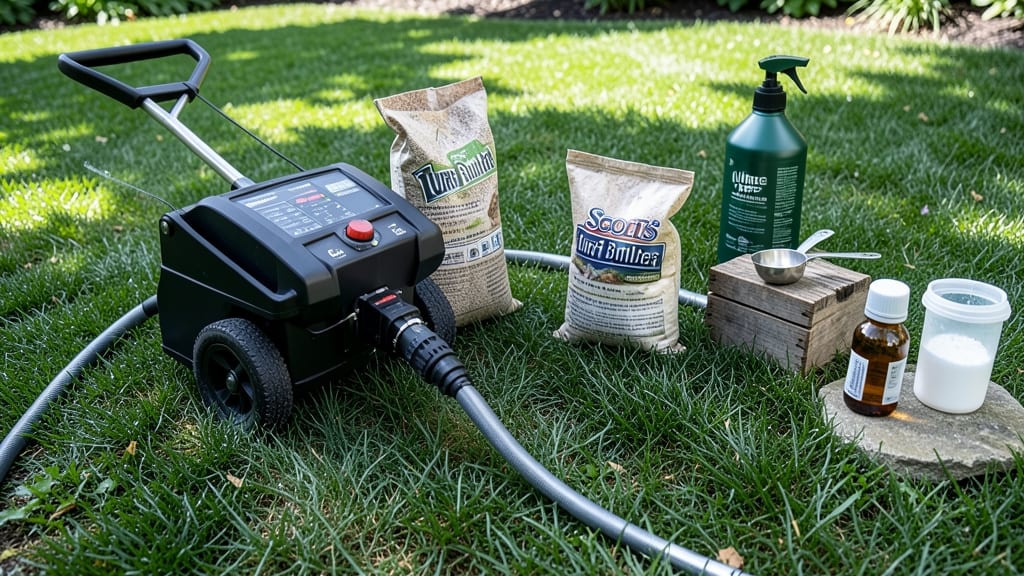
To neutralize dog pee on lawn, act fast by diluting fresh urine with water, then apply a vinegar-water solution (equal parts) to break down ammonia, and finish with baking soda to restore soil balance. Repeat weekly in high-traffic areas.
Dog urine contains high levels of ammonia and nitrogen, which burn grass blades and disrupt soil microbes when concentrated. 🌱 The longer it sits, the more it alters your lawn's pH, creating yellow patches that won't grow back without intervention.
I've seen firsthand how weekly maintenance prevents permanent damage—especially in sandy soils where nutrients drain quickly. The key is acting within minutes of a pee incident, because that's when the chemical reaction starts.
For clay-heavy lawns, add a dash of dish soap to the vinegar mix to help it penetrate deeper. Overwatering after treatment can wash away the baking soda too quickly, so let the soil absorb it naturally.
I always recommend testing your lawn's pH after a month of consistent treatment—aim for a neutral 6.5-7.0 range for optimal grass health.
💡 In This Article
- Why Dog Urine Damages Grass and Soil
- DIY Dog Urine Neutralizer Recipes for Different Lawn Types
Why dog urine damages grass and soil
Dog urine is essentially a concentrated cocktail of ammonia and nitrogen compounds, which act like a chemical burn on grass blades. When your pup pees, the urine's pH can spike to 8.0-9.0—that's 100 times more alkaline than normal soil.
This extreme alkalinity disrupts the grass's cellular structure, causing the blades to turn brown and crisp at the edges within 24-48 hours. The ammonia also releases gas that repels beneficial soil microbes, starving your lawn of the nutrients it needs to recover.
The damage gets worse because dog urine contains 2-3 times more nitrogen than synthetic fertilizers.
While nitrogen is essential for growth, this sudden influx overwhelms the grass, leading to yellow patches that spread quickly in sandy soils (where nutrients drain fast) or linger in clay-heavy lawns (where water pools and concentrates the chemicals).
Over time, repeated urination in the same spot creates a "pee patch" where grass refuses to regrow—this happens because the soil's pH shifts toward 7.5-8.5, making it inhospitable for most grass types.
What most people don't realize is that the odor isn't just from ammonia—it's also from uric acid, which takes 3-5 days to fully break down in soil. This lingering smell attracts flies and can even deter dogs from using other parts of the yard.
The combination of chemical burn, microbial disruption, and pH imbalance creates a perfect storm for lawn damage that's often permanent if left untreated.
Here's the science behind why timing matters: Fresh urine has 80% of its ammonia content in a volatile state, meaning it evaporates quickly. Diluting with water immediately (within 5-10 minutes) reduces the concentration by up to 60%, preventing that initial chemical burn.
The remaining ammonia binds to soil particles over time, which is why vinegar becomes essential—it converts the ammonia into ammonium ions that plants can actually use as fertilizer.
Season also plays a critical role. In summer, urine evaporates faster, concentrating the damage, while winter's cooler temps slow the chemical reaction—giving you slightly more time to act.
But regardless of season, the soil's microbial community takes 2-4 weeks to recover from even a single urination event, which is why consistent treatment is non-negotiable for high-traffic dog areas.
Consider this visual analogy: Think of your lawn like a sponge. Dog urine acts like bleach—it dries out the outer layer (grass blades) while altering the sponge's internal structure (soil pH and microbes).
The vinegar-baking soda combo works like a sponge restorer, drawing out the bleach residue while restoring the balance. Without this intervention, that "pee patch" becomes a permanent scar on your lawn.