
Lawn
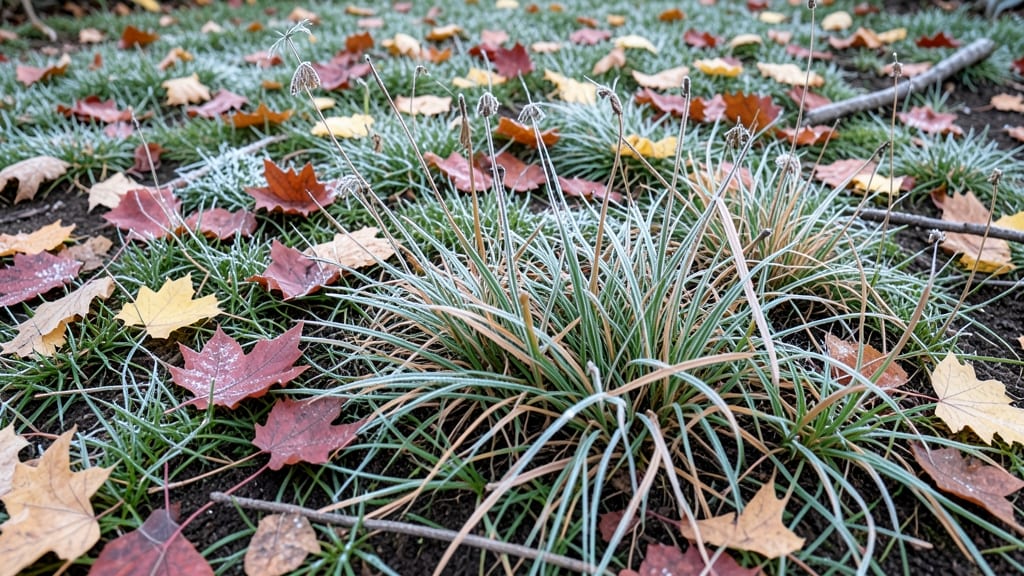
Leaves on lawn over winter remain because cold temperatures slow their natural breakdown, creating a thick layer that can choke grass and attract pests. Remove them by raking when dry or mulch finely for organic matter, but avoid letting them pile up too thickly.
Cold weather is the main reason why fallen leaves stick around on lawns during winter.
The freezing temperatures and reduced moisture slow down the natural decomposition process, leaving them to accumulate in thick layers. 🌿 When this happens, the leaves block sunlight from reaching the grass, which can weaken it over time.
Plus, damp leaves create the perfect environment for pests like slugs and fungi to thrive, potentially damaging your lawn's health.
Raking leaves is the most straightforward method, especially when they're dry and brittle. For a more eco-friendly approach, consider mulching leaves with a lawn mower—this shreds them into smaller pieces that can break down more easily and provide nutrients to the soil.
Just be sure not to leave them in thick piles, as this can still smother grass. If you have a large yard, using leaf blowers or composting the leaves can also be effective options.
💡 In This Article
- Why Lawn Leaves Persist Through Winter and Their Impact
- Safe Lawn Leaf Removal Methods for Winter Preparation
Why lawn leaves persist through winter and their impact
The persistence of leaves on lawns during winter stems from a biological slowdown caused by cold temperatures. When autumn arrives, leaves enter a state of dormancy, where microbial activity—responsible for breaking down organic matter—plummets by 50-70% compared to warmer months.
This happens because soil microbes and decomposers like fungi and bacteria thrive in temperatures above 50°F (10°C), while winter ground temps often drop below 40°F (4°C). Without these decomposers active, leaves remain intact for months, forming thick mats that block sunlight from reaching grass blades.
These leaf layers create a physical barrier that suffocates grass, cutting off 60-80% of necessary sunlight for photosynthesis. The trapped moisture beneath the leaves also creates anaerobic conditions, where oxygen levels drop and harmful gases like methane build up.
This environment becomes a breeding ground for pests: slugs thrive in damp leaf litter, while fungal diseases like snow mold spread rapidly under thick, insulating layers.
Even a 1-inch (2.5 cm) layer of leaves can reduce grass growth by 30% during winter, while 3+ inches (7.5+ cm) risks killing grass entirely.
The texture of leaves plays a role too. Broadleaf varieties like oak or maple create dense, airtight layers that trap moisture, while finer leaves like birch or aspen allow slightly more airflow. However, when mixed with dew or frost, even lightweight leaves form a suffocating blanket.
The weight of wet leaves can also physically crush grass blades, leaving brown patches that persist into spring. This is why leaves that seem harmless in fall can become a major issue by late winter.
Another critical factor is the pH shift caused by decomposing leaves. As leaves break down slowly, they release tannins that lower soil pH, making it more acidic. This chemical change stresses grass roots, weakening their ability to absorb nutrients.
In some cases, the acidity can even inhibit beneficial soil bacteria, creating a vicious cycle where grass recovery becomes even harder once temperatures rise. The combination of physical smothering, pest attraction, and chemical changes explains why winter leaves are more than just an eyesore—they're a silent threat to lawn health.
Consider this comparison: A healthy lawn in 50°F (10°C) weather can recover from light leaf cover in 2-3 weeks of spring growth, but under 3+ inches (7.5+ cm) of leaves, recovery time extends to 6-8 weeks or longer.
The longer leaves stay, the more damage accumulates, making early winter cleanup crucial for spring lawn vitality. This is why timing—removing leaves before heavy snowfall—can mean the difference between a lush spring lawn and one requiring extensive repair.