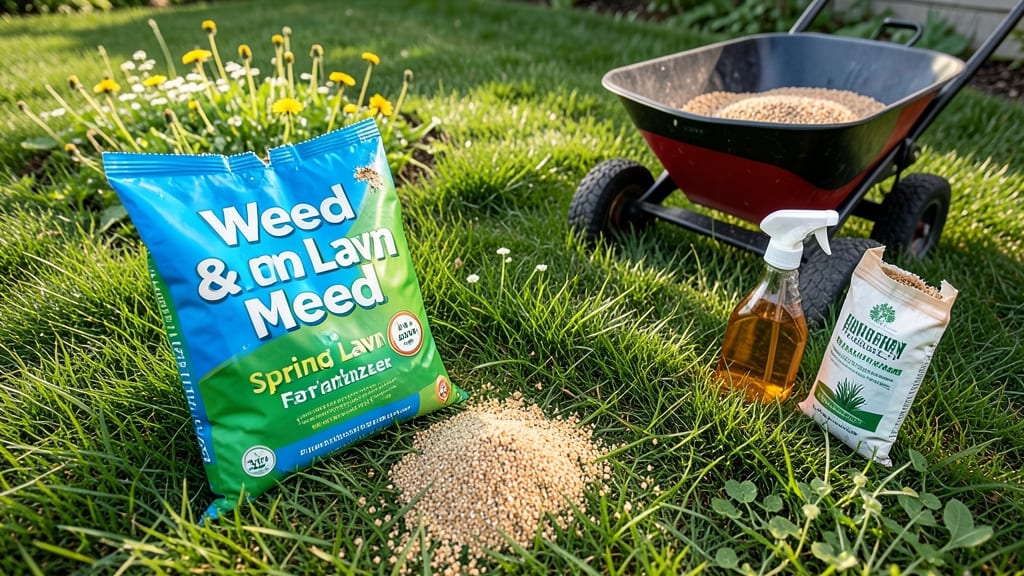
Buying guide: how to choose the right spring lawn fertilizer and weed control
1. Pre-Emergent vs. Post-Emergent Control 💡
Spring is all about pre-emergent weed control—this means stopping weeds before they sprout, not after. Most spring fertilizers focus on pre-emergent herbicides (like prodiamine or pendimethalin) to block annual weeds like crabgrass. However, some products offer dual-action control, combining pre-emergent with post-emergent ingredients to tackle existing weeds.
If your lawn already has weeds, look for a combo formula—but be cautious, as post-emergent herbicides can harm grass if misapplied. For most homeowners, a pure pre-emergent applied in early spring is the safest bet, especially if you’re dealing with cool-season grasses like fescue or ryegrass.
2. Nutrient Ratio (NPK) for Your Grass Type ⚡
The NPK ratio (Nitrogen-Phosphorus-Potassium) determines how your lawn gets fed.
For spring, focus on high nitrogen (N) (first number) to promote rapid green-up, but avoid excessive phosphorus (P) if your soil tests show high levels. Cool-season grasses (common in northern climates) thrive with ratios like 24-0-10 or 16-4-8, while warm-season grasses (like Bermuda or Zoysia) prefer lower nitrogen (12-0-4 or 10-0-20).
Slow-release nitrogen (like polymer-coated urea) is ideal—it feeds your lawn steadily without risking burn or runoff. Counter-intuitively, organic options (like corn gluten meal) often provide both weed control and nutrients, but they may require more frequent applications.
3. Application Method: Granular vs. Liquid Trade-Offs ✅
Granular fertilizers are spreader-friendly and cost-effective for large lawns, but they can wash away in heavy rain if not rainfast. Look for waterproof granules that activate upon contact with soil. Liquid concentrates, on the other hand, offer precise control for spot treatments and eliminate waste from runoff.
They’re easier to apply with a hose-end sprayer but may require more frequent reapplication. For small yards or problem areas (like driveway cracks), a liquid formula is the way to go.
If you’ve got a sprawling lawn, a granular spreader paired with a slow-release product will save you time and money in the long run.
4. Environmental and Pet Safety 🛡️
Not all weed controls are pet-safe. Synthetic pre-emergents (like prodiamine) can harm pets until they’re activated by soil moisture—usually within 24–48 hours. Organic options (like corn gluten meal) are safer but may take 30+ days to fully activate.
Always check the activation period and keep pets off treated areas until the product is rainfast. For eco-conscious homeowners, organic certifications (like OMRI-listed) are worth the extra cost, though they may require more frequent applications.
If you’ve got kids or pets, a pet-safe granular with a short activation time is the best compromise.
5. Climate and Timing: When to Apply 🔍
Timing is everything in spring. In northern climates, apply pre-emergent as soon as the soil reaches 55°F (usually March–April), while southern lawns should wait until late winter/early spring (February–March) when weeds start germinating. A common mistake?
Applying too early or too late—weeds get a head start, and your fertilizer becomes wasted. For warm-season grasses, a late spring/early summer application (May–June) works better. Pro tip: Mow your lawn short (1–1.5 inches) before applying granular fertilizer to ensure even coverage and reduce waste.
Frequently asked questions
Q: When is the best time to apply spring lawn fertilizer with weed control?
The ideal time depends on your climate and grass type. For cool-season grasses (like fescue or ryegrass), apply pre-emergent as soon as soil reaches 55°F in early spring (typically March–April in northern regions). In southern climates, aim for late winter/early spring (February–March) when weeds start germinating. For warm-season grasses (Bermuda, Zoysia), wait until late spring/early summer (May–June). Pro tip: Mow your lawn short (1–1.5 inches) before application to ensure even coverage and reduce waste.
Q: Can I use a spring fertilizer with weed control on an existing weed problem?
Most pre-emergent-only fertilizers won’t kill existing weeds—they only stop new ones from sprouting. For active weeds, look for a dual-action formula (pre-emergent + post-emergent) like the budget-friendly liquid concentrate in our roundup. If your lawn has heavy weed pressure, spot-treat with a selective herbicide first, then apply your chosen fertilizer. Avoid mixing products unless labeled safe, as chemical interactions can damage grass.
Q: How do I avoid fertilizer runoff or waste after application?
To prevent runoff and waste, always choose a rainfast granular fertilizer (like the mid-range or premium options in our guide) that activates upon contact with soil. Apply on a dry, calm day with no rain forecast for 24–48 hours. Water lightly after application (not before) to help granules settle. For liquid concentrates, use a hose-end sprayer for precise control. Avoid overapplying—stick to the recommended coverage rates to protect local waterways and your wallet.
Q: Are these fertilizers safe for pets and children?
Safety varies by product. Synthetic pre-emergents (like prodiamine) are typically safe for pets after 24–48 hours once activated by soil moisture, but keep them off treated areas until the product is rainfast. Organic options (like corn gluten meal) are safer but may take 30+ days to fully activate. Always check the label for activation periods and pet safety warnings. For families with kids or pets, the budget-friendly organic granular in our roundup is a great low-risk choice.
Q: What’s the difference between granular and liquid spring fertilizers?
1
Granular fertilizers
are ideal for large lawns—they’re cost-effective, spreader-friendly, and provide long-lasting coverage (especially slow-release options). However, they can wash away in heavy rain if not rainfast. Liquid concentrates offer precise spot treatment, no waste from runoff, and faster results (7–14 days). They’re perfect for small yards or problem areas but require more frequent reapplication. Choose granular for broad coverage and liquid for targeted control.
Q: How long does weed control last with these fertilizers?
Most pre-emergent fertilizers provide 3–6 months of weed suppression when applied correctly. The premium extended-release option in our guide offers a 3-year barrier against weeds, making it an investment piece for large properties. For standard products, reapply in late spring for continuous protection. Organic options (like corn gluten meal) may require more frequent applications (every 4–6 weeks) but break down harmlessly in soil.
Q: What’s the best budget-friendly alternative if I’m on a tight budget?
If you’re looking for an affordable yet effective option, the budget-friendly organic granular or the best value liquid concentrate are excellent choices. The organic granular uses corn gluten meal for natural weed suppression and soil improvement, while the liquid concentrate delivers fast-acting pre + post-emergent control for spot treatments. Both avoid the waste of overpriced brands while still delivering strong results. For under $20, you can cover a 1,500–2,000 sq ft area effectively.
★★★★★4.8(1 review)