
Watering
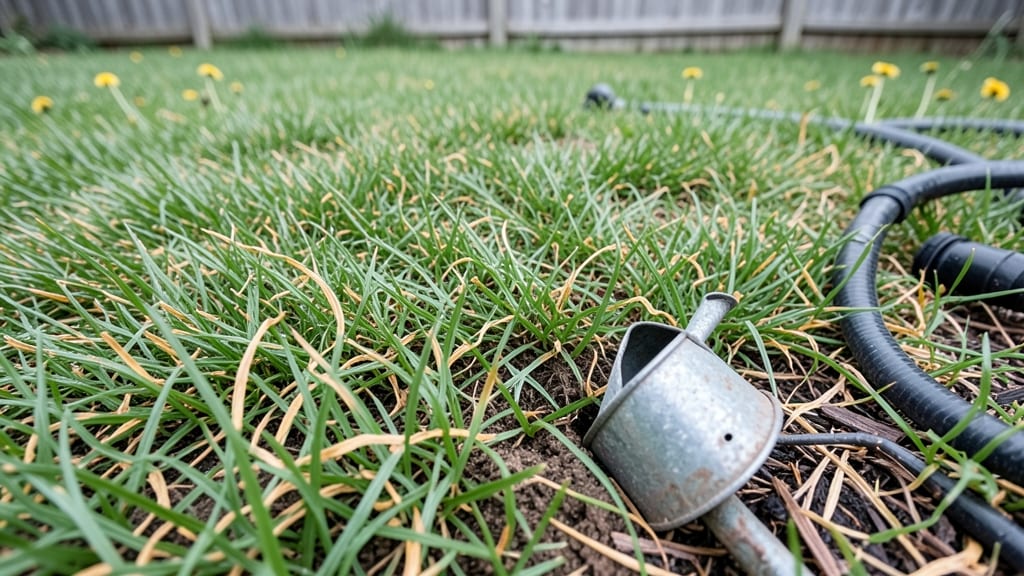
To tell if grass is overwatered or underwatered, check for yellowing blades (underwatered) or a spongy, mushy texture with fungal growth (overwatered). Soil moisture and root health also reveal the issue—dry, hard soil means thirsty grass, while soggy, foul-smelling soil signals excess water.
Your lawn tells you everything you need to know through its color, texture, and soil condition. 🌱 Underwatered grass often shows dull, bluish-gray blades that stay crisp even when stepped on, while overwatered grass develops dark green patches that feel squishy underfoot.
The roots tell the real story—thirsty grass has roots pulling away from dry soil, while overwatered roots suffocate in compacted, waterlogged earth. I’ve seen firsthand how quickly fungal diseases like brown patch take hold when grass sits in wet conditions for too long.
Don’t rely on guesswork—dig a small hole to check soil moisture. If the top inch feels bone-dry, your grass needs water; if it’s damp or smells musty, you’re drowning the roots.
The key is balance: most lawns need about 1-1.5 inches of water per week, including rainfall, and should be watered deeply but less frequently to encourage deep root growth.
💡 In This Article
- Visual and Soil Clues for Grass Water Stress
- Adjusting Watering for Healthy Lawn Recovery
Visual and soil clues for grass water stress
When grass struggles with water, its leaves and roots send clear visual signals. Underwatered grass loses its vibrant green hue, turning a dull grayish-blue as chlorophyll breaks down under drought stress. This happens because plants prioritize root survival over leaf function, shutting down photosynthesis to conserve energy.
The blades also develop a papery texture and stay upright even when stepped on—a sure sign they're desperately clinging to moisture. 🌱
Overwatered grass, on the other hand, shows dark green patches that feel spongy when pressed, almost like a wet sponge. This occurs because excess water displaces oxygen in the soil, creating anaerobic conditions that trigger fungal growth.
You might notice mold or that foul, rotting smell—this is Pythium or Fusarium fungi thriving in waterlogged roots. The science behind this is simple: roots need oxygen to breathe, and when soil stays saturated for more than 48 hours, they suffocate, leading to root rot.
Digging into the soil reveals even more clues. Healthy lawn soil should feel like a damp sponge—moist but not soggy—about 1-2 inches deep. If your trowel pulls out cleanly with minimal resistance, the roots are struggling to anchor.
For underwatered grass, the soil will be dry and crumbly, while overwatered soil stays clumped together and emits that unmistakable musty odor. This is your grass's SOS signal: too little water means dehydration, while too much creates a toxic environment. ✨
Seasonal factors complicate these signs. In hot, dry climates, grass may wilt by midday but recover at night—a normal response to heat stress. However, if blades stay folded and crispy even after evening, that's underwatering.
Conversely, in humid regions, grass might look lush but develop fungal spots if water pools on the surface. The key is observing patterns over time rather than reacting to single symptoms.
Here's what's actually happening at the cellular level: underwatered grass cells lose turgor pressure (the internal water pressure that keeps cells rigid), causing wilting. Overwatered grass cells, meanwhile, experience oxygen deprivation, leading to fermentation-like processes that produce ethanol—a toxic byproduct that weakens roots.
This is why overwatered grass often wilts despite being in wet soil: the roots can't absorb nutrients or water efficiently. 💫
Don't overlook subtle signs like footprints that linger for hours—this indicates weak, water-stressed roots unable to recover. Or those mysterious dark circles where water pools: these are perfect breeding grounds for lawn diseases.
The solution lies in understanding your grass's specific needs, which vary by type (cool-season vs warm-season grasses behave differently) and local climate conditions.
Most homeowners make the mistake of watering based on a schedule rather than soil conditions. The best approach? Test soil moisture weekly by sticking your finger 2-3 inches deep. If it feels dry, water deeply (about ½ inch per session) until moisture reaches 6 inches down.
This encourages roots to grow deeper, making your lawn more resilient to both drought and excess water. 🌿