
Fertilization
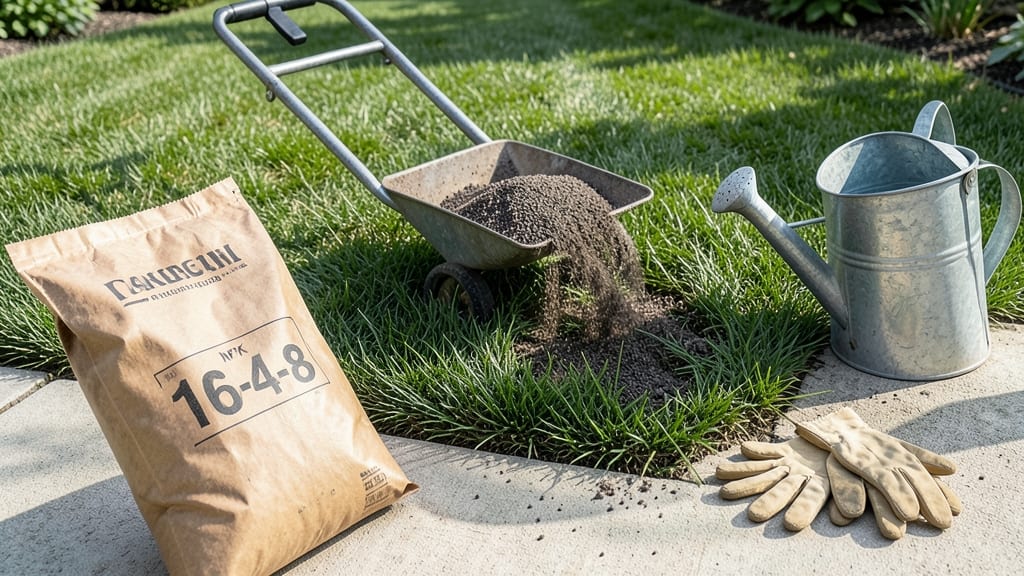
Spreading lawn fertilizer evenly is the secret to that deep, vibrant green your neighbors envy—no streaks, no patchy spots, just consistent growth. 🌱 I’ve learned the hard way that skipping this step means wasting money and ending up with brown patches where the fertilizer clumps.
The right technique transforms your lawn from "meh" to "wow" in just a few weeks.
You’ll need a broadcast spreader (for large lawns) or a drop spreader (for precision), plus safety gear—gloves and goggles. Most people overlook calibrating the spreader first, which leads to uneven coverage.
Set it to the manufacturer’s recommended setting for your fertilizer type, then walk in straight lines with 12-inch overlaps to avoid missed spots.
Timing matters just as much as technique: apply in early spring or fall when grass is actively growing, never in summer heat. For cool-season grasses, a light application every 6-8 weeks keeps them lush without burning.
Warm-season grasses need less frequent feeding—once in late spring and again in early summer—but heavier per application.
Watch for these common mistakes: over-fertilizing (which burns grass), skipping calibration, or applying when rain is forecasted. If you see yellow patches after spreading, you’ve gone too heavy—next time, halve the amount.
With practice, you’ll get it right every season, and your lawn will thank you with thick, resilient grass that stands up to foot traffic and weather.
📚 In This Guide
- What you need
- Instructions
- Tips and common mistakes
- Wrapping up and next steps
What you need
- ● Lawn fertilizer: Choose a high-quality, slow-release granular fertilizer (e.g., 16-4-8 or 20-5-10 NPK ratio). Aim for 10-25 lbs per 1,000 sq ft, depending on your lawn’s needs and the product’s application rate (check the label!).
- ● Broadcast spreader: A drop spreader (for precision) or broadcast spreader (for faster coverage). Ensure it’s calibrated for granular fertilizer (not seed).
- ● Measuring tape or wheel: To accurately measure your lawn’s dimensions (in feet or square footage).
- ● Garden hose with shutoff nozzle: For wetting the lawn before and after spreading (essential for activation!).
- ● Gloves and safety goggles: Protect your hands and eyes from dust and fertilizer particles.
- ○ Garden cart or wheelbarrow: (Optional but helpful!) For hauling fertilizer to hard-to-reach spots.
- ● Calibration guide or spreader test kit: Ensures even distribution—spread a small amount of fertilizer on cardboard to test your spreader’s settings.
- ● Marking flags or spray paint: To outline sections if your lawn has varying fertility needs (e.g., shady vs. sunny areas).
- ● Leaf blower or rake: Clears debris before fertilizing for better contact with grass blades.
- ● Weather app or forecast: To pick a dry, calm day (no rain for 24-48 hours) for optimal results.
Step-by-Step instructions for even lawn fertilizer application
Here's how I achieve that perfectly even spread—no streaks, no missed spots, just lush, uniform growth.
🪴 Step 1: Prepare Your Lawn and Equipment
Start by mowing the lawn to a height of 2.5-3.5 inches—this ensures the fertilizer makes direct contact with the soil and grass blades. Remove any debris, leaves, or thatch that might block application. I like to work on a calm day when wind won't scatter granules unpredictably.
Calibrate your spreader first. For granular fertilizer, set it to the recommended rate per 1,000 square feet (check the product label). Most spreaders have a dial—turn it until the output matches the label's instructions. I test mine by catching the output in a bucket over a measured area to verify accuracy.
☀️ Step 2: Apply Fertilizer in Overlapping Passes
Begin at one end of the lawn and work in straight lines, keeping the spreader 12-18 inches above the grass for even distribution. Walk at a steady pace—too fast and you'll miss spots, too slow and you'll pile up granules. I imagine a grid to guide my path, ensuring each pass overlaps the previous by 6-8 inches.
For large lawns, divide the area into sections. I mark boundaries with stakes and flags so I don't double-apply or skip sections. The goal is 100% coverage without overlap—think of it like painting a wall with even strokes. If you see bare patches, adjust your stride or spreader height.
💧 Step 3: Water Immediately After Application
Within 24 hours of spreading, water the lawn deeply to activate the fertilizer. Light rain won't cut it—you need ½ inch of water to dissolve granules and carry nutrients into the soil. I set my sprinkler for 20-30 minutes to ensure full saturation.
Watch for runoff. If water pools or drains too quickly, you're overwatering. Slow down the sprinkler or break the watering into two shorter sessions. The soil should feel moist to 4-6 inches deep—that's how deep roots need to absorb nutrients. Avoid heavy foot traffic on the lawn for 48 hours to let the fertilizer settle.
✂️ Step 4: Monitor and Adjust for Seasonal Needs
Check the lawn 7-10 days after fertilizing for signs of improvement—richer green color and stronger growth indicate success. If you notice yellow patches or slow growth, you may need a second application 6-8 weeks later, especially in cool-season grasses. Warm-season grasses like Bermuda thrive with 3-4 applications per year.
Adjust your approach based on grass type. Cool-season grasses (like fescue or bluegrass) benefit from early spring and fall feedings, while warm-season grasses (like zoysia or St. Augustine) need summer applications. I keep a calendar with dates to avoid over-fertilizing—more isn't better, and excess can burn grass or pollute waterways.
Tips & tricks for perfect lawn fertilizer application
These pro-level strategies will help you achieve that flawless, professional-grade spread every time—no guesswork involved.
Precision Calibration: In Step 1, don't just eyeball your spreader settings! I take it a step further by testing the output in a 10' x 10' square. Catch the granules in a bucket and measure—you should get exactly what the label recommends for that area. Most spreaders lose accuracy over time, so recalibrate every few years or after heavy use. This ensures your 1,000 square feet gets the exact nutrient balance it needs without waste.
Visual Guide Technique: For Step 2's overlapping passes, imagine your lawn as a grid of 3-foot squares. This mental map helps maintain perfect 6-8 inch overlaps without over-thinking it. I mark the starting point with a small flag and walk at a pace where I can comfortably count "one-thousand-one" between each step—this creates that ideal 3-foot spacing automatically. The grid method eliminates those frustrating bare spots that ruin an otherwise perfect application.
Watering Science: The 24-hour window for watering in Step 3 is non-negotiable, but here's the secret: soil type matters. Sandy soil absorbs water quickly, so you might need the full 20-30 minutes of sprinkling. Clay soil holds water longer, so I often split the watering into two 15-minute sessions with a 2-hour break. Always check moisture at 4-6 inches—stick your finger in and feel for dampness. If it's bone dry, you need more water.
Seasonal Timing: When planning your 6-8 week intervals in Step 4, consider your local frost dates. Cool-season grasses should get their last feeding 6-8 weeks before the first frost, while warm-season grasses need their final feeding 6-8 weeks before the first hard freeze. I mark these dates on my calendar with colored highlighters—one color for cool-season, another for warm-season—to avoid mixing up schedules.
Pro Tips for Spread Lawn Fertilizer
- These pro-level strategies will help you achieve that flawless, professional-grade spread every time—no guesswork involved.
- Precision Calibration: In Step 1, don't just eyeball your spreader settings!
- Visual Guide Technique: For Step 2's overlapping passes, imagine your lawn as a grid of 3-foot squares.
Frequently asked questions
Got questions about spreading lawn fertilizer like a pro?
Here are answers to the most common concerns—from timing and techniques to troubleshooting—so you can keep your lawn looking its best without the guesswork.
When is the best time of day to spread lawn fertilizer?
Early morning or late afternoon are ideal to avoid the midday heat and wind. This helps the fertilizer stay in place and prevents it from burning the grass in high temperatures. If you must apply during the day, water the lawn afterward to help it absorb evenly.
How often should I fertilize my lawn, and how do I know if it’s over-fertilized?
Most lawns need fertilization 3-4 times per year, depending on your climate and grass type. Over-fertilizing signs include yellowing grass, excessive leaf growth, or white crust on the soil. If you see these, flush the lawn with water and wait before reapplying.
Can I use a broadcast spreader or should I invest in a drop spreader?
A broadcast spreader is great for quick coverage but may waste fertilizer on driveways or sidewalks. A drop spreader offers more precision, ensuring even distribution and reducing waste. If your budget allows, a drop spreader is the better long-term choice for efficiency and accuracy.
What’s the best way to spread fertilizer on slopes or uneven terrain?
Work in small sections, spreading perpendicular to the slope first, then parallel. Use a handheld spreader for tight spots and take your time to avoid clumping. For steep areas, consider hiring a professional to ensure safety and even coverage.
Do I need to water my lawn after applying fertilizer, and how much?
Yes! Watering lightly after application (about ¼ inch) helps activate the fertilizer. Then, water deeply (1-1.5 inches) over the next 24-48 hours to prevent burning and help nutrients reach the roots. Avoid heavy rain immediately after spreading to prevent runoff.
What’s the difference between slow-release and quick-release fertilizers, and which should I use?
Quick-release
fertilizers work fast but require more frequent applications and carry a higher burn risk. Slow-release fertilizers feed your lawn gradually (30-90 days), reducing maintenance and promoting steady growth. For most homeowners, slow-release is the safer, more convenient choice.
Wrapping up and next steps
Spreading lawn fertilizer evenly is the secret to a thick, vibrant lawn that neighbors will envy! 🌱 By choosing the right tools, timing, and techniques—like the drop-spread or broadcast method—you’ll give your grass the nutrients it craves without wasting a grain.
Remember, consistency is key, so take your time and double-check for missed spots.
Now that you’re armed with the know-how, roll up those sleeves and get ready to transform your yard! Start small with a patch if you’re new, then expand as your confidence grows. Happy spreading—and enjoy that lush green carpet in no time! 🌿