
Lawn
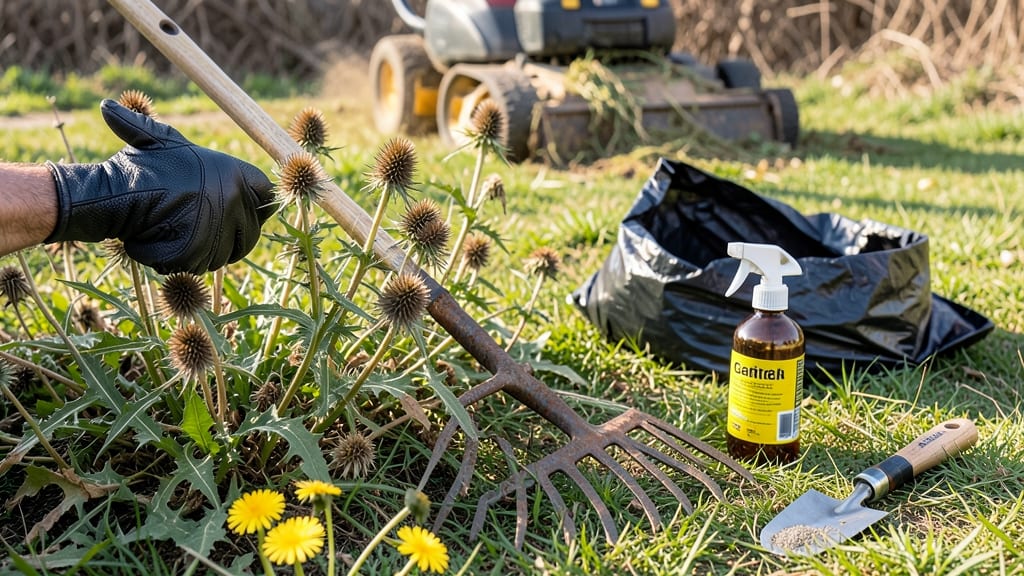
To get rid of burrs in lawn, pull them by hand with gloves, use a string trimmer for dense patches, or apply a targeted herbicide like glyphosate for stubborn infestations. Regular mowing and overseeding help prevent regrowth.
Burrs thrive in lawns because their spiky seed pods latch onto clothing, pet fur, and even mower blades, spreading effortlessly. 🌱 These hardy weeds often take root where grass is thin or soil is compacted, making them a persistent nuisance.
I’ve found that early intervention—like hand-pulling before seeds mature—saves time and prevents future outbreaks. For larger patches, a string trimmer cuts down regrowth quickly, while herbicides target deep-rooted systems but require careful application to avoid harming surrounding plants.
Prevention starts with consistent lawn care: mowing at the right height keeps grass competitive, and overseeding fills bare spots where burrs love to grow. The key is staying ahead—once they establish roots, removal becomes far more labor-intensive.
💡 In This Article
- Why Burrs Invade Lawns and How They Spread
- Manual vs Power Tools for Burr Removal: Pros and Cons
Why burrs invade lawns and how they spread
Burrs dominate lawns because their survival strategy relies on two key traits: aggressive seed dispersal and deep, fibrous root systems. Each burr contains 1-2 seeds encased in spiny pods that latch onto anything passing through—pet fur, shoes, or mower blades—then release seeds in new locations.
This "hitchhiking" method explains why they spread rapidly even in well-maintained lawns. The roots can grow up to 12 inches deep, anchoring the plant firmly in compacted soil where grass struggles to establish.
The seasonal growth cycle of burrs makes them especially persistent. They germinate in early spring when soil temperatures reach 55-60°F, then bolt to seed production by midsummer. 🌱 What most people don't realize is that each mature plant can produce 50-100 seeds per season, creating a self-perpetuating cycle.
Burrs thrive in neglected lawns because they outcompete grass in poor soil conditions—low organic matter, high clay content, or areas with less than 30% sunlight. Their shallow roots also make them drought-tolerant, while grass roots often dry out in these conditions.
Burrs exploit another lawn weakness: bare spots. When grass thins due to foot traffic, pet activity, or poor maintenance, burr seeds find ideal germination sites.
The key difference between grass and burrs is their growth rate—grass spreads via stolons or rhizomes (1-2 inches per month), while burrs mature in just 6-8 weeks from seed. This rapid lifecycle means one missed mowing season can turn a small patch into a full-blown infestation.
Soil compaction plays a surprising role too. Heavy foot traffic or equipment compacts the topsoil, creating a dense layer that prevents grass roots from penetrating deeply. Burrs, however, thrive in this environment because their shallow roots can quickly establish in the loose upper layer. 🌱 The result?
A vicious cycle where compacted soil weakens grass, which then allows burrs to dominate. This is why aeration—creating ¼-inch holes every 2-3 inches—becomes a critical preventive measure in high-traffic areas.
Understanding these mechanisms explains why prevention requires a multi-step approach. While mowing at 3-4 inches tall keeps grass competitive, it's the soil health that truly makes the difference. Healthy turf with deep roots (4-6 inches deep) naturally crowds out burrs by starving them of sunlight and nutrients.
The challenge is that burrs often appear after the damage is done—once they've established roots, removal becomes exponentially harder.