
Watering
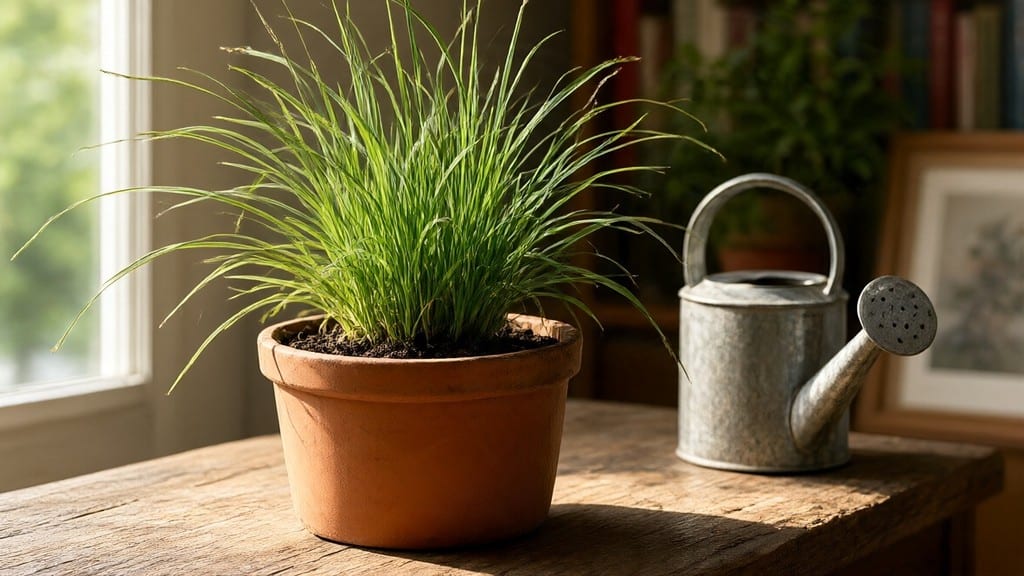
To water cat grass properly, maintain consistent moisture by hydrating every 2-3 days, then taper to weekly once roots establish. Too much water drowns roots, while dryness makes leaves crispy—both are clear signals to adjust your schedule.
Cat grass thrives on a delicate moisture balance—its roots need oxygen to grow, but they suffocate when soggy. 💧 The soil should feel damp like a wrung-out sponge, never muddy.
I’ve found that terracotta pots with drainage holes prevent overwatering, while a finger test (inserting your finger 1 inch deep) helps gauge when it’s time to hydrate again. In warmer months, you might need daily checks, while cooler weather slows evaporation, reducing frequency.
Watch for visual cues like wilting blades or yellowing tips—these are your plant’s SOS signals. 🌱 A moisture meter (around $10) takes the guesswork out of it, but even a simple finger check works.
Pro tip: Water in the morning so excess moisture evaporates by night, reducing mold risks. Consistency is key—your cat’s fresh grass depends on it!
💡 In This Article
- Cat Grass Watering Science: Soil, Roots, and Growth Factors
- Signs Your Cat Grass Needs Water (And When to Adjust)
Cat grass watering science: soil, roots, and growth factors
Cat grass roots thrive in a Goldilocks zone of moisture—not too wet, not too dry. The soil needs to retain enough water to hydrate the roots while allowing oxygen to circulate, which is why well-draining mixes (like 50% potting soil and 50% perlite) work best.
When soil stays soggy, roots suffocate from lack of oxygen, leading to root rot—a fungal infection that turns roots black and mushy. This happens within 48 hours of overwatering, especially in sealed containers without drainage. 🔥
The ideal moisture level mimics spring rain: soil should feel damp 1 inch deep, like a wrung-out sponge. Sandy soils drain too fast, while clay holds too much water—both extremes stress the plant.
A moisture meter (or your finger) reveals the truth: if topsoil is dry but deeper layers stay wet, you’re overwatering. Cat grass blades also wilt when thirsty, but they bounce back within hours of hydration, unlike overwatered plants that stay limp.
Overwatering doesn’t just rot roots—it invites pests like fungus gnats, whose larvae feed on decaying organic matter. These tiny black flies lay eggs in damp soil, and their adults swarm around your plant. The solution?
Let the top ½ inch of soil dry between waterings, and avoid saucers that trap excess water. Even 1 extra tablespoon of water per pot can double the risk of mold and mildew, which coat leaves in fuzzy white growth.
Seasonal shifts demand adjustments: in summer heat, cat grass evaporates moisture twice as fast, requiring daily checks, while winter slows growth, cutting water needs by half. The plant’s leaves also act as a moisture barometer—yellowing tips signal overwatering (too much salt buildup), while brown, crispy edges mean underwatering.
Both extremes stunt growth by 30-50%, proving consistency is the secret ingredient. ✨
Here’s what’s actually happening at the cellular level: cat grass blades (like wheatgrass) have cuticles that slow water loss, but their roots lack the waxy coatings of mature plants. This makes them 2x more sensitive to dehydration.
When soil dries out, roots shrink and pull away from soil particles, breaking critical nutrient pathways. Rehydrating too quickly can cause osmotic shock, where cells absorb water faster than they can adjust, leading to wilting.
For best results, water in the morning using room-temperature water (cold water shocks roots). A spray bottle mimics natural rain, while deep watering at the base encourages root growth downward.
Avoid overhead watering, which can spread fungal spores. The goal? Keep roots hydrated without drowning them—like Goldilocks, your cat’s grass needs it just right. 💫