
How To
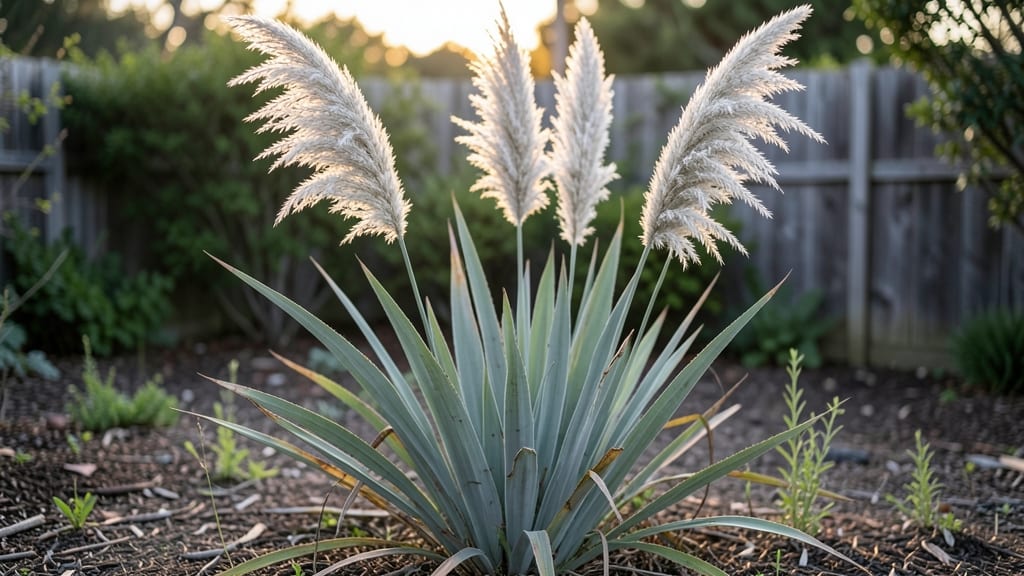
Patience is key when cultivating pampas grass, as its stunning plumes are the last to emerge. 🌿 The first two years are mostly about root expansion and stem growth, while the real show—those iconic feathery blooms—typically appears in year three.
I’ve seen dramatic differences between varieties: some dwarf types mature in just 2-3 years, while giant varieties can take closer to 5 years to reach their full 12-foot height. Proper soil prep and sunlight exposure can shave off up to a year of growth time, especially in frost-free zones.
What many gardeners overlook is how seasonal timing affects growth speed. Planting in early spring gives seedlings a full growing season to establish roots before winter, while fall planting in mild climates can lead to faster springtime growth.
I always recommend testing soil drainage before planting—waterlogged roots are the #1 reason pampas grass stalls in its development.
💡 In This Article
- Pampas Grass Growth Stages by Variety
- Speeding Up Pampas Grass Growth: Pro Tips
Pampas grass growth stages by variety
Here's what's actually happening underground before you see those dramatic plumes: pampas grass (Cortaderia selloana) spends its first year establishing a fibrous root system that can spread 3-5 feet wide while the shoot remains under 6 inches tall.
The classic variety develops tuberous roots that store energy for rapid spring growth, while dwarf varieties like 'Pink Feather' focus more on compact root development to support their 3-5 foot mature height. 🌱 The key factor is how quickly these roots access nutrients—well-drained soil with 1-2% organic matter can accelerate this stage by up to 30% compared to heavy clay.
By year two, you'll notice stem elongation where varieties differ dramatically. Cortaderia selloana can shoot up 3-4 feet annually in ideal conditions (USDA zones 7-10), while 'Pink Feather' grows only 1-2 feet per year but develops denser foliage.
The science behind this involves auxin hormone production—warmer climates trigger more rapid cell division in the growing tips. In cooler zones (USDA 6), growth may stall completely until temperatures exceed 50°F consistently.
What most people don't realize is that the first visible plumes often appear on second-year growth rather than the main stem.
This is where dwarf varieties shine in practical terms: they reach their 2-3 foot mature height in just 2-3 years compared to 4-5 years for giants. The trade-off? Dwarf types produce smaller plumes (12-18 inches vs 3-5 feet for standard varieties).
For example, 'Baby Bunting' matures in 2 years but tops out at 3 feet, making it perfect for containers. The root systems of dwarf varieties also stay shallower (18-24 inches deep), while giant types develop roots that can penetrate 4-5 feet—explaining why they're more drought-tolerant once established.
Climate plays a surprising role in plume development timing. In USDA zone 10, you might see first plumes by year 2.5 on Cortaderia selloana, while in zone 7, they may not appear until year 4. The reason? Cooler nights reduce the florigen hormone production needed for flowering.
Even within the same variety, plants in full sun (6+ hours daily) will develop plumes 6-8 months earlier than those in partial shade. The visual difference is striking: sun-grown plants show plumes that are 20-30% denser and last 2-3 weeks longer than shaded counterparts.
What most gardeners miss is how pruning affects future growth stages. Cutting back old plumes in late winter (before new growth starts) redirects energy to stem thickening rather than flowering, which can accelerate maturity by 1 year in some cases.
For giant varieties, this means reaching 8-10 feet a year sooner. The catch?
You'll sacrifice that year's plumes, so it's a trade-off worth considering if you're impatient for height. 💫 For dwarf varieties, minimal pruning is needed—their compact growth habit means they naturally allocate resources to foliage development rather than vertical growth.
One final nuance worth noting: soil pH affects nutrient availability during these stages. Pampas grass thrives in slightly acidic to neutral soil (pH 6.0-7.5). In alkaline soils (pH >7.5), iron and manganese become less available, causing yellowing leaves that stunt growth.
Amending with elemental sulfur can lower pH by 1 point per application, potentially adding 6-12 months to the maturation timeline if done incorrectly.
The visual difference between properly amended and neglected soil is dramatic—healthy plants show deep green foliage from the base up, while deficient plants develop yellowing from the bottom as roots struggle to access nutrients.