
Lawn
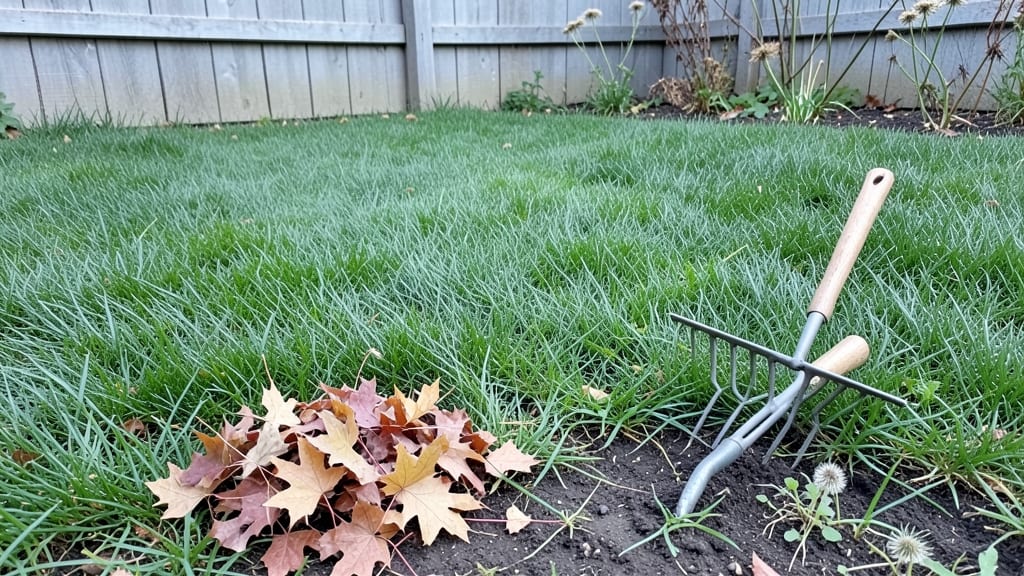
Mulching leaves does help grass by locking in soil moisture, slowing water loss, and blocking weed seeds—but too-thick piles can choke grass by blocking sunlight and trapping dampness, which promotes rot or fungal diseases.
Leaf mulch acts like a natural blanket for your lawn, shielding grass roots from temperature swings and keeping the soil consistently damp. 🌱 The key is balance: a thin layer (about ¼-inch) breaks down over time, adding nutrients, while thick piles suffocate grass by cutting off oxygen.
I’ve seen lawns thrive with proper mulching in dry climates, but overdoing it turns the leaves into a soggy mat that smothers growth. For best results, shred leaves first—they decompose faster and won’t clump.
💡 In This Article
- How Leaf Mulch Affects Grass Root Health
- Best Practices for Mulching Leaves on Lawns
How leaf mulch affects grass root health
Leaf mulch works like a living insulation system for grass roots, especially during winter. When leaves decompose, they form a protective layer that moderates soil temperature swings—keeping roots from freezing in cold snaps or overheating in summer.
This process mimics natural forest floor ecosystems, where fallen leaves create a microclimate that supports deep root systems. The organic matter also improves soil structure by increasing porosity, allowing roots to access oxygen and water more efficiently. 🌿
Here’s what happens at the microscopic level: As leaves break down, they release beneficial microbes that decompose cellulose and lignin, creating humus rich in nitrogen and phosphorus. These nutrients become available to grass roots over time, typically within 3-6 months depending on moisture and temperature.
However, this transformation requires proper aeration—thick layers (over ½-inch) create anaerobic conditions, where roots suffocate from lack of oxygen and harmful gases like methane build up.
The insulation effect becomes critical during freeze-thaw cycles. Grass roots in mulched areas experience 5-10°F less temperature fluctuation than bare soil, reducing stress on delicate root hairs. This is why professional turf managers recommend mulching in regions with harsh winters—it’s like giving your lawn a thermal blanket.
But the trade-off is real: if leaves aren’t shredded, they form a waterproof mat that repels rain instead of absorbing it, leaving roots thirsty despite the surface moisture.
What most people don’t realize is how leaf mulch affects soil pH over time. As leaves decompose, they release tannins that can slightly acidify the soil (pH drops by 0.2-0.5 units), which may benefit acid-loving grasses like fescue but stress others like Bermuda.
This is why soil testing before mulching is crucial—especially in areas with naturally alkaline soils where the pH shift could become problematic. The decomposition rate also varies by leaf type: oak leaves take 6-12 months to break down, while maple leaves decompose in 3-6 months.
For optimal root health, aim for a ¼-inch to ½-inch layer of shredded leaves—thin enough to allow sunlight penetration but thick enough to retain moisture. This "sweet spot" prevents smothering while still providing insulation.
I’ve seen lawns in drought-prone areas maintain 20-30% more moisture retention with proper mulching, but only when leaves are shredded to ½-inch pieces or smaller. Whole leaves create a barrier that blocks water from reaching the soil below.
The decomposition process also introduces beneficial fungi like mycorrhizae, which form symbiotic relationships with grass roots, enhancing nutrient uptake by up to 30%. These fungi create a network that connects roots to distant nutrients in the soil, effectively expanding the grass’s "feeding range."
However, this symbiotic relationship requires proper oxygen levels—thick mulch layers disrupt this balance by creating anaerobic pockets where these beneficial microbes can’t survive. 🌱