
Lawn
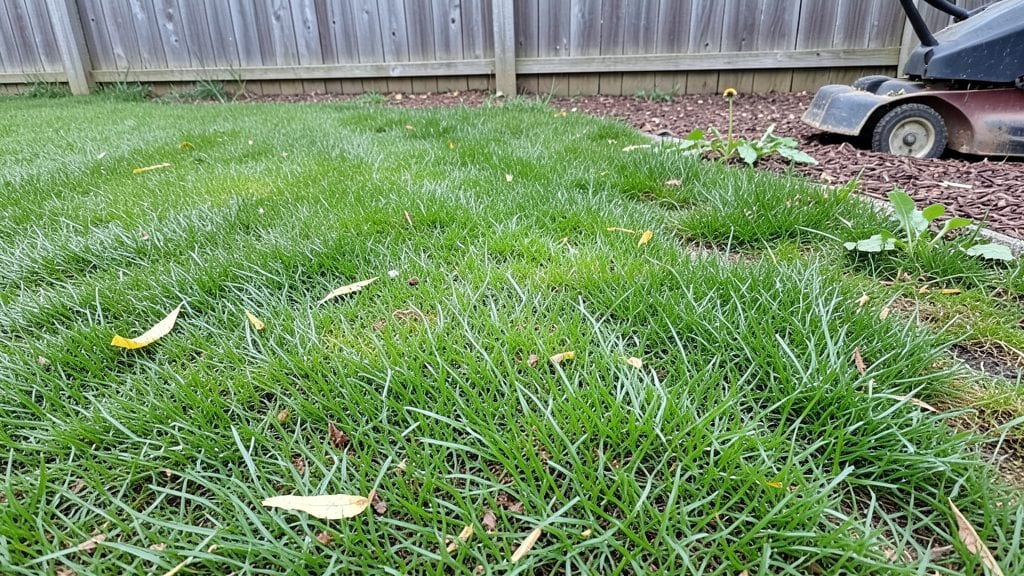
Cutting grass short weakens lawns by exposing roots to heat, drought, and weed invasion while stressing the plant’s ability to recover. Aim for mowing heights of 3–4 inches to maintain grass health and resilience, especially in hot climates or drought-prone areas.
When you mow grass too short, you're essentially stripping its natural defense system—roots and shade-providing blades—that protect against extreme temperatures and moisture loss. 🔥 This practice, often called "scalping," forces grass to divert energy from growth to survival, leaving it vulnerable to brown patches and invasive weeds.
The ideal height varies by grass type, but most experts agree that taller grass retains moisture better and stays greener longer during dry spells.
For example, Kentucky bluegrass thrives at 3-4 inches while Bermuda grass can handle slightly shorter cuts (1-2 inches) without stress. The key is gradual adjustments—never reduce blade height by more than one-third at a time to avoid shocking the grass.
In my experience, the biggest mistake homeowners make is rushing to lower blades during summer heat, which accelerates drought damage.
💡 In This Article
- How Short Grass Mowing Damages Root Systems and Soil
- Optimal Grass Height Settings by Climate and Grass Type
How short grass mowing damages root systems and soil
When you scalp grass by cutting it too short—below 2 inches—you trigger a biological stress response that disrupts the plant's natural growth cycle. The grass blades act as natural shade, protecting the crown (where roots meet stems) from direct sunlight.
Without this protection, the crown's temperature can rise by 10-15°F during peak summer heat, causing cellular damage. This heat stress forces the grass to divert energy from root growth to survival mechanisms, weakening its ability to absorb water and nutrients.
The roots themselves become vulnerable to dehydration because shorter blades reduce the grass's natural moisture-retaining capacity. Studies show that grass cut to 1 inch loses 30-40% more water through evaporation compared to grass maintained at 3-4 inches.
This moisture loss accelerates in sandy soils, where water drains quickly, leaving roots exposed to drought conditions. 🌱 For example, Kentucky bluegrass, which has shallow roots, suffers more from scalping than deep-rooted Bermuda grass, which can access moisture from lower soil layers.
Soil erosion becomes another major issue when grass is cut too short. The roots' ability to anchor soil particles weakens, making the lawn more susceptible to wind and water erosion. In heavy rainfall, soil particles wash away more easily, exposing compacted subsoil that prevents proper drainage.
This creates a vicious cycle: compacted soil reduces root penetration, which further weakens the grass's resilience to environmental stressors.
Different grass types react uniquely to scalping due to their root structures. Cool-season grasses like tall fescue develop deeper roots when maintained at 3-4 inches, while warm-season grasses like Zoysia can tolerate slightly shorter cuts (1.5-2.5 inches) because their root systems are naturally more drought-resistant.
However, even hardy warm-season grasses will struggle if cut below their optimal height during prolonged dry spells.
What most people don't realize is that scalping also disrupts the grass's photosynthesis process. Shorter blades mean fewer leaves to capture sunlight, reducing the plant's ability to produce energy. This energy deficit forces the grass to break down its own roots for sustenance, weakening the entire system.
The result? A lawn that's more prone to brown patches, weed invasion, and thinning over time.
Consider this: A lawn mowed at 3 inches can shade up to 75% of the soil surface, while one cut to 1 inch leaves only 25% shaded. This difference in shade coverage directly impacts soil temperature and moisture retention.
In my experience, the most resilient lawns are those where grass is allowed to grow tall enough to provide this natural protection while still being maintained for aesthetics. 🌿