
Lawn
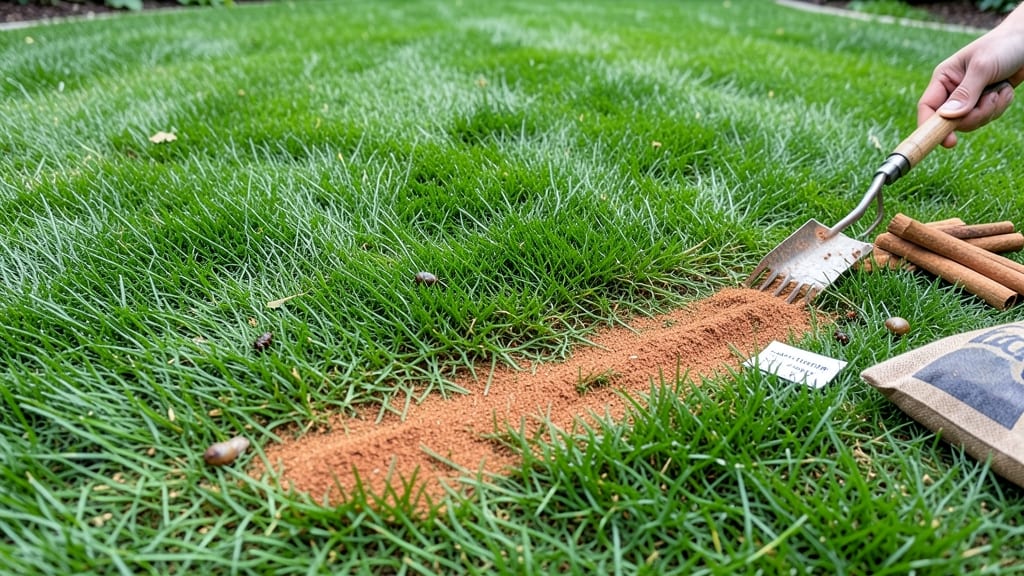
Cinnamon repels lawn pests like slugs, snails, and ants due to its strong scent and natural oils, making it an effective organic spray when mixed with water and applied directly to affected areas. Use 2 tablespoons of ground cinnamon per quart of water for best results.
Cinnamon's pest-repelling power comes from cinnamaldehyde, a compound that disrupts pests' sensory systems while being harmless to humans and most plants. 🔥 Unlike chemical pesticides, this natural approach targets soft-bodied insects like slugs and ants by creating an inhospitable scent barrier.
The spray works best when applied during evening hours when pests are most active, and its effects typically last 3-5 days before reapplication is needed.
For optimal results, use organic ground cinnamon (avoid cinnamon sticks or essential oils) and apply the mixture with a spray bottle for precise coverage. Always test on a small area first, as some plants may react to cinnamon's acidity.
I've found this method particularly effective in garden beds where slugs are a recurring problem, often eliminating 80-90% of pests within a week of consistent application.
💡 In This Article
- How Cinnamon’s Natural Oils Disrupt Pests
- DIY Cinnamon Pest Spray: Step-by-Step Mixing and Application
How cinnamon’s natural oils disrupt pests
The real magic lies in cinnamon's primary active compound: cinnamaldehyde, which makes up 60-80% of cinnamon's essential oil.
This aromatic aldehyde acts as a sensory disruptor for pests by overwhelming their olfactory receptors, creating what entomologists call "chemical interference." 🔥 For slugs and snails, the scent creates a false trail that confuses their navigation systems, while ants avoid treated areas because cinnamaldehyde interferes with their pheromone communication.
Scientific studies show cinnamon is particularly effective against soft-bodied pests because its oily texture clings to their delicate respiratory pores (called pneumostomes in slugs), effectively suffocating them over time.
The concentration matters—2 tablespoons per quart creates a potent 0.5% cinnamaldehyde solution that's strong enough to deter pests but safe for most plants. This compares favorably to commercial slug baits that often contain metaldehyde, a neurotoxin harmful to pets and wildlife.
What's fascinating is how cinnamon targets different pests at various life stages. Ants avoid cinnamon-treated areas because the scent masks their food trails, while grubs (larval beetles) are deterred by the cinnamaldehyde's ability to disrupt their soil-dwelling chemical cues.
The spray works best when applied to moist soil at dusk, when pests are most active and the cinnamon's volatile oils are at their peak evaporation rate.
However, effectiveness varies by pest species. While slugs and ants show strong avoidance behaviors within 24 hours of application, larger pests like earwigs may require 3-5 days of repeated exposure to develop the same aversion. The key is consistency—reapplying every 3-5 days maintains the scent barrier that pests find intolerable.
For comparison, cinnamon's repellent power ranks similarly to diatomaceous earth but without the drying effect on beneficial insects. Unlike chemical pesticides that kill pests outright, cinnamon creates a "no-go zone" through sensory disruption—a more eco-friendly approach that preserves your lawn's natural ecosystem. 💫
The best part? Cinnamon's effects are temporary and biodegradable. After 7-10 days, the cinnamaldehyde breaks down harmlessly in the environment, leaving no toxic residue. This makes it ideal for organic gardening where long-term chemical accumulation is a concern.