
Lawn
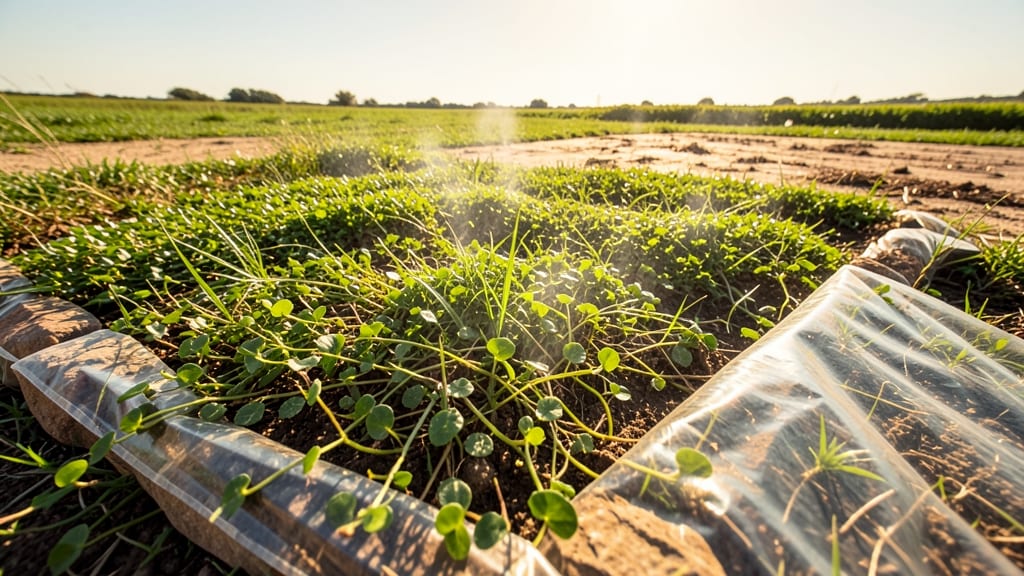
Chickweed might look harmless, but it can quickly take over your lawn, smothering grass and leaving bare patches. These 10 natural removal methods—ranging from manual techniques to organic treatments—will help you reclaim your yard without harsh chemicals.
Hand-Pulling Chickweed in Early Morning
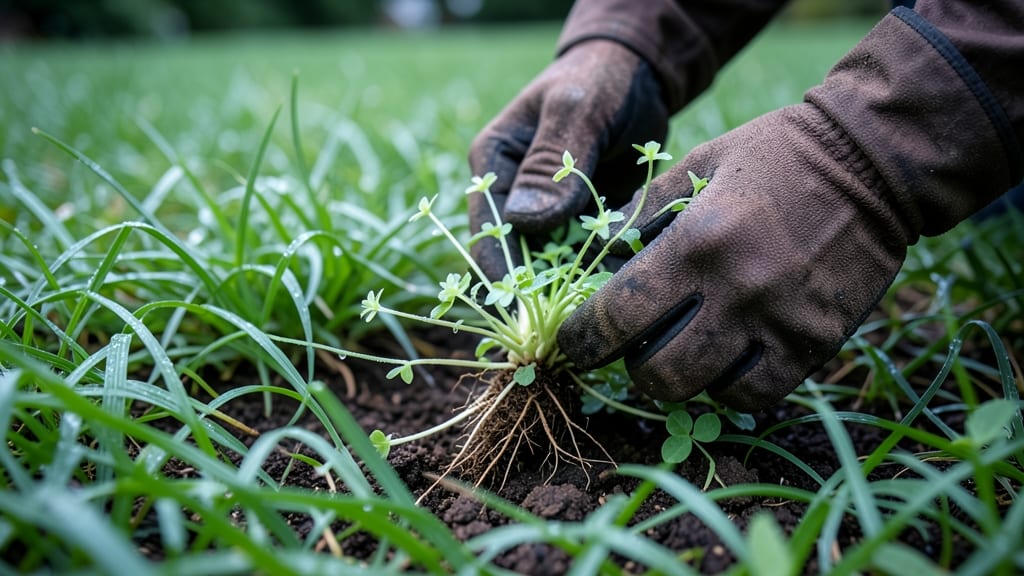
Skip the harsh chemicals—your best weapon against chickweed is timing and technique. The early morning hours, when dew clings to the grass and soil stays moist, create the perfect conditions for hand-pulling weeds without the struggle.
Grab a pair of gardening gloves and pull the chickweed at the root—this prevents regrowth and ensures the weed stays gone. Focus on small patches or spot treatments first, as this method works best when you're tackling a manageable area. The moist soil makes it easier to remove the entire plant, including those sneaky roots.
This approach is perfect for beginners or anyone who prefers a hands-on, chemical-free solution. Plus, you’ll avoid disturbing your grass too much, keeping your lawn healthy and lush. 🌱
Corn Gluten Meal Pre-Emergent Treatment
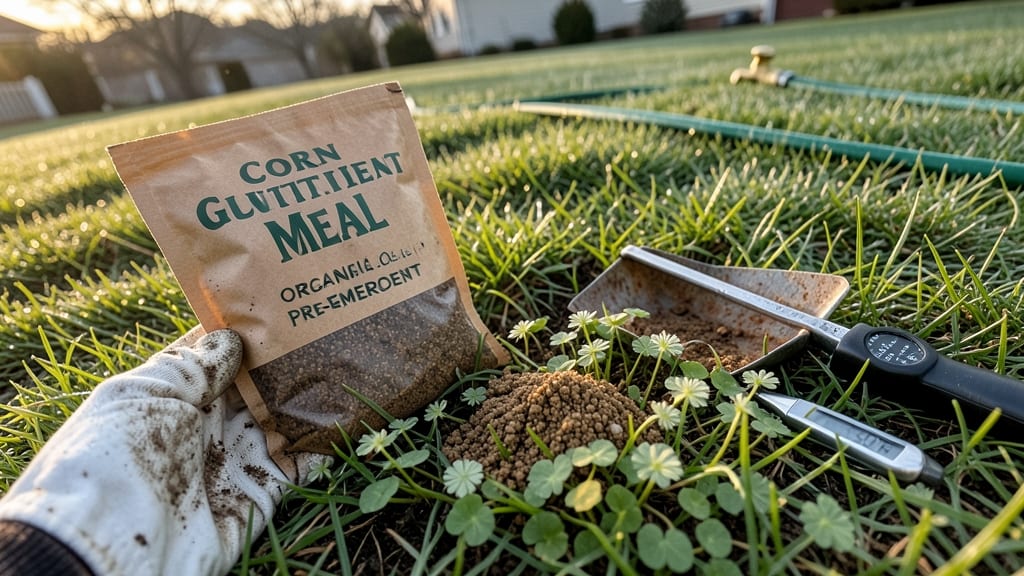
Tired of chickweed popping up every spring like clockwork? Corn gluten meal is your secret weapon—this organic pre-emergent treatment stops chickweed seeds from sprouting before they become a problem.
Apply ½ to 1 pound per 100 square feet in early spring (March-April) when soil temperatures reach 50°F (10°C). Water lightly after application to activate the weed-blocking properties. Unlike synthetic chemicals, corn gluten meal also adds 10% nitrogen, giving your lawn a gentle boost while preventing future chickweed invasions.
Perfect for organic gardeners and those with kids/pets, this method is safe once established but requires annual reapplication for continuous protection. 🌱
Vinegar and Dish Soap Spot Spray
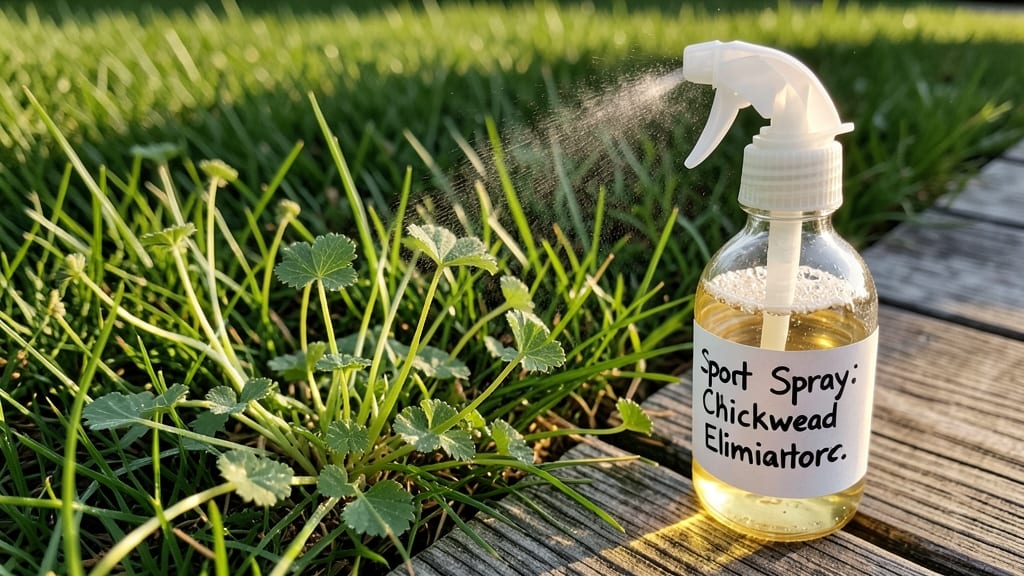
When chickweed stubbornly resists other removal methods, a vinegar and dish soap spot spray delivers fast, chemical-free results—with minimal effort. This dynamic duo targets only the weeds, leaving your grass unharmed when applied correctly on dry, sunny days (the secret to avoiding collateral damage).
Mix 1 gallon of white vinegar (5% acidity) with 1 tablespoon of dish soap in a spray bottle. The vinegar kills weeds by disrupting their cell structure, while the soap breaks down the waxy layer on leaves, ensuring absorption. Focus on small patches—test a hidden area first to confirm your grass tolerates the acidity. Reapply every 3-5 days until chickweed wilts completely, typically within a week.
This method is perfect for gardeners who want immediate results without synthetic herbicides, especially in tight spots where hand-pulling isn’t practical. Just avoid windy days to keep the spray contained! ✨
Mulching with Straw or Grass Clippings
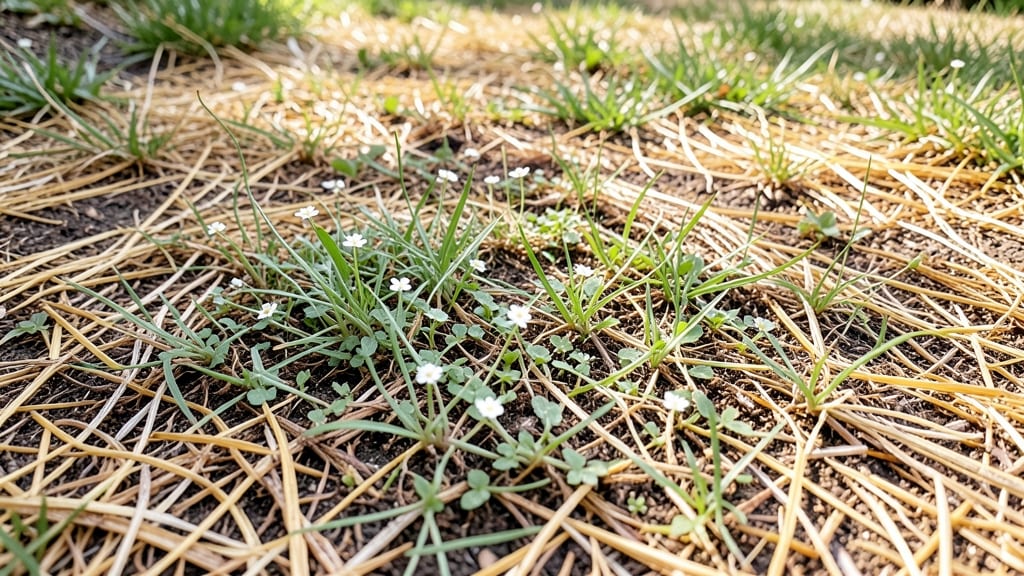
Struggling with chickweed creeping into thin grass or bare patches? A simple layer of straw or grass clippings can smother it by cutting off sunlight—nature’s way of reclaiming your lawn without chemicals. This method works especially well in areas where grass is struggling to grow back.
Spread a 2-3 inch thick layer of straw or dry grass clippings over the affected areas, focusing on spots where chickweed is visible. The mulch blocks sunlight, preventing the weed from photosynthesizing and eventually killing it while also protecting soil moisture. For best results, apply after mowing or when the lawn is dry to avoid clumping.
This low-cost, eco-friendly solution is perfect for lawn restoration and works wonders in shaded areas where other methods might fail. It’s also a great way to recycle grass clippings instead of bagging them! 🌿
Boiling Water Treatment for Sidewalks
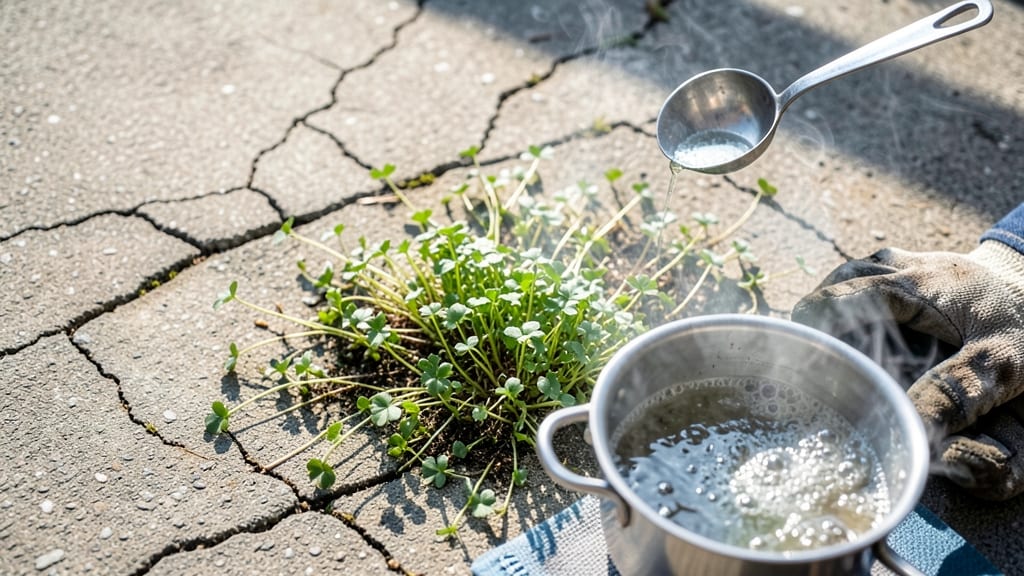
When chickweed invades your concrete cracks and sidewalks, boiling water becomes your fastest, chemical-free ally. This method targets weeds in non-grass areas where traditional herbicides could damage surrounding surfaces or plants.
Simply pour freshly boiled water directly onto the chickweed growing in cracks—its 100°C (212°F) temperature kills the plant instantly by disrupting cell structures. The process is zero-cost and works best in late spring or summer when weeds are actively growing. For stubborn patches, repeat every few days until the area is clear.
Urban gardeners and homeowners with patios or driveways will love this solution—it’s pet-safe once cooled and requires no special equipment beyond a kettle or pot of boiling water. 💡
Diatomaceous Earth Dust Application
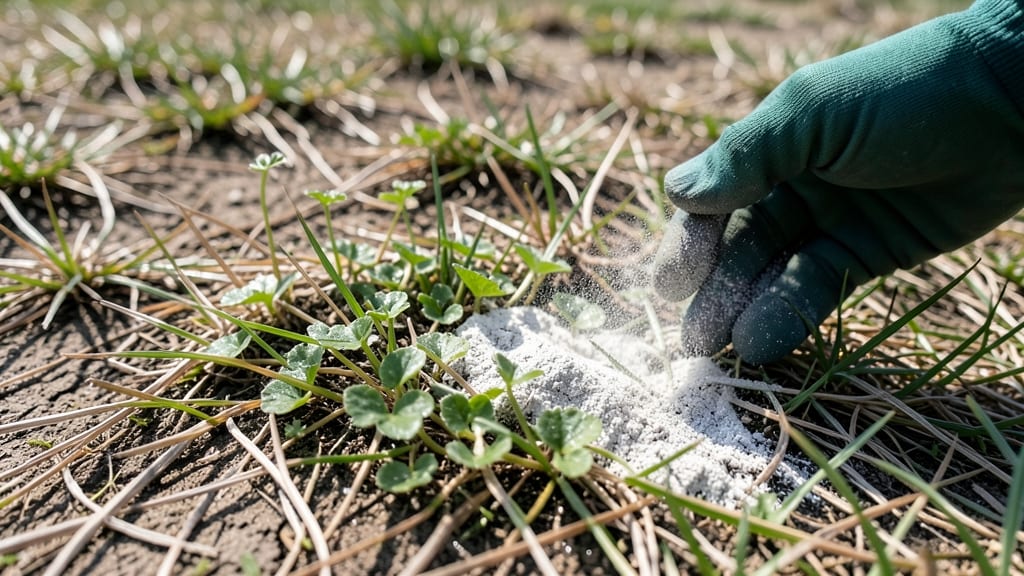
Struggling with chickweed in dry, patchy lawns where other methods fail? Diatomaceous earth (DE) is your secret weapon—a fine, non-toxic powder that dehydrates chickweed by damaging its protective outer layer while leaving your grass unharmed.
Sprinkle a thin layer of food-grade DE directly over chickweed on dry, sunny days (moisture reduces its effectiveness). Reapply every 7-10 days until the weeds wither, or combine it with corn gluten meal for a two-pronged organic attack. This method is especially effective for drought-prone lawns where watering is limited.
Ideal for eco-conscious gardeners, DE is safe for pets and kids once settled into the soil, making it a low-effort, long-term solution for stubborn chickweed patches. 💚
Sheep or Goat Grazing for Large Lawns

If your lawn stretches across acres and chickweed is becoming a full-time battle, consider sheep or goat grazing as your most sustainable solution. These animals naturally target broadleaf weeds like chickweed while leaving grass untouched, turning your weed problem into a free fertilization service.
Start with 2-3 animals per acre and rotate them every 2-3 days to prevent overgrazing. Chickweed’s tender leaves make it a favorite snack, while the animals’ manure enriches the soil with nitrogen and organic matter, reducing your need for synthetic fertilizers. This method works best in spring and fall when chickweed is most active and grass can recover quickly.
Ideal for rural properties, homesteads, or large estates, this approach saves hours of manual labor while creating a self-sustaining ecosystem. Just ensure your pasture has plenty of water and shade to keep your livestock happy and productive. 🌿
Saltwater Spray for Coastal Lawns
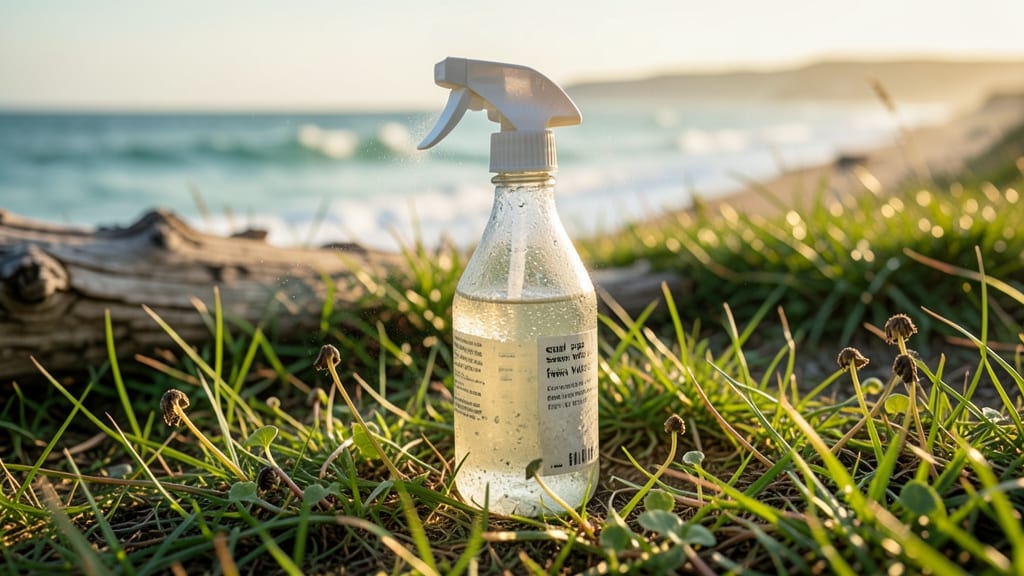
Living near the coast gives you a free, potent weapon against chickweed—saltwater spray! The natural salinity in ocean water acts as a targeted herbicide, dehydrating chickweed while leaving salt-tolerant grasses unharmed in the right conditions.
Mix equal parts seawater and water in a spray bottle, then apply directly to chickweed on bright, sunny days when humidity is low. Reapply every 3-5 days until the weeds brown and die. This method works best on sandy, well-draining soils where salt won’t accumulate and damage plants.
Ideal for coastal gardeners or those with salt-tolerant lawns like seashore paspalum, this zero-cost solution skips chemicals entirely. Just avoid treating delicate plants or areas with poor drainage. ✨
Compost Tea Soil Drench for Prevention
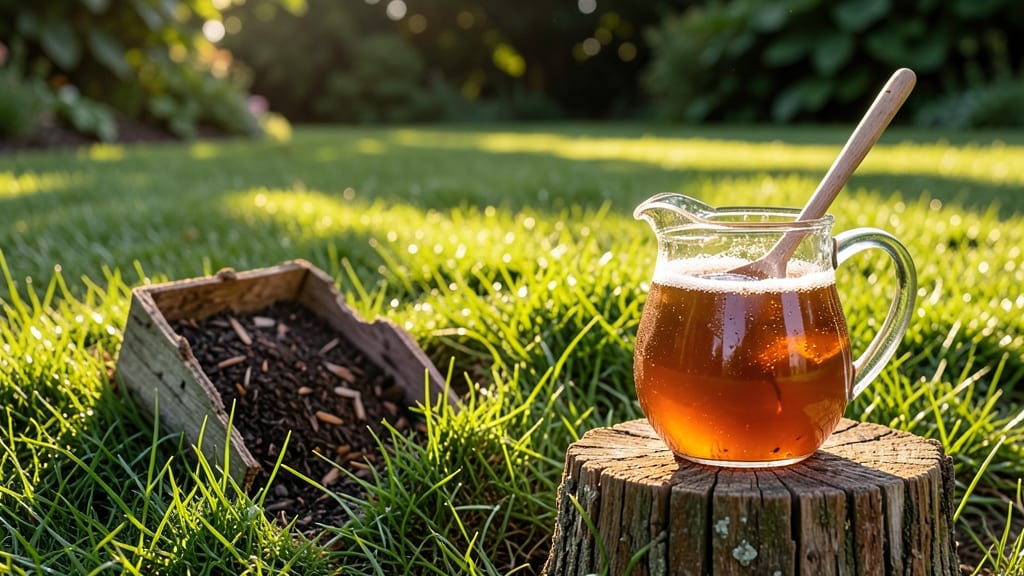
Want a lawn so thick and healthy that chickweed can’t even get a foothold? Compost tea is your secret weapon—a nutrient-packed soil drench that strengthens grass roots while crowding out weeds naturally.
Brewed from compost, this liquid gold is packed with beneficial microbes that break down organic matter, releasing nutrients directly to your grass’s roots. Apply every 4-6 weeks during growing seasons (spring and fall) using a sprayer or watering can. The key is consistency—healthy grass outcompetes chickweed by shading the soil and absorbing water before weeds can establish.
Perfect for organic gardeners or anyone tired of chemical treatments, compost tea also improves soil structure over time. It’s especially effective in lawns with thin grass or after overseeding. 💚
Solarizing Plastic Sheet Method

When chickweed has completely overtaken your lawn and no other method seems to work, solarization delivers a heat-powered reset that kills roots and seeds in one fell swoop. This technique uses the sun’s natural energy to create a greenhouse effect under clear plastic sheets, baking out even the deepest chickweed infestations.
Lay 4-6 mil black or clear plastic sheeting tightly over the infested area in late spring or early summer when temperatures consistently exceed 85°F (29°C). Secure edges with soil or bricks to trap heat for 4-6 weeks, checking weekly for condensation buildup. The trapped heat will reach 120-140°F (49-60°C), effectively sterilizing the soil and eliminating chickweed roots at every depth.
Perfect for large, heavily infested lawns before reseeding, this method also reduces soil-borne diseases. Just remove the plastic, till the area, and plant fresh grass or ground cover—your clean slate awaits! ✨