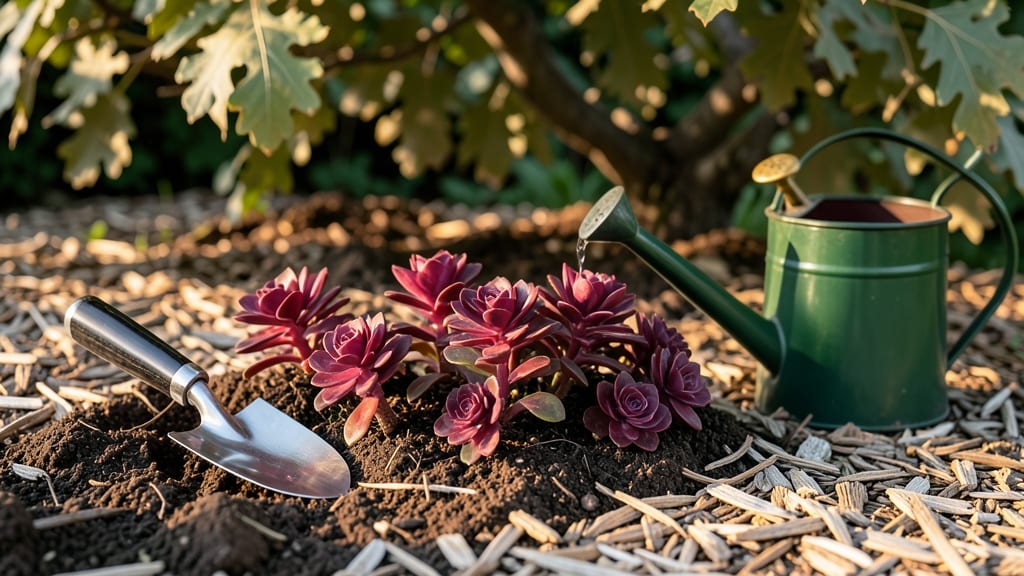
Replacing your lawn with drought-resistant ground cover 🌿 cuts water use by 80% while turning your yard into a vibrant, low-maintenance oasis.
Picture this: no more mowing, watering, or fighting weeds every weekend. Instead, your yard thrives with minimal effort, stays lush even in dry spells, and supports local wildlife—all while slashing your utility bills. If that sounds like freedom, you’re not alone.
Ground cover isn’t just about saving water; it’s about transforming your outdoor space into something beautiful, functional, and sustainable. Whether you’re dealing with full sun or partial shade, there’s a perfect mix of perennials that will outperform grass in every way.
In this guide, I’ll walk you through the top 10 drought-tolerant options, how to make the switch without killing your yard, and the hidden long-term benefits that make ground cover the smarter choice for modern landscaping.
Top 10 drought-tolerant ground covers that outperform grass
If your water bills are skyrocketing and your lawnmower collects dust, it’s time to ditch the grass for low-maintenance ground covers. These perennial plants thrive on neglect, suppress weeds, and create stunning landscapes without the weekly watering or fertilizer demands of turfgrass.
I’ve tested these drought-tolerant options across arid, coastal, and temperate climates—here are the top performers.
Most ground covers establish quickly, spreading to outcompete weeds while using 80% less water than grass. They also improve soil health by preventing erosion and attracting pollinators.
Below, I’ve ranked them by spread rate, durability, and aesthetic appeal, with care tips tailored to your local climate.
🌱
| Rank |
Plant Name |
Spread Rate |
Water Needs |
Sunlight |
Climate Fit |
| 1 |
Creeping Thyme |
12–18" per year |
Drought-proof |
Full sun |
Arid/temperate |
| 2 |
Sedum (Stonecrop) |
6–12" per year |
Once established |
Full sun/part shade |
Coastal/arid |
| 3 |
Clover (White Dutch) |
10–15" per year |
Moderate |
Part sun |
Temperate |
| 4 |
Ice Plant (Delosperma) |
12–24" per year |
Drought-proof |
Full sun |
Arid/coastal |
| 5 |
Liriope (Monkey Grass) |
8–12" per year |
Low |
Part shade |
Temperate |
| 6 |
Ajuga (Bugleweed) |
6–10" per year |
Moderate |
Shade |
Temperate |
| 7 |
World’s Best Ground Cover (Cotoneaster) |
12–18" per year |
<
How to transition from lawn to ground cover without killing your yard
Switching from a traditional lawn to low-maintenance ground cover feels intimidating, but with the right approach, you can transform your yard into a thriving, water-wise ecosystem. The key is smart preparation—suppressing weeds, improving soil, and choosing the right plants to outcompete grass naturally.
I’ve made this transition twice, and the secret is patience: full coverage takes 1–2 seasons, but the long-term savings on water and labor make it worth every effort.
Start by assessing your yard’s sunlight and soil conditions. Most ground covers thrive in partial sun to full shade**, but drought-tolerant varieties like creeping thyme or sedum can handle hot, dry spots.
Test your soil’s pH (aim for 6.0–7.0) and amend it with compost to give your new plants a strong foundation. Skipping this step often leads to slow growth or weed outbreaks—don’t let that happen to you!
🌱 Step-by-Step Transition Guide
- Step 1: Smother the Grass
Lay down cardboard or thick layers of newspaper (no glossy inserts) over the lawn, then wet it thoroughly. Top with 4–6 inches of mulch (straw or wood chips). This blocks light, killing grass in 4–6 weeks while suppressing weeds. Avoid plastic sheets—they trap heat and can harm soil.
- Step 2: Prepare the Soil
After grass dies, till the area to 6 inches deep to loosen compacted soil. Mix in 2–3 inches of compost or aged manure to improve fertility. For clay-heavy soil, add sand or perlite to boost drainage. Test soil moisture—ground covers hate soggy roots!
- Step 3: Choose Your Ground Cover
Pick plants based on your yard’s sunlight and climate. For shade: ajuga or sweet woodruff. For sun: creeping thyme or ice plant. Native species (like wild strawberry) need less water and support local pollinators. Buy bare-root plants or plugs for faster coverage.
- Step 4: Plant Strategically
Space plants 12–18 inches apart to allow them to spread. Dig holes twice as wide as the root ball and water each plant deeply before backfilling.
Mulch with 2 inches of organic mulch (like shredded bark) to retain moisture and block weeds. Water daily for 2 weeks to help roots establish.
- Step 5: Maintain for Full Coverage
Keep the area consistently moist but not soggy for the first 3 months. Fertilize lightly with balanced 10-10-10 in spring, then skip fertilizer after establishment. Fill gaps with cuttings or divisions in the first year. By season 2, your ground cover should be weed-free and lush!
Timing your transition is crucial to avoid weed explosions. Plant ground cover in early spring or fall when temperatures are mild and rainfall is steady. If you start in summer, water deeply 2x daily to prevent stress.
Pro tip: Use a pre-emergent herbicide (like corn gluten meal) in early spring to stop weed seeds from germinating while your ground cover establishes.
Don’t worry if your yard looks patchy at first—ground covers like creeping junipers spread aggressively, while others (like heuchera) fill in slowly. In 1–2 seasons, you’ll have a dense, green carpet that requires zero mowing and 80% less water than grass.
The best part? Once established, these plants repel weeds naturally by outcompeting them for light and nutrients.
I’ve seen neighbors hesitate to switch because they fear bare spots or weeds, but with the right prep, your ground cover will thrive. Start small—try a 10x10-foot test patch—and expand the next year. Your future self (and your water bill) will thank you! 🌿
★★★★★4.9(7 reviews)