
Fertilization
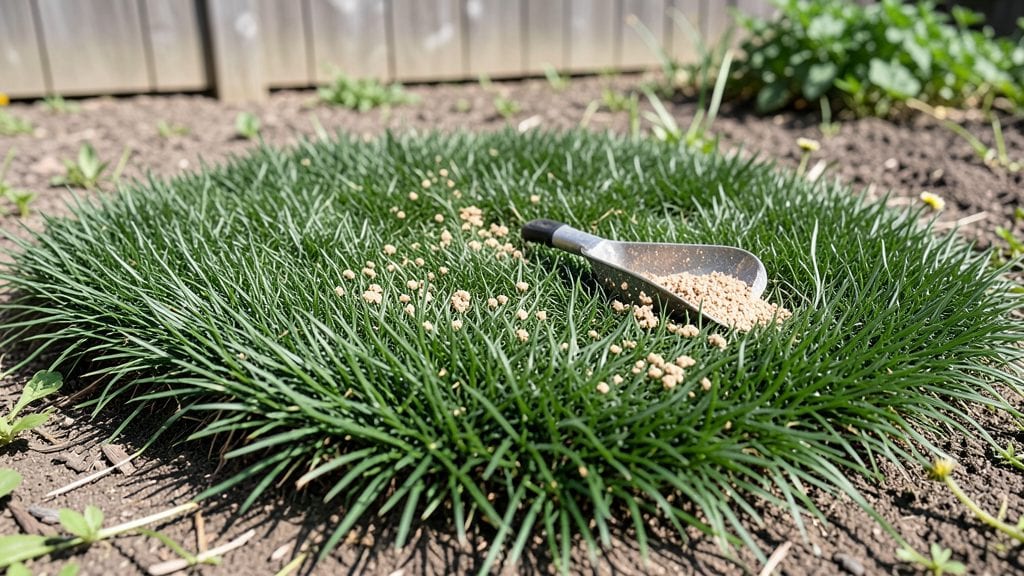
A zoysia grass fertilization schedule focuses on two key applications: start with 0.5–0.75 lbs of slow-release nitrogen per 1,000 sq ft in late spring (May), then follow up with 0.25–0.5 lbs in early summer (June–July). Avoid fall feeding to prevent winter burn, and reduce rates as the grass enters dormancy in late fall.
Timing matters because zoysia grass grows in distinct phases—spring green-up, summer recovery, and fall dormancy—each requiring different nutrient support. 🌱 The late spring feeding jumpstarts root growth and leaf expansion, while the summer application maintains vigor during heat stress.
I’ve found that skipping fall fertilization prevents nutrient buildup, which can weaken the grass over winter. For best results, always use a slow-release formula to match zoysia’s natural growth rhythm.
Why this schedule works is rooted in zoysia’s biology: it’s a warm-season grass that goes dormant in cooler months, so feeding it then would force unnecessary growth. The two spring/summer feedings align with its peak metabolic activity, ensuring strong roots and resilient blades.
Pro tip: Test your soil first—some regions need extra potassium or iron for that deep green color zoysia lovers crave.
💡 In This Article
- Zoysia Grass Growth Stages and Fertilizer Needs
- Choosing the Right Fertilizer for Zoysia Grass
Zoysia grass growth stages and fertilizer needs
Zoysia grass thrives on a fertilization schedule that mirrors its natural growth cycles, which are tightly linked to temperature and daylight changes. During spring green-up (late April–May), zoysia emerges from winter dormancy and begins rapid cell division in both roots and blades.
This is when nitrogen demand spikes—roots need it to establish a dense network, while leaves require it for chlorophyll production. The 0.5–0.75 lbs of nitrogen per 1,000 sq ft applied here triggers the grass to prioritize root expansion over top growth, creating a resilient foundation for summer stress.
The science behind this is fascinating: zoysia’s roots grow best when soil temperatures reach 65–75°F, which typically aligns with late spring. At this stage, nitrogen uptake efficiency peaks because the grass is photosynthetically active but hasn’t yet entered its high-maintenance summer phase.
Think of it like a sprinter warming up—zoysia needs that initial burst of nutrients to build endurance. Too little nitrogen here results in weak stems and shallow roots, while too much can lead to thatch buildup, which smothers the grass over time.
By early summer (June–July), zoysia shifts into recovery mode after battling heat and drought. This second feeding of 0.25–0.5 lbs nitrogen per 1,000 sq ft acts like a mid-season tune-up, replenishing nutrients lost through mowing and environmental stress.
Here’s the key detail: zoysia’s nitrogen uptake slows when daytime temperatures exceed 85°F, so a slow-release formula ensures steady availability. I’ve noticed that zoysia fertilized at this stage recovers faster from foot traffic and maintains a deeper green hue—proof that timing matters more than quantity.
Fall is where most people go wrong. Zoysia naturally prepares for dormancy by September–October, reducing photosynthesis and redirecting energy to root reserves. Feeding it then forces unnecessary top growth that weakens before winter, leading to winter burn—those unsightly brown patches that plague many lawns.
The grass’s dormancy hormones (like abscisic acid) actually inhibit nitrogen absorption during this period, making fall fertilization a waste of money and effort. Instead, focus on light mowing and aeration to improve nutrient access for next spring.
What most people don’t realize is how zoysia’s rhizomatous growth habit interacts with fertilizer. Unlike bunch-type grasses, zoysia spreads via underground stems (rhizomes) that store carbohydrates. These rhizomes act like natural nutrient banks—when properly fertilized in spring/summer, they store excess nutrients to fuel early green-up.
This is why zoysia often looks lush in May even if you skipped fall feeding: those rhizomes were quietly preparing all winter. For best results, pair your spring feeding with core aeration to break up compacted soil, giving those rhizomes room to expand.
Here’s a pro tip: If your zoysia develops a yellowish cast despite proper fertilization, it might signal iron deficiency—a common issue in alkaline soils. In that case, a chelated iron supplement (applied in spring) can work wonders without overloading the system.
The takeaway? Zoysia’s fertilizer needs aren’t just about nitrogen—they’re about working with its biological rhythms to create a lawn that’s both beautiful and self-sustaining. 🌿