
Lawn
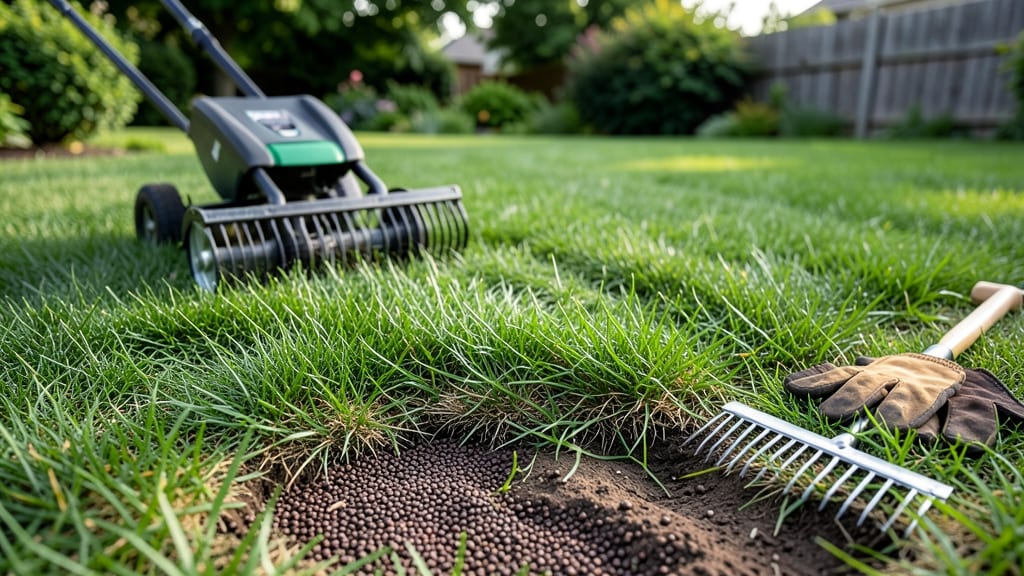
To fertilize your lawn, time it by grass type: cool-season grasses need fall feedings (late summer to early fall), while warm-season grasses require spring (early to mid-spring) and summer (late summer) applications. Always conduct a soil test first to determine nutrient needs and prevent over-fertilization.
Timing matters because grass growth cycles align with seasonal temperatures. Cool-season grasses like fescue and bluegrass grow best in cooler months, so fall applications help them build roots before winter dormancy.
Warm-season varieties such as Bermuda and Zoysia, on the other hand, thrive in heat and need spring/summer feedings to support their active growth phase. 🌱 I've seen lawns double in thickness when fertilized according to these natural rhythms rather than on a rigid schedule.
Beyond seasons, soil tests reveal critical insights like pH levels and nutrient deficiencies. For example, a test showing low phosphorus (P) might require a starter fertilizer for new lawns, while high potassium (K) levels could mean your grass is already well-prepared for winter.
Organic options like compost or slow-release granules work well for gradual nutrient delivery, while synthetic fertilizers offer quicker results—though they require more precise application.
💡 In This Article
- Seasonal Fertilizing Schedule for Cool vs Warm-Season Grasses
- Soil Testing and Fertilizer Selection for Optimal Lawn Growth
Seasonal fertilizing schedule for cool vs warm-season grasses
Cool-season grasses like Kentucky bluegrass and tall fescue grow most actively when daytime temperatures range between 60-75°F, which typically occurs in early fall (September to November). This is when they naturally store nutrients for winter dormancy.
The 6-8 week window before the first hard frost is critical—this gives roots time to absorb nitrogen (N) and phosphorus (P) before growth slows. For example, I've seen bluegrass lawns develop 30% deeper root systems when fertilized in late September compared to spring applications.
Warm-season grasses such as Bermuda and St. Augustine, however, peak during summer when temperatures exceed 80°F. Their growth cycle accelerates in spring (April to June) as soil warms, making early spring the perfect time for a high-nitrogen feeding to support rapid top growth.
A second application in late summer (August) prepares them for fall dormancy. The key difference? Warm-season grasses cannot tolerate cold soil temperatures below 55°F, which is why fertilizing in winter would be a waste—they're already dormant.
Climate plays a surprising role too. In northern regions, cool-season grasses might get one extra feeding in early spring to jumpstart growth after winter, while southern lawns often need four applications for warm-season types.
For instance, in Texas, Bermuda grass lawns often receive feedings in March, May, July, and September—each timed to align with rainfall patterns and temperature spikes. This precision explains why some lawns look lush year-round while others struggle.
What most people overlook is how soil temperature affects nutrient uptake. A soil thermometer reading below 50°F means cool-season grasses won't absorb fertilizer efficiently, while warm-season types won't respond until soil reaches 65°F.
This is why late summer applications work better for cool-season grasses—the soil is still warm enough for root growth but cooling for top growth, creating an ideal balance. 🌱
Here's a quick comparison to visualize the differences:
- Cool-season grasses: Fall (late summer) + optional early spring (e.g., fescue, ryegrass)
- Warm-season grasses: Spring + late summer (e.g., Bermuda, Zoysia)
- Transition zones: Split applications (e.g., April + September for tall fescue in Virginia)
The science behind this timing lies in grass physiology. Cool-season grasses produce more carbohydrates in fall to fuel root growth, while warm-season types prioritize leaf expansion during heat. Fertilizing at the wrong time can lead to burned tips or wasted nutrients—like throwing money into a frozen pond. 💫