
Lawn
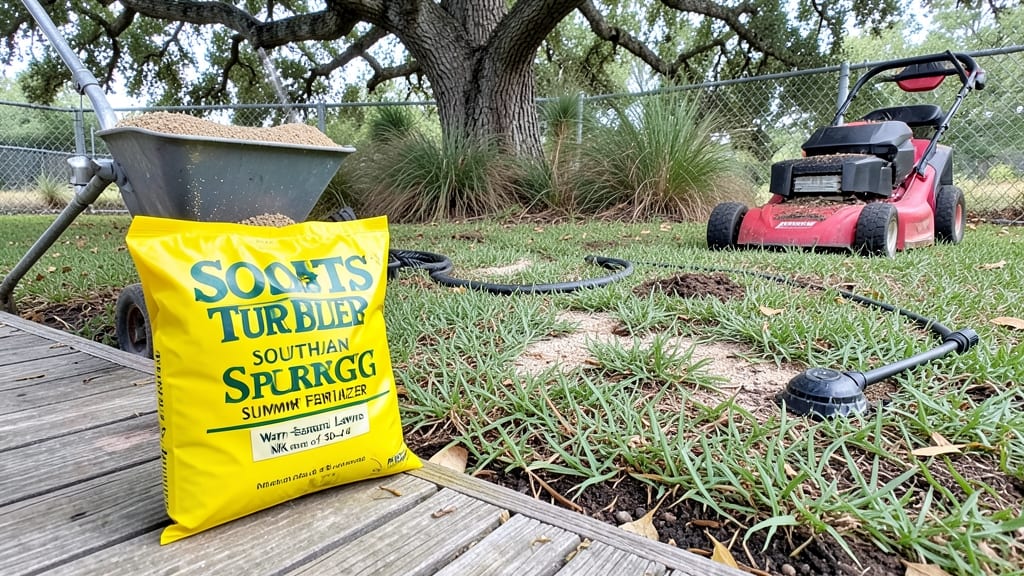
To fertilize lawns in Texas, timing depends on your grass type and climate zone: cool-season grasses like ryegrass should be fed in fall (September–November), while warm-season grasses like Bermuda require spring (March–May) and summer (June–July) applications. Always adjust based on rainfall patterns and soil test results.
Texas's diverse climate zones mean fertilization schedules can vary dramatically from North to South.
For instance, North Texas with its cooler winters favors fall feedings for cool-season grasses, while South Texas heat demands summer applications for drought-resistant Bermuda grass. 🌱 The key is matching fertilizer with your grass's active growth phase—cool-season grasses wake up in spring but need fall prep for winter, while warm-season types peak in summer.
Don't forget that soil health plays a critical role. Testing your soil's pH and nutrient levels before applying fertilizer helps you avoid overfeeding, which can actually harm your lawn. Slow-release fertilizers are ideal for Texas summers, providing steady nutrition without burning grass in extreme heat.
I always recommend splitting applications into two feedings—once at the start of the growing season and again mid-season—for the best results.
💡 In This Article
- Texas Climate Zones and Fertilizer Timing by Grass Type
- Step-by-Step Fertilizer Application Guide for Texas Lawns
Texas climate zones and fertilizer timing by grass type
Texas stretches across three distinct USDA climate zones—North (Zone 7b-8a), Central (Zone 8a-9a), and South (Zone 9a-10a)—each with unique temperature patterns that dictate when your grass absorbs nutrients most efficiently.
In North Texas, soil temperatures drop below 50°F in winter, triggering dormancy in cool-season grasses like Tall Fescue and Kentucky Bluegrass. These grasses need fall fertilization (late September to November) to build root reserves before winter, as nutrient uptake slows below 60°F.
Meanwhile, South Texas stays above 70°F year-round, allowing warm-season grasses like St. Augustine and Centipede to grow actively in winter, shifting their peak fertilization window to January–March. 🌡️
Warm-season grasses like Bermuda and Zoysia dominate Central and South Texas, where they enter their most vigorous growth phase when soil temperatures exceed 65°F—typically by April in North Texas but as early as February in South Texas.
This is why spring (March–May) and summer (June–July) feedings are critical for these types. The science behind this timing lies in their photosynthetic efficiency: warm-season grasses produce 30-50% more biomass when daytime temperatures hover between 80-95°F, making them prime candidates for fertilizer uptake during these months.
Cool-season grasses, conversely, peak in late spring (April–May) but require fall prep to survive Texas winters.
Rainfall patterns further complicate timing—North Texas often experiences dry spells in late summer, making June–July feedings risky for warm-season grasses unless paired with slow-release fertilizers that won't leach away with sudden downpours.
In Central Texas, where rainfall is more evenly distributed, a split application (early spring + mid-summer) works best for Bermuda grass, which can burn if over-fertilized during 100°F+ heatwaves.
Soil moisture levels also trigger nutrient absorption: warm-season grasses absorb 50% more nitrogen when soil moisture is between 20-30% of field capacity, so irrigation timing matters just as much as fertilizer schedule. 💧
Here’s how to match your grass type to Texas’s zones and adjust timing:
- North Texas (Cool-Season Dominant): Fertilize September–November (fall) for Tall Fescue/Bluegrass; March–April for spring green-up. Avoid summer feeding—grass goes dormant.
- Central Texas (Transition Zone): Warm-season grasses (Bermuda) need March–May (spring) + June–July (summer); cool-season (Ryegrass) gets September–October only.
- South Texas (Warm-Season Year-Round): Feed January–March (winter growth) + May–June (peak heat). Fall fertilization is unnecessary unless overseeding cool-season cover crops.
Pro tip: Use a soil thermometer to track when soil hits 65°F (warm-season wake-up) or 50°F (cool-season dormancy). This beats guessing—nutrient uptake stalls outside these thresholds, wasting fertilizer.
For example, applying nitrogen to Bermuda grass in February in North Texas (soil 55°F) results in only 20% absorption compared to 80%+ when soil is 75°F in May. 🌡️
The most common mistake? Overlooking soil testing. Texas soils vary wildly—North Texas often has clay-heavy, alkaline pH (7.5–8.5), while South Texas soils are sandy and acidic (5.5–6.5). A pH below 6.0 locks out phosphorus and micronutrients, while pH above 7.5 reduces nitrogen availability.
Adjust fertilizer ratios based on test results: for example, lime (calcium carbonate) may be needed in acidic South Texas soils before applying phosphorus-heavy fertilizers. Always test in early spring to guide your first application. 🧪